706 kr
Skickas inom 7-10 vardagar
706 kr
Skickas inom 7-10 vardagar
687 kr
Skickas inom 10-15 vardagar
915 kr
Skickas inom 10-15 vardagar
220 kr
Skickas inom 7-10 vardagar
365 kr
Skickas inom 7-10 vardagar
497 kr
Skickas inom 7-10 vardagar
407 kr
Skickas inom 7-10 vardagar
204 kr
Skickas inom 7-10 vardagar
361 kr
Skickas inom 7-10 vardagar
228 kr
Skickas inom 7-10 vardagar
1 051 kr
Läs direkt efter köp
1 066 kr
Läs direkt efter köp
2 720 kr
Skickas inom 10-15 vardagar
754 kr
Skickas inom 10-15 vardagar
2 489 kr
Skickas inom 10-15 vardagar
475 kr
Skickas inom 3-6 vardagar
883 kr
Läs direkt efter köp
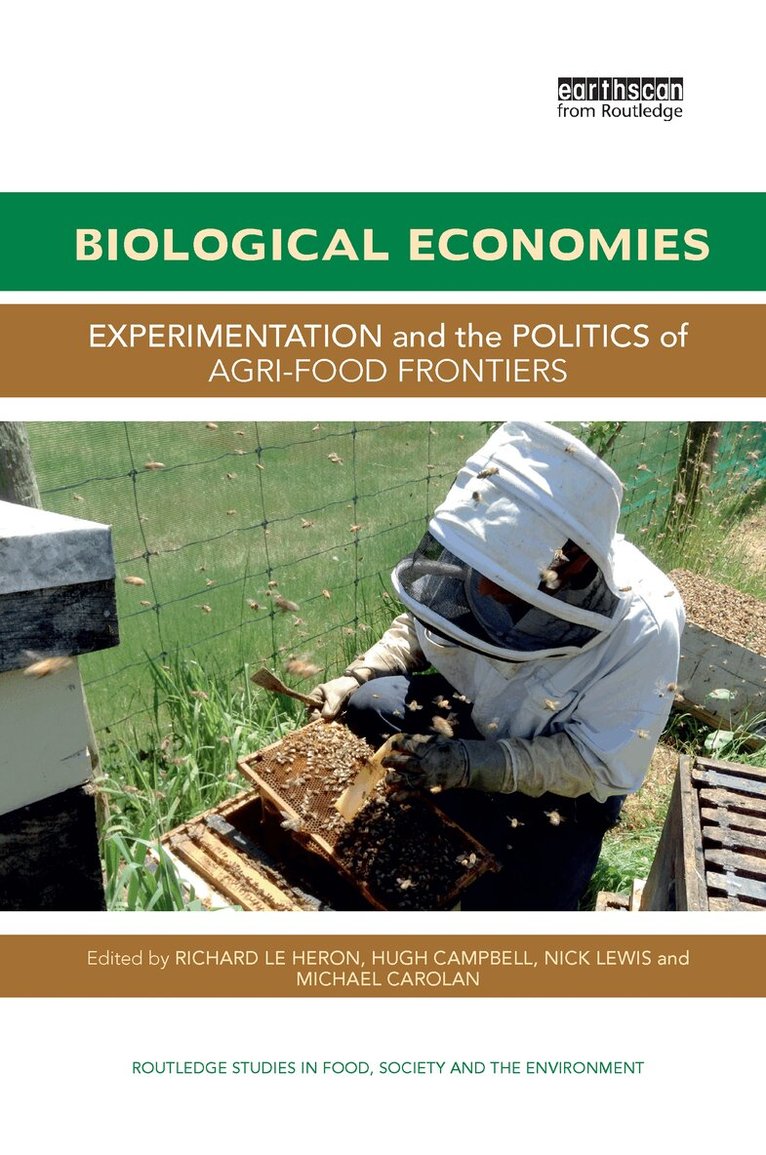
Recent agri-food studies, including commodity systems, the political economy of agriculture, regional development, and wider examinations of the rural dimension in economic geography and rural sociology have been confronted by three challenges. These can be summarized as: ‘more than human’ approaches to economic life; a ‘post-structural political economy’ of food and agriculture; and calls for more ‘enactive’, performative research approaches.
This volume describes the genealogy of such approaches, drawing on the reflective insights of more than five years of international engagement and research. It demonstrates the kinds of new work being generated under these approaches and provides a means for exploring how they should be all understood as part of the same broader need to review theory and methods in the study of food, agriculture, rural development and economic geography. This radical collective approach is elaborated as the Biological Economies approach. The authors break out from traditional categories of analysis, reconceptualising materialities, and reframing economic assemblages as biological economies, based on the notion of all research being enactive or performative.
1 563 kr
Skickas inom 10-15 vardagar
460 kr
Skickas inom 10-15 vardagar
788 kr
Läs direkt efter köp
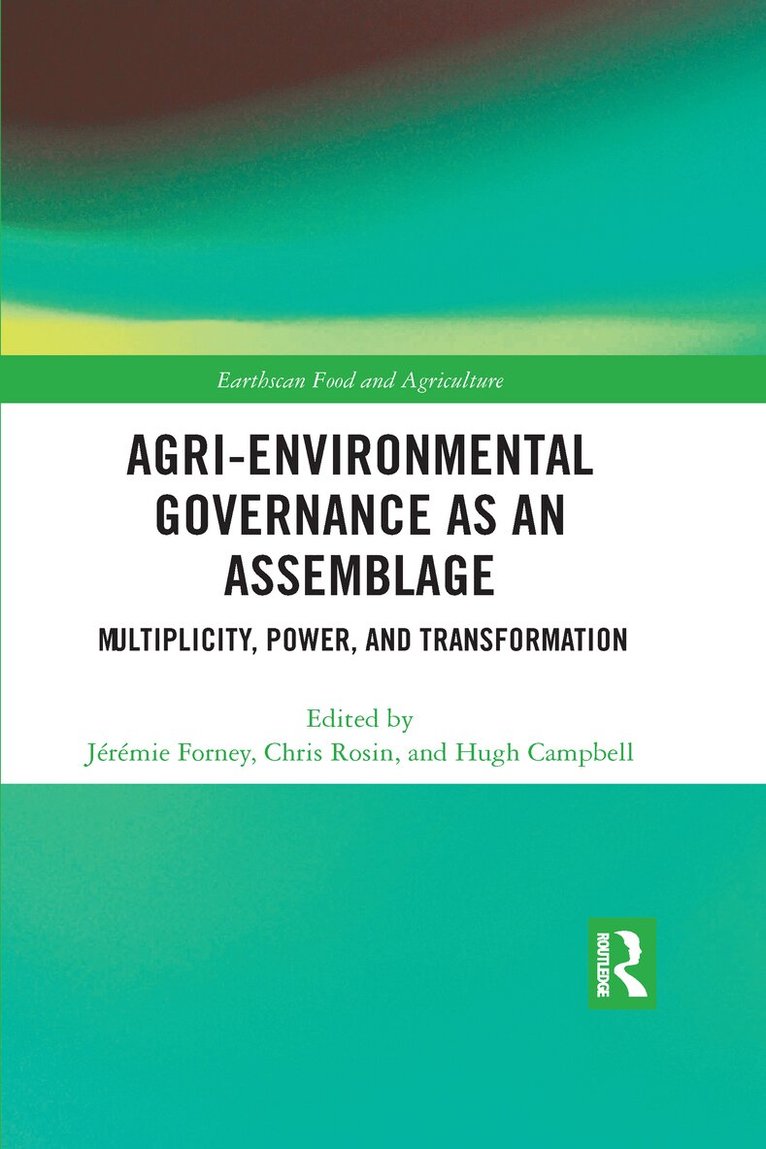
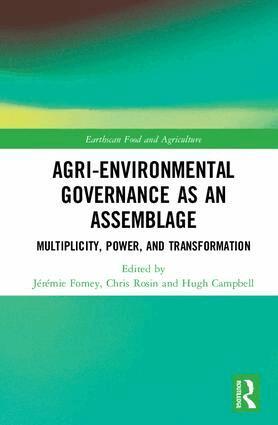
In recent decades, the governance of the environment in agri-food systems has emerged as a crucial challenge. A multiplicity of actors have been enrolled in this process, with the private sector and civil society progressively becoming key components in a global context often described as neoliberalization. Agri-environmental governance (AEG) thus gathers a highly complex assemblage of actors and instruments, with multiple interrelations.
This book addresses this complexity, challenging traditional modes of research and explanation in social science and agri-food studies. To do so, it draws on multiple theoretical and methodological insights, applied to case studies from Asia, Europe, Africa, and the Americas. It elaborates an emergent approach to AEG practices as assemblages, looking at the coming-together of multiple actors with diverse trajectories and objectives. The book lays the foundations for an encompassing theoretical framework that transcends pre-existing categories, as well as promoting innovative methodologies, which integrate the role of social actors – including scientists – in the construction of new assemblages. The chapters define, first, the multiplicities and agencies inherent to AEG assemblages. A second set tackles the question of the politics in AEG assemblages, where political hierarchies interweave with economic power and the search for more democratic and participative approaches. Finally, these insights are developed in the form of assemblage practice and methodology. The book challenges social scientists to confront the shortcomings of existing approaches and consider alternative answers to questions about environmental governance of agri-food systems.
814 kr
Läs direkt efter köp
In recent decades, the governance of the environment in agri-food systems has emerged as a crucial challenge. A multiplicity of actors have been enrolled in this process, with the private sector and civil society progressively becoming key components in a global context often described as neoliberalization. Agri-environmental governance (AEG) thus gathers a highly complex assemblage of actors and instruments, with multiple interrelations.
This book addresses this complexity, challenging traditional modes of research and explanation in social science and agri-food studies. To do so, it draws on multiple theoretical and methodological insights, applied to case studies from Asia, Europe, Africa, and the Americas. It elaborates an emergent approach to AEG practices as assemblages, looking at the coming-together of multiple actors with diverse trajectories and objectives. The book lays the foundations for an encompassing theoretical framework that transcends pre-existing categories, as well as promoting innovative methodologies, which integrate the role of social actors – including scientists – in the construction of new assemblages. The chapters define, first, the multiplicities and agencies inherent to AEG assemblages. A second set tackles the question of the politics in AEG assemblages, where political hierarchies interweave with economic power and the search for more democratic and participative approaches. Finally, these insights are developed in the form of assemblage practice and methodology. The book challenges social scientists to confront the shortcomings of existing approaches and consider alternative answers to questions about environmental governance of agri-food systems.
537 kr
Skickas inom 7-10 vardagar
134 kr
Skickas inom 7-10 vardagar
134 kr
Skickas inom 7-10 vardagar
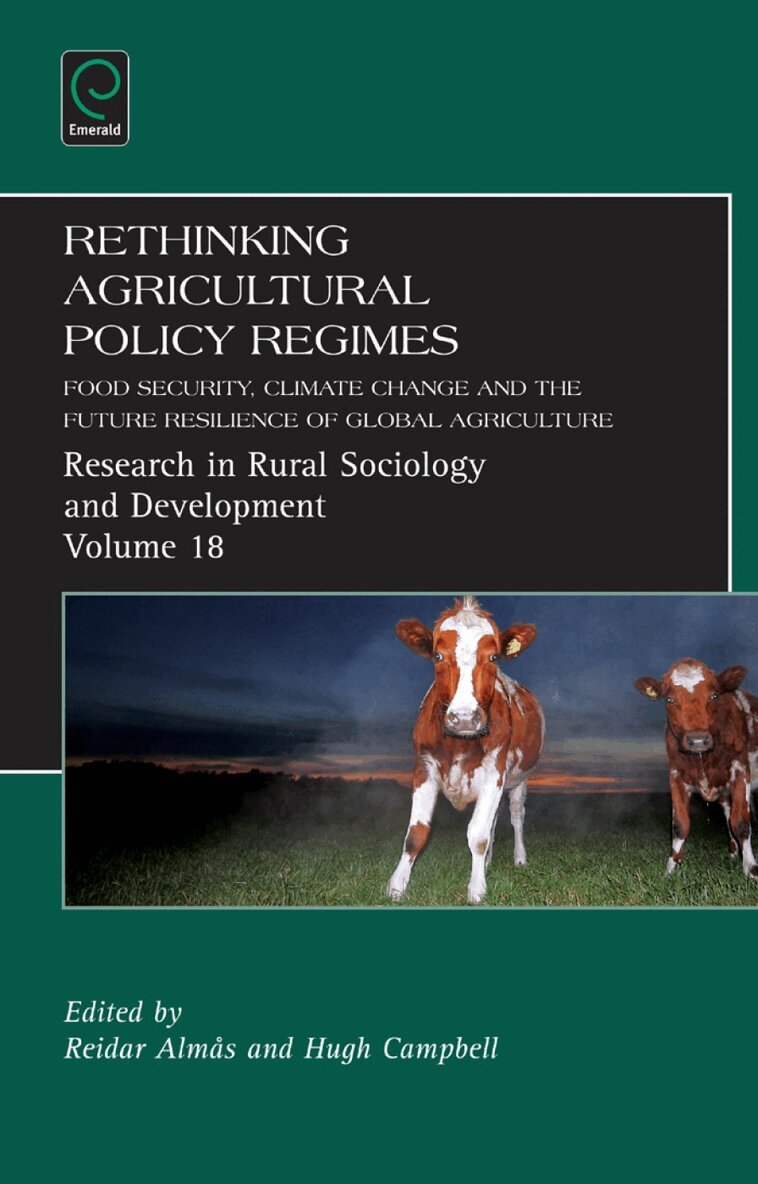
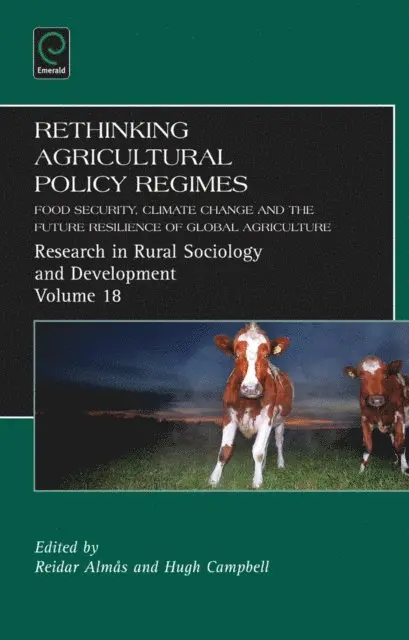
Food Security, Climate Change and the Future Resilience of Global Agriculture
1 310 kr
Skickas inom 7-10 vardagar
1 421 kr
Läs direkt efter köp
1 623 kr
Skickas inom 7-10 vardagar
1 007 kr
Läs direkt efter köp
Unlike other books on architecture and film, Architecture Filmmaking investigates how the now-expanded field of architecture utilizes the practice of filmmaking (feature/short film, stop motion animation and documentary) or video/moving image in research, teaching and practice, and what the consequences of this interdisciplinary exchange are. While architecture and filmmaking have clearly distinct disciplinary outputs and filmmaking is a much younger art than architecture, the intersection between them is less defined. This book investigates the ways in which architectural researchers, teachers of architecture, their students and practising architects, filmmakers and artists are using filmmaking uniquely in their practice.