761 kr
Skickas inom 10-15 vardagar
761 kr
Skickas inom 10-15 vardagar
1 664 kr
Skickas inom 10-15 vardagar
2 096 kr
Läs direkt efter köp
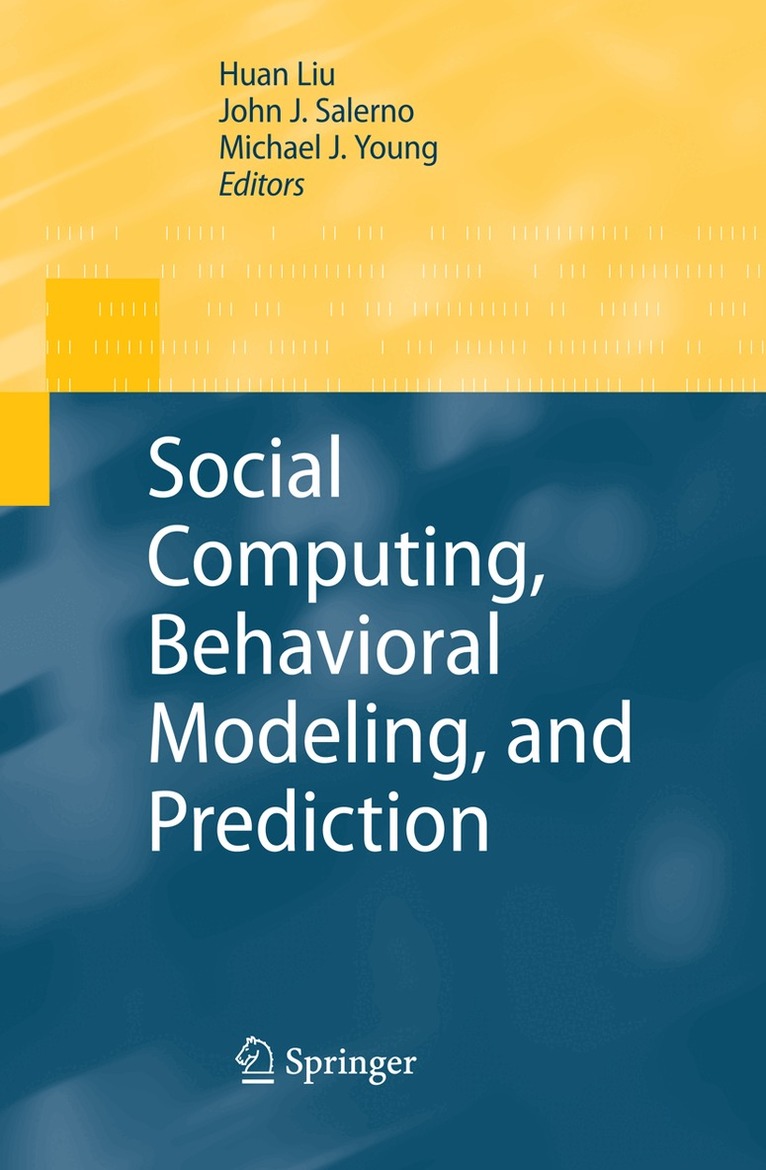
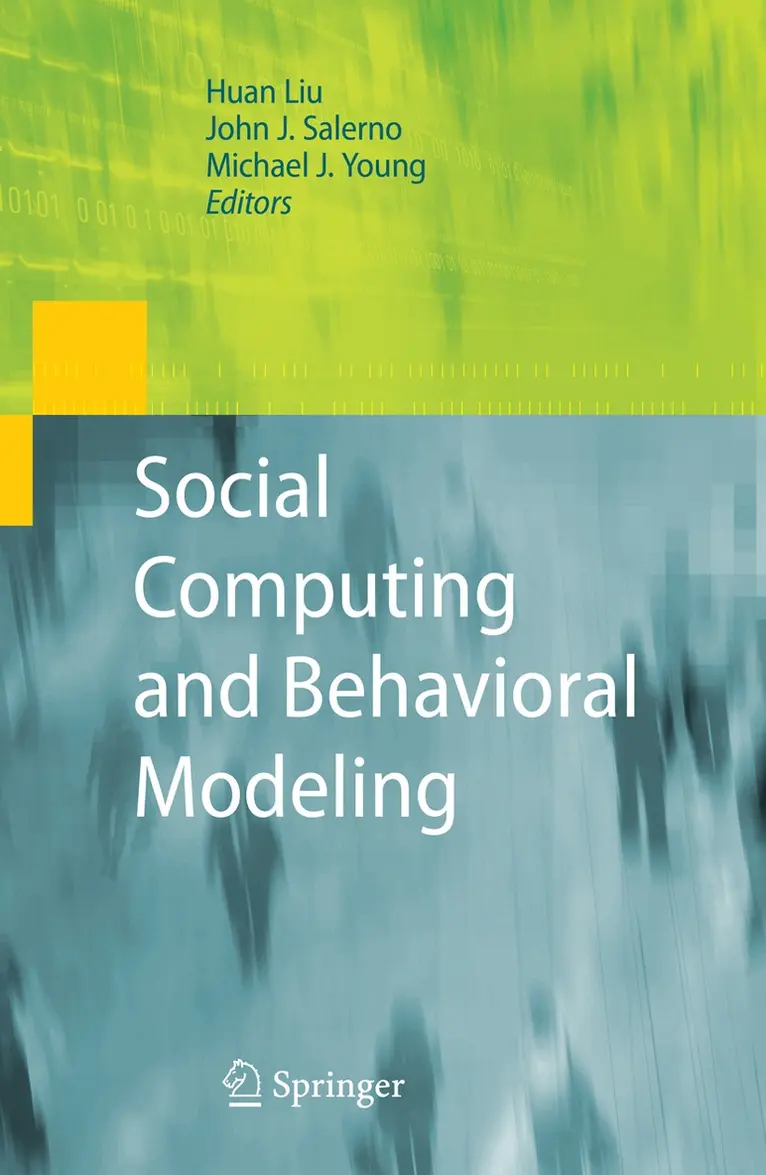
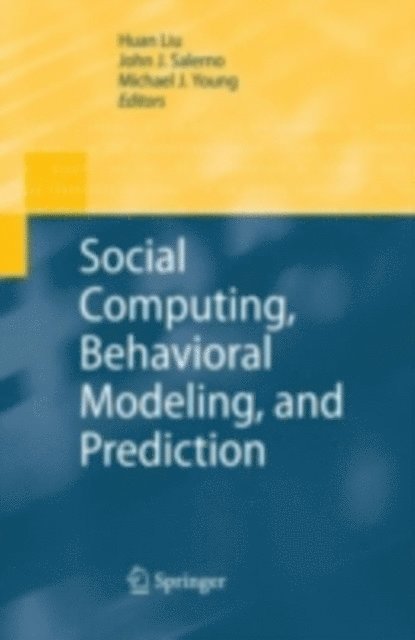
Social computing concerns the study of social behavior and context based on computational systems. Behavioral modeling reproduces the social behavior, and allows for experimenting with and deep understanding of behavior, patterns, and potential outcomes. The pervasive use of computer and Internet technologies provides an unprecedented environment where people can share opinions and experiences, offer suggestions and advice, debate, and even conduct experiments. Social computing facilitates behavioral modeling in model building, analysis, pattern mining, anticipation, and prediction. The proceedings from this interdisciplinary workshop provide a platform for researchers, practitioners, and graduate students from sociology, behavioral and computer science, psychology, cultural study, information systems, and operations research to share results and develop new concepts and methodologies aimed at advancing and deepening our understanding of social and behavioral computing to aid critical decision making.
2 273 kr
Kommande
2 102 kr
Läs direkt efter köp
1 685 kr
Skickas inom 10-15 vardagar
2 245 kr
Skickas inom 10-15 vardagar
3 699 kr
Skickas inom 10-15 vardagar
1 022 kr
Läs direkt efter köp
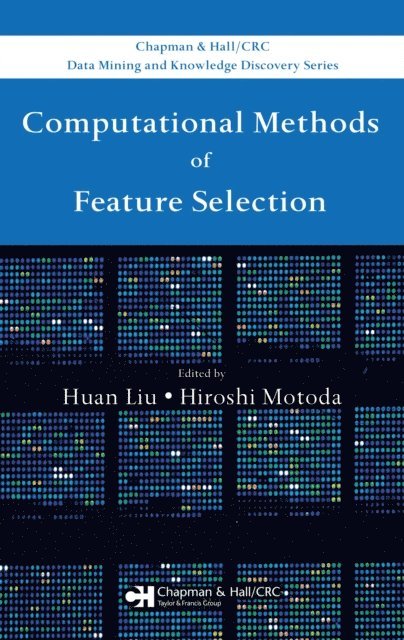
Due to increasing demands for dimensionality reduction, research on feature selection has deeply and widely expanded into many fields, including computational statistics, pattern recognition, machine learning, data mining, and knowledge discovery. Highlighting current research issues, Computational Methods of Feature Selection introduces the
1 204 kr
Läs direkt efter köp
This detailed book introduces China''s national dynamic water resources assessment model, presenting its construction, application scenarios, and modern modeling approach to replace traditional statistics-based methods.
The book thoroughly explores the applications of distributed hydrological modeling techniques in national water resources assessment. It presents the successful development of the China Water Assessment Model (CWAM), which is based on the WEP-L hydrological model. CWAM demonstrates broad potential in supporting national water information acquisition, uniquely covering both surveyed and un-surveyed regions. The work highlights the model''s ability to account for China''s diverse climatic and geological characteristics, while improving the efficiency of water resources assessment and providing solutions to dynamic assessment challenges, especially under climate change and human impacts.
This work will serve as an essential reference for scholars and students in hydrology and water resources, as well as policy makers and engineers involved in water resources management and assessment.
Chapter 1 of this book is freely available as a downloadable Open Access PDF at http://www.taylorfrancis.com under a Creative Commons Attribution-Non Commercial-No Derivatives (CC BY-NC-ND) 4.0 license.
1 204 kr
Läs direkt efter köp
This detailed book introduces China''s national dynamic water resources assessment model, presenting its construction, application scenarios, and modern modeling approach to replace traditional statistics-based methods.
The book thoroughly explores the applications of distributed hydrological modeling techniques in national water resources assessment. It presents the successful development of the China Water Assessment Model (CWAM), which is based on the WEP-L hydrological model. CWAM demonstrates broad potential in supporting national water information acquisition, uniquely covering both surveyed and un-surveyed regions. The work highlights the model''s ability to account for China''s diverse climatic and geological characteristics, while improving the efficiency of water resources assessment and providing solutions to dynamic assessment challenges, especially under climate change and human impacts.
This work will serve as an essential reference for scholars and students in hydrology and water resources, as well as policy makers and engineers involved in water resources management and assessment.
Chapter 1 of this book is freely available as a downloadable Open Access PDF at http://www.taylorfrancis.com under a Creative Commons Attribution-Non Commercial-No Derivatives (CC BY-NC-ND) 4.0 license.
1 523 kr
Skickas inom 10-15 vardagar
1 015 kr
Skickas inom 7-10 vardagar
1 176 kr
Skickas inom 10-15 vardagar
1 893 kr
Skickas inom 10-15 vardagar
1 007 kr
Läs direkt efter köp
1 007 kr
Läs direkt efter köp
892 kr
Läs direkt efter köp
Feature engineering plays a vital role in big data analytics. Machine learning and data mining algorithms cannot work without data. Little can be achieved if there are few features to represent the underlying data objects, and the quality of results of those algorithms largely depends on the quality of the available features. Feature Engineering for Machine Learning and Data Analytics provides a comprehensive introduction to feature engineering, including feature generation, feature extraction, feature transformation, feature selection, and feature analysis and evaluation.
The book presents key concepts, methods, examples, and applications, as well as chapters on feature engineering for major data types such as texts, images, sequences, time series, graphs, streaming data, software engineering data, Twitter data, and social media data. It also contains generic feature generation approaches, as well as methods for generating tried-and-tested, hand-crafted, domain-specific features.
The first chapter defines the concepts of features and feature engineering, offers an overview of the book, and provides pointers to topics not covered in this book. The next six chapters are devoted to feature engineering, including feature generation for specific data types. The subsequent four chapters cover generic approaches for feature engineering, namely feature selection, feature transformation based feature engineering, deep learning based feature engineering, and pattern based feature generation and engineering. The last three chapters discuss feature engineering for social bot detection, software management, and Twitter-based applications respectively.
This book can be used as a reference for data analysts, big data scientists, data preprocessing workers, project managers, project developers, prediction modelers, professors, researchers, graduate students, and upper level undergraduate students. It can also be used as the primary text for courses on feature engineering, or as a supplement for courses on machine learning, data mining, and big data analytics.
892 kr
Läs direkt efter köp
Feature engineering plays a vital role in big data analytics. Machine learning and data mining algorithms cannot work without data. Little can be achieved if there are few features to represent the underlying data objects, and the quality of results of those algorithms largely depends on the quality of the available features. Feature Engineering for Machine Learning and Data Analytics provides a comprehensive introduction to feature engineering, including feature generation, feature extraction, feature transformation, feature selection, and feature analysis and evaluation.
The book presents key concepts, methods, examples, and applications, as well as chapters on feature engineering for major data types such as texts, images, sequences, time series, graphs, streaming data, software engineering data, Twitter data, and social media data. It also contains generic feature generation approaches, as well as methods for generating tried-and-tested, hand-crafted, domain-specific features.
The first chapter defines the concepts of features and feature engineering, offers an overview of the book, and provides pointers to topics not covered in this book. The next six chapters are devoted to feature engineering, including feature generation for specific data types. The subsequent four chapters cover generic approaches for feature engineering, namely feature selection, feature transformation based feature engineering, deep learning based feature engineering, and pattern based feature generation and engineering. The last three chapters discuss feature engineering for social bot detection, software management, and Twitter-based applications respectively.
This book can be used as a reference for data analysts, big data scientists, data preprocessing workers, project managers, project developers, prediction modelers, professors, researchers, graduate students, and upper level undergraduate students. It can also be used as the primary text for courses on feature engineering, or as a supplement for courses on machine learning, data mining, and big data analytics.
3 552 kr
Skickas inom 10-15 vardagar
2 044 kr
Läs direkt efter köp
1 687 kr
Skickas inom 10-15 vardagar
1 687 kr
Skickas inom 10-15 vardagar
1 681 kr
Skickas inom 10-15 vardagar
3 703 kr
Skickas inom 10-15 vardagar
2 157 kr
Skickas inom 10-15 vardagar
561 kr
Skickas inom 10-15 vardagar
750 kr
Läs direkt efter köp
4 658 kr
Läs direkt efter köp
2 925 kr
Läs direkt efter köp