An accessible introduction to ideas and concerns of one of sociology’s early founders. This new volume of the SAGE Social Thinkers series provides a concise introduction to the work, life, and influences of Georg Simmel. It closely examines the writings and ideas of Simmel that introduced a new way of looking at culture and society and helped establish sociology’s place among the academic fields. The book focuses on the key intellectual concerns of Simmel, including the process of individualization, religion, private and family life, cities, and modernization. It is ideal for use as a self-contained volume or in conjunction with other sociological theory textbooks.

As the founder of the humanist version of sociology, Georg Simmel sent powerful messages about the discipline. His key ideas - that reality is socially constructed, changes over time and rarely is as it appears - are critically re-examined with an eye toward drawing lessons for contemporary scholars and activists. With essential insights for those working in any field within the social sciences.
In China: Promise or Threat? Helle compares the cultures of China and the West through both private and public spheres. He argues that, for China, the private sphere of family life is well-defined and regulated, whereas behaviour in public relating to matters of government and law is less so. In contrast, in his view, the West inverts this arrangement.
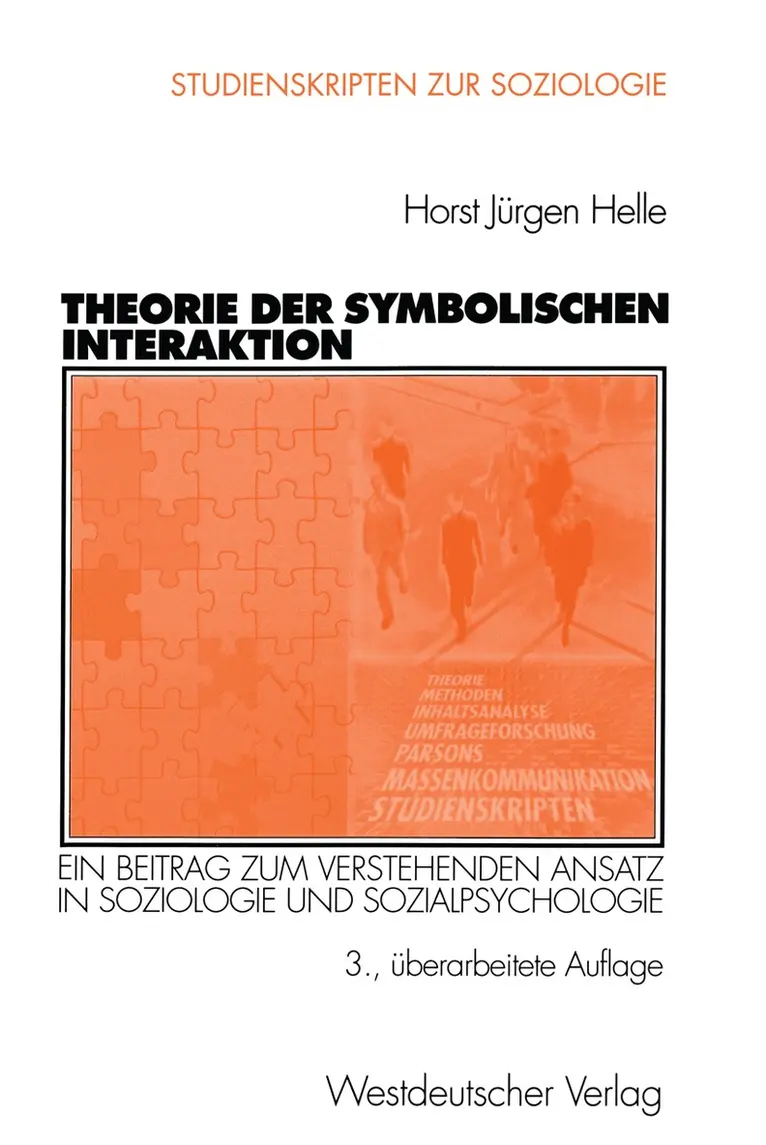
Der vorliegende Band stellt die Entwicklung der Theorie der Symbolischen Interaktion (TSI) seit Herbert Blumer dar. Sein Werk wird jedoch nicht singulär betrachtet, sondern in den Werdegang des "verstehenden" Ansatzes der Soziologie eingeordnet. Der Autor skizziert zunächst die Grundlagen der Verstehenden Soziologie sowie den Weg der europäischen Soziologie zwischen Positivismus und Neukantianismus. Ausführlich behandelt er auch den direkten Bezugspunkt Herbert Blumers: die Arbeiten Georg Herbert Meads, des "geistigen Vaters" der TSI. Zum Abschluss werden die spezifischen Fragestellungen weiterer TSI-Vertreter wie Anselm Strauss, Tamotsu Shibutani und besonders Erving Goffman erörtert.