Inbunden, Engelska, 2027
1 623 kr
Kommande
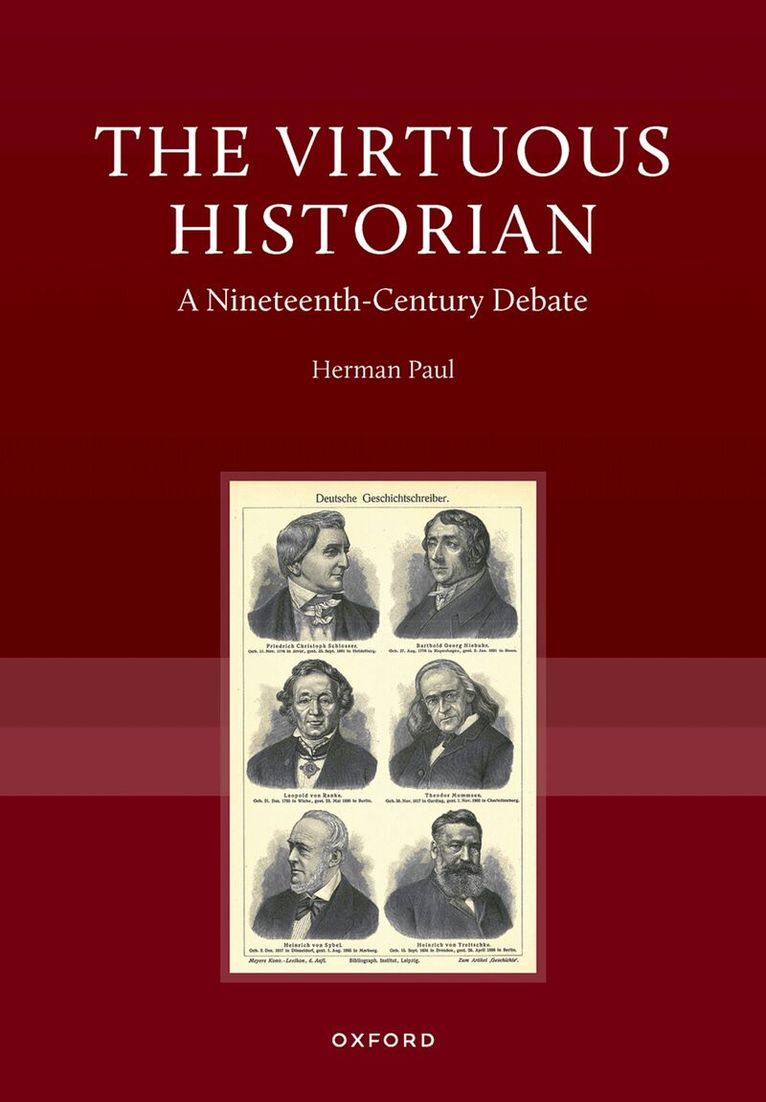
Nineteenth-century German historians quarrelled endlessly about virtues and vices. Challenging the characterisation of this so-called 'virtue talk' as ornamental and rhetorical, The Virtuous Historian demonstrates that these were in fact a foundational facet of their historical craft.Historians used the discourse of virtue and vice to position themselves in changing intellectual, political, and religious contexts. The ways in which they spoke about virtues reflected their understanding of the historian's vocation at a time when old and new tasks vied for hegemony. In addition, historians drew on notions of virtue in articulating their pedagogical views, assessing the work of colleagues, and patrolling the borders of their profession. These findings show that the virtuous historian as imagined by nineteenth-century authors lay at the nexus of scholarly ideals, practices, and institutions. It was a crystallization point in which many lines came together^—^and hence a site of perennial contestation.Apart from providing new insight into nineteenth-century historiography, The Virtuous Historian offers valuable lessons for the present. Nineteenth-century experiences with virtues and vices were not always positive. Susceptible to ad hominem abuse, the discourse was widely used to justify the exclusion of female, Jewish, and Catholic scholars. In critical engagement with current virtue-ethical literature, The Virtuous Historian argues that these realities have to be taken into account by anyone advocating a 'return of virtue'. The result is important reading for all historians of historiography but also, more broadly, humanities scholars interested in virtue-ethical approaches to research integrity.