640 kr
Skickas inom 10-15 vardagar
640 kr
Skickas inom 10-15 vardagar
658 kr
Läs direkt efter köp
First published in 1997. Article 224 is one of the most powerful Articles of the Treaty of Rome, allowing a member state to take unilateral measures and to suspend some or all its Treaty-based obligations in times of what can loosely be described as serious internal turmoil or external threat. It is for this reason that the very next Article of the Treaty, Article 225, allows the Commission or a member state to challenge invocation of Art.224, before the European Court of Justice (ECJ), on grounds of improper use. In practice, the use of Art.224, by a member state presents multiple problems. The obvious connection with defence and security issues has inhibited the ECJ which still has not given and authentic interpretation of this Article. As the recent former Yugoslav Republic of Macedonia (FYROM) cases (Greek referral for the embargo on FYROM) indicate, unless the use of Art.224 is blatantly flippant, the ECJ is not in a position to challenge a member state’s unilateral measures.
654 kr
Läs direkt efter köp
First published in 1997. Article 224 is one of the most powerful Articles of the Treaty of Rome, allowing a member state to take unilateral measures and to suspend some or all its Treaty-based obligations in times of what can loosely be described as serious internal turmoil or external threat. It is for this reason that the very next Article of the Treaty, Article 225, allows the Commission or a member state to challenge invocation of Art.224, before the European Court of Justice (ECJ), on grounds of improper use. In practice, the use of Art.224, by a member state presents multiple problems. The obvious connection with defence and security issues has inhibited the ECJ which still has not given and authentic interpretation of this Article. As the recent former Yugoslav Republic of Macedonia (FYROM) cases (Greek referral for the embargo on FYROM) indicate, unless the use of Art.224 is blatantly flippant, the ECJ is not in a position to challenge a member state’s unilateral measures.
1 358 kr
Skickas inom 7-10 vardagar
2 311 kr
Skickas inom 10-15 vardagar
2 324 kr
Skickas inom 10-15 vardagar
644 kr
Kommande
760 kr
Läs direkt efter köp
760 kr
Läs direkt efter köp
764 kr
Skickas inom 7-10 vardagar
842 kr
Skickas inom 10-15 vardagar
1 530 kr
Skickas inom 10-15 vardagar
563 kr
Skickas inom 10-15 vardagar
2 311 kr
Skickas inom 10-15 vardagar
981 kr
Läs direkt efter köp
988 kr
Läs direkt efter köp
1 967 kr
Skickas inom 10-15 vardagar
2 136 kr
Läs direkt efter köp
2 151 kr
Läs direkt efter köp
2 007 kr
Läs direkt efter köp
2 007 kr
Läs direkt efter köp
2 842 kr
Skickas inom 7-10 vardagar
2 724 kr
Läs direkt efter köp
2 724 kr
Läs direkt efter köp
1 424 kr
Läs direkt efter köp
1 424 kr
Läs direkt efter köp
2 062 kr
Skickas inom 7-10 vardagar
419 kr
Läs direkt efter köp
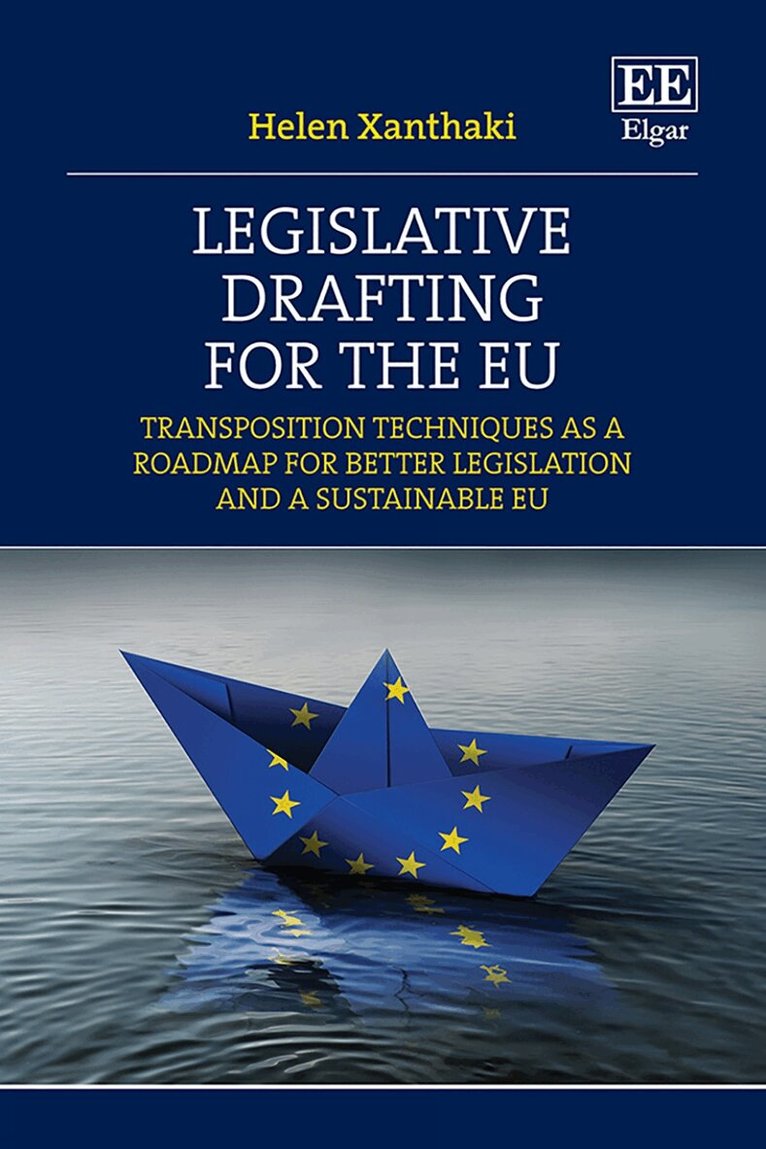
This innovative book reveals the weaknesses in the current drafting of EU law and recommends concrete changes for these regulations and directives in order to aid transposition. Highlighting the importance of drafting techniques, Helen Xanthaki offers an insightful analysis of EU legislation and emphasises the benefit of citizen-centred law-making in sustaining loyalty and trust in the EU. The author explores how reform is necessary to reflect the current usage of EU legislative expressions as the final legislative text for regulation, both at supranational and national levels. Considering the best ways to aid this reform, the book discusses legislative effectiveness and regulatory efficacy, Thornton’s methodology, and the use of easified and gender inclusive language to achieve clarity, precision, and unambiguity.
Providing an incisive examination of EU legislative drafting and its implications for the member states, this thought-provoking book is a crucial read for scholars of European law, legislative drafting, regulation, and EU studies.
1 183 kr
Skickas inom 10-15 vardagar
1 291 kr
Läs direkt efter köp