3 083 kr
Skickas inom 10-15 vardagar
3 083 kr
Skickas inom 10-15 vardagar
827 kr
Skickas inom 10-15 vardagar
2 497 kr
Skickas inom 10-15 vardagar
3 047 kr
Skickas inom 10-15 vardagar
745 kr
Skickas inom 10-15 vardagar
2 526 kr
Skickas inom 10-15 vardagar
754 kr
Skickas inom 10-15 vardagar
915 kr
Skickas inom 10-15 vardagar
705 kr
Läs direkt efter köp
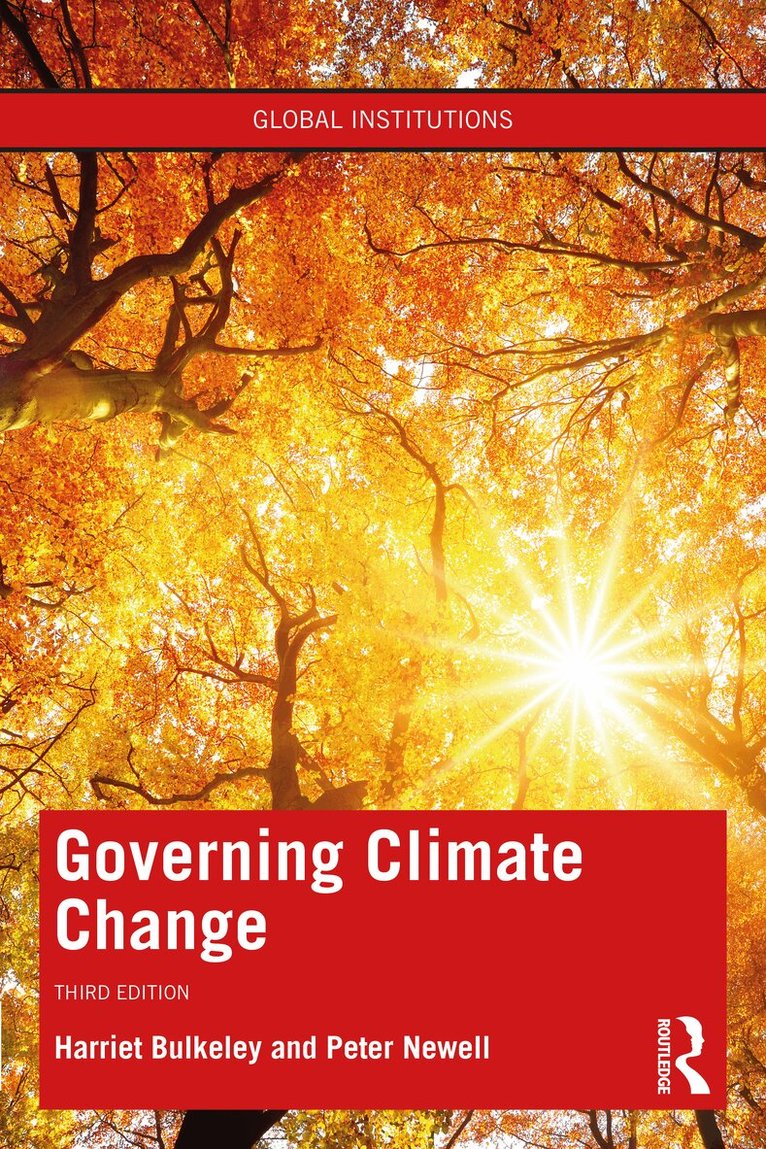
This fully revised and expanded new edition provides a short and accessible introduction to how climate change is governed by an increasingly diverse range of actors, from civil society and business actors to multilateral development banks, donors, and cities.
The issue of global climate change has risen to the top of the international political agenda. Despite ongoing contestation about the science informing policy, the economic costs of action and the allocation of responsibility for addressing the issue within and between nations, it is clear that climate change will continue to be one of the most pressing and challenging issues facing humanity for many years to come.
The book:
Evaluates the role of states and non-state actors in governing climate change at multiple levels of political organization: local, national, and global
Provides a discussion of theoretical debates on climate change governance, moving beyond analytical approaches focused solely on nation-states and international negotiations
Examines a range of key topical issues in the politics of climate change
Includes multiple examples from both the north and the global south
Providing an inter-disciplinary perspective drawing on geography, politics, international relations, and development studies, this book is essential reading for all those concerned not only with the climate governance but with the future of the environment in general.
695 kr
Läs direkt efter köp
This fully revised and expanded new edition provides a short and accessible introduction to how climate change is governed by an increasingly diverse range of actors, from civil society and business actors to multilateral development banks, donors, and cities.
The issue of global climate change has risen to the top of the international political agenda. Despite ongoing contestation about the science informing policy, the economic costs of action and the allocation of responsibility for addressing the issue within and between nations, it is clear that climate change will continue to be one of the most pressing and challenging issues facing humanity for many years to come.
The book:
Evaluates the role of states and non-state actors in governing climate change at multiple levels of political organization: local, national, and global
Provides a discussion of theoretical debates on climate change governance, moving beyond analytical approaches focused solely on nation-states and international negotiations
Examines a range of key topical issues in the politics of climate change
Includes multiple examples from both the north and the global south
Providing an inter-disciplinary perspective drawing on geography, politics, international relations, and development studies, this book is essential reading for all those concerned not only with the climate governance but with the future of the environment in general.
2 515 kr
Skickas inom 10-15 vardagar
605 kr
Skickas inom 10-15 vardagar
1 738 kr
Skickas inom 7-10 vardagar
1 563 kr
Skickas inom 11-20 vardagar
1 928 kr
Skickas inom 7-10 vardagar
688 kr
Skickas inom 7-10 vardagar
493 kr
Skickas inom 7-10 vardagar
1 665 kr
Skickas inom 7-10 vardagar
734 kr
Läs direkt efter köp
729 kr
Läs direkt efter köp
748 kr
Skickas inom 7-10 vardagar
773 kr
Skickas inom 7-10 vardagar
1 513 kr
Skickas inom 7-10 vardagar
610 kr
284 kr
Skickas inom 7-10 vardagar
949 kr
Läs direkt efter köp
Climate change is one of the most challenging issues of our time. As key sites in the production and management of emissions of greenhouse gases, cities will be crucial for the implementation of international agreements and national policies on climate change. This book provides a critical analysis of the role of cities in addressing climate change and the prospects for urban sustainability. Cities and Climate Change is the first in-depth analysis of the role of cities in addressing climate change. The book argues that key challenges concerning the resources and powers of local government, as well as conflicts between local goals for economic development and climate change mitigation, have restricted the level of local action on climate change. These findings have significant implications for the prospects of mitigating climate change and achieving urban sustainability. This book provides a valuable interdisciplinary analysis of these issues, and will appeal to students and researchers interested in sustainability at local and global scales.
963 kr
Läs direkt efter köp
Climate change is one of the most challenging issues of our time. As key sites in the production and management of emissions of greenhouse gases, cities will be crucial for the implementation of international agreements and national policies on climate change. This book provides a critical analysis of the role of cities in addressing climate change and the prospects for urban sustainability. Cities and Climate Change is the first in-depth analysis of the role of cities in addressing climate change. The book argues that key challenges concerning the resources and powers of local government, as well as conflicts between local goals for economic development and climate change mitigation, have restricted the level of local action on climate change. These findings have significant implications for the prospects of mitigating climate change and achieving urban sustainability. This book provides a valuable interdisciplinary analysis of these issues, and will appeal to students and researchers interested in sustainability at local and global scales.
864 kr
Läs direkt efter köp
883 kr
Läs direkt efter köp
1 051 kr
Läs direkt efter köp
Current societies face unprecedented risks and challenges connected to climate change. Addressing them will require fundamental transformations in the infrastructures that sustain everyday life, such as energy, water, waste and mobility. A transition to a ‘low carbon’ future implies a large scale reorganisation in the way societies produce and use energy. Cities are critical in this transition because they concentrate social and economic activities that produce climate change related emissions. At the same time, cities are increasingly recognised as sources of opportunities for climate change mitigation. Whether, how and why low carbon transitions in urban systems take place in response to climate change will therefore be decisive for the success of global mitigation efforts. As a result, climate change increasingly features as a critical issue in the management of urban infrastructure and in urbanisation policies.
Cities and Low Carbon Transitions presents a ground-breaking analysis of the role of cities in low carbon socio-technical transitions. Insights from the fields of urban studies and technological transitions are combined to examine how, why and with what implications cities bring about low carbon transitions. The book outlines the key concepts underpinning theories of socio-technical transition and assesses its potential strengths and limits for understanding the social and technological responses to climate change that are emerging in cities. It draws on a diverse range of examples including world cities, ordinary cities and transition towns, from North America, Europe, South Africa and China, to provide evidence that expectations, aspirations and plans to undertake purposive socio-technical transitions are emerging in different urban contexts.
This collection adds to existing literature on cities and energy transitions and introduces critical questions about power and social interests, lock-in and development trajectories, social equity and economic development, and socio-technical change in cities. The book addresses academics, policy makers, practitioners and researchers interested in the development of systemic responses in cities to curb climate change.