588 kr
Skickas inom 7-10 vardagar
588 kr
Skickas inom 7-10 vardagar
1 255 kr
Skickas
785 kr
Läs direkt efter köp
Taxation and Inequality in Latin America takes a heterodox political economy approach, focusing on Latin America, where current problems of taxation have existed for a century and great wealth contrasts with abject poverty. The book analyzes the relation of natural resource wealth, allocational politics and the limited role of taxation for redistribution, and progressive resource mobilization. By drawing on the political economy of tax regimes, the book considers the specific conditions of taxation in Latin America, which apply to a large part of the Global South and more than 100 countries specializing in the extraction and export of raw materials. This book will cover:
taxation and the dominance of raw material export sectors;
taxation and allocational politics;
new perspectives on political economy and tax regimes.
Scholars and advanced students of political economy, political science, development studies, and fiscal sociology will find several key issues in tax research from a novel angle. The book provides an analytical orientation that relates central questions of taxation to patterns of regional political economy, thereby opening up the debate with tax scholars from other world regions of the Global South.
768 kr
Läs direkt efter köp
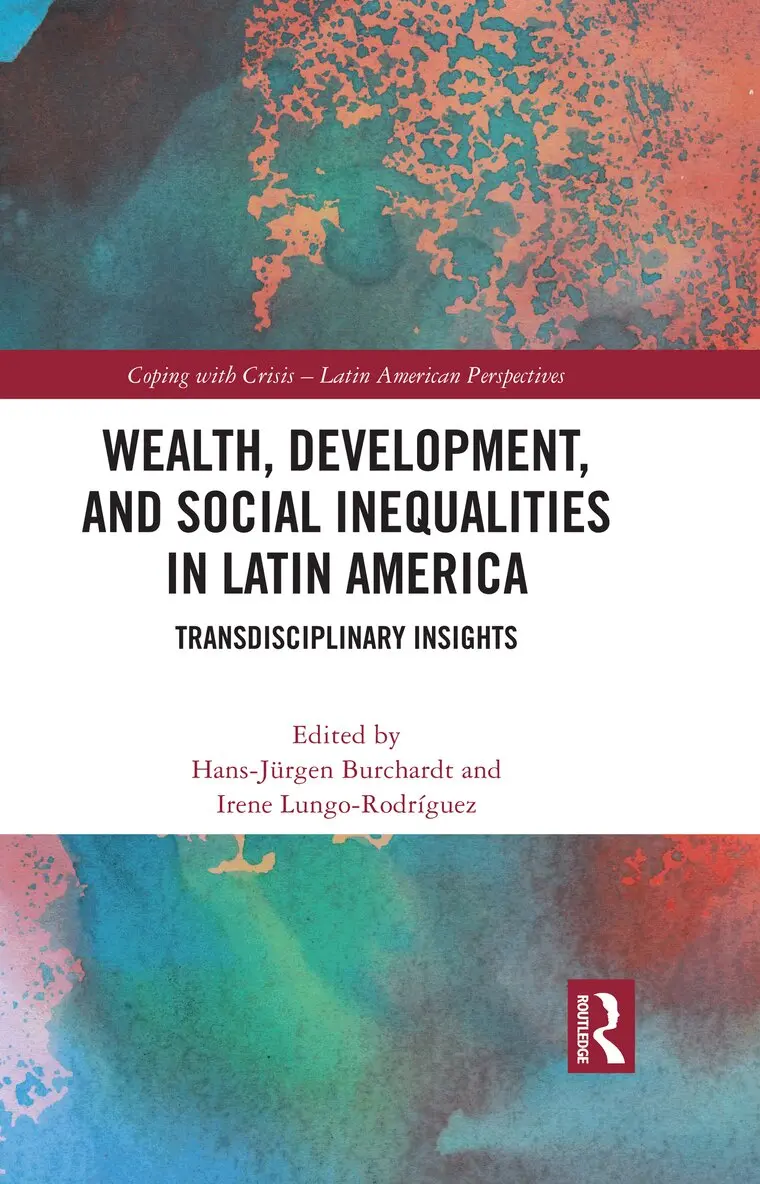
In this book, Hans-Jürgen Burchardt and Irene Lungo-Rodríguez lead a transdisciplinary team of experts to advance our understanding of wealth in Latin America.
Combining conceptual discussions with empirical research, they analyze characteristics of wealth, and the implications for inequality. Three thematic sections provide a unique overarching structure to understand the economic, social, political, and cultural complexity of wealth. Questions examined include:
What economic, institutional, and structural factors contribute to the excessive accumulation of wealth? What political dynamics promote the concentration of wealth and power? What type of social, political, and economic relations are generated in these contexts of extreme wealth concentration? What socio-cultural processes contribute to legitimizing and reproducing wealth? What are the local, regional, and national socio-ecological effects of these dynamics?Wealth, Development and Social Inequalities in Latin America provides thought-provoking reading for students and researchers alike who wish to look beyond the Global North for answers on the importance of studying wealth.
2 542 kr
Skickas inom 10-15 vardagar
675 kr
Skickas inom 10-15 vardagar
2 526 kr
Skickas inom 10-15 vardagar
651 kr
Skickas inom 10-15 vardagar
745 kr
Läs direkt efter köp
The persistence of extractivism in Latin America is a central issue in contemporary debates on global sustainability and the curse of the energy transition.
This book explores these pressing concerns by analyzing the tensions between the energy transition, extractivism, and green development in Latin America. While important parts of the world economy are beginning to decarbonize and industrialized nations promote sustainability initiatives, resource extraction continues to play a fundamental role in the political, economic, and social landscapes of the Global South. The international expert contributors to this volume examine whether the emerging sustainability paradigm based on energy transition represents an alternative or merely a reconfiguration of historical extractivist structures. The first few chapters of the book critically examine the unsustainability of extractivism and therefore the historical and contemporary challenges of resource dependency. It presents case studies of countries such as Bolivia, Venezuela, and Argentina, illustrating how extractivist states have struggled with governance dilemmas, environmental degradation, and socio-political resistance. The following chapters focus on the challenges for the green economy, investigating the intersection between sustainability and structural economic constraints, addressing the risks of green extractivism, and exploring whether Latin America can escape the cycle of resource dependency.
Through an interdisciplinary approach that integrates political economy, sociology, environmental science, and development studies, this book provides a nuanced understanding of Latin America’s resource dilemmas in the context of global energy transitions.
2 542 kr
Skickas inom 10-15 vardagar
235 kr
Läs direkt efter köp
323 kr
Skickas inom 3-6 vardagar
365 kr
Skickas inom 3-6 vardagar