In 1747, after printing a few Arabic liturgical and polemical books in Iași, the capital of Moldavia, Sylvester, patriarch of the Greek Orthodox Church of Antioch, relocated to Bucharest. There, he established an Arabic-type press at the Church of Saint Spyridon, a metochion recently granted to him by the Phanar-born Prince Constantin Mavrocordatos. Until recently, the Acts of the Synods of Constantinople, a miscellany printed by Sylvester in Bucharest in 1747, were considered lost. This collection contains Arabic texts used in the fight against the Latin creed and the Greek Catholic Melkite Church, which emerged after a schism of 1724. Among these texts are the acts issued by the Synods of Constantinople in 1723, 1725, and 1727 translated from Greek into Arabic. They include the names of all the signing clerics, as well as those they excommunicated. Other sections contain a meticulously composed refutation of the primary Latin “inventions” and a historical account of the Syrian Christians’ situation during Sylvester’s era. This volume is a re-edition of the Arabic text, accompanied by an English annotated translation. It is based on a recently discovered copy of the editio princeps, an outcome of the TYPARABIC project research.
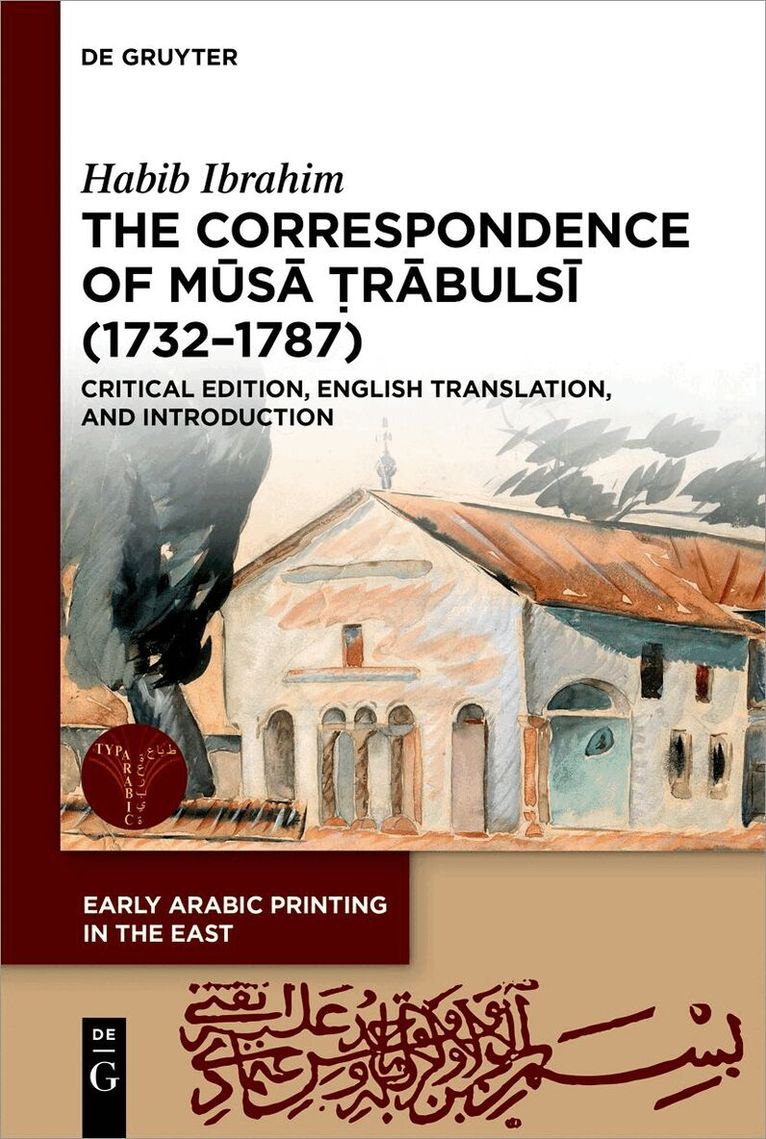
The correspondence of Mūsā Ṭrābulsī preserved in the unique MS 300 of the Orthodox Syriac Patriarchate in Homs is a collection of 71 letters (+1 repeated) received mainly by Mūsā from various correspondents during his tenure as a secretary of Patriarch Sylvester of Antioch (1724-1766) and his travels in the Patriarch's company. The letters exchanged by Yūsuf Mark and Mūsā Ṭrābulsī illustrate the help that Sylvester received in Moldavia and Wallachia and his efforts to secure the printing of Christian Arabic books there in 1745–1747, and in Beirut in 1750–1753. Other letters connect Ilyās Fakhr and Sophronios of Kilis with this circle of Syrian intellectuals who supported many of Patriarch Sylvester’s projects. The volume contains the Arabic edition of the letters, an English translation, an introduction presenting the biography of Mūsā Ṭrābulsī and key figures in the letters, a codicological study of the manuscript, and indexes. Through various sources, the editor was able to gather new bibliographical material. Thanks to these findings, we now have a deeper knowledge of the Nawfal family members, Mūsā himself, the books that interested him, and his translation activity. The present edition demonstrates that Mūsā was an exceptional figure in the history of the Antiochian patriarchate during the challenging period following the 1724 division. Although he did not attain higher ecclesiastical ranks, he was held in special esteem by the clergy of the patriarchate.