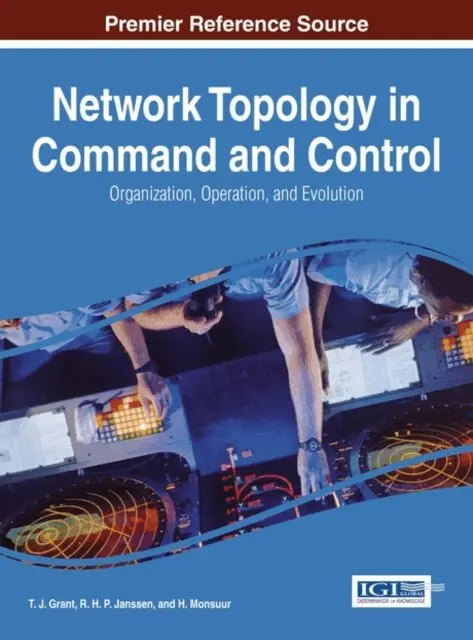
Over the past decade, the Command and Control (C2) field has been making a transformation from top-down, directive command to Network Centric Operations (NCO), peer-to-peer negation, self-synchronization, and agility. As the terms NCO and NEC suggest, C2 systems are regarded as networks, rather than a hierarchy. Accordingly, it is appropriate to view the C2 process and C2 systems through the lens of network theory. Network Topology in Command and Control: Organization, Operation, and Evolution aims to connect the fields of C2 and network science. Featuring timely research on topics pertaining to the C2 network evolution, security, and modeling, this publication is ideal for reference use by students, academicians, and security professionals in the fields of C2 and network science.
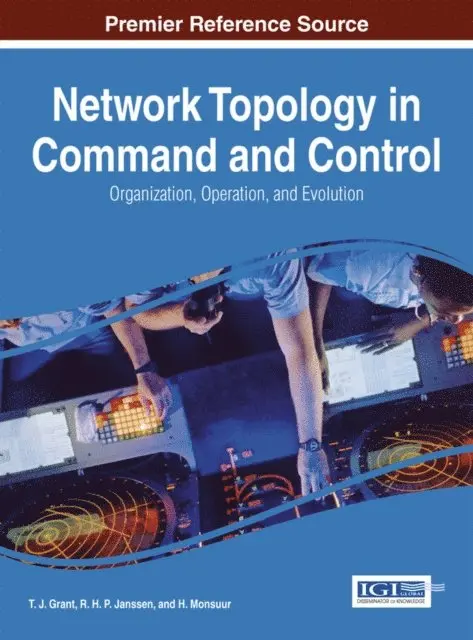
Over the past decade, the Command and Control (C2) field has been making a transformation from top-down, directive command to Network Centric Operations (NCO), peer-to-peer negation, self-synchronization, and agility. As the terms NCO and NEC suggest, C2 systems are regarded as networks, rather than a hierarchy. Accordingly, it is appropriate to view the C2 process and C2 systems through the lens of network theory. Network Topology in Command and Control: Organization, Operation, and Evolution aims to connect the fields of C2 and network science. Featuring timely research on topics pertaining to the C2 network evolution, security, and modeling, this publication is ideal for reference use by students, academicians, and security professionals in the fields of C2 and network science.
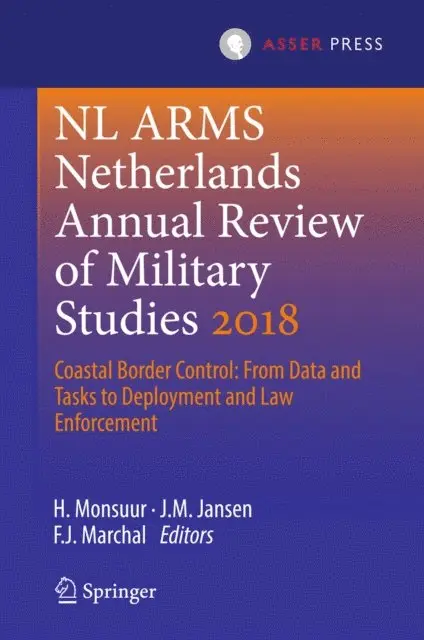
This book provides a comprehensive study of border control: from data analysis andinformation warfare, frameworks for command and control, and game-theoretic riskmanagement, up to the (optimal) deployment of law enforcement missions.Innovative about this book is that it approaches the subject from several angles, aimingto connect theory and practice of law enforcement missions with risk management and/or quantitative modelling. Some chapters focus on legal challenges and informationwarfare, while others provide quantitative modelling of military asset deployment inthe area of interest, or show the benefits of cooperative wireless sensor networks forborder control. A case study of the Dutch Border Security Team supplements the theory.The publication is ideally suited for reference use by students, academicians, researchersand professionals in the field of border control and related areas.H. Monsuur is Professor of Military Operations Research, J.M. Jansen is AssociateProfessor of Operational ICT, and F.J. Marchal is Lecturer of International/MilitaryLaw at the Faculty of Military Sciences of the Netherlands Defence Academy in DenHelder, The Netherlands.
This book provides a comprehensive study of border control: from data analysis andinformation warfare, frameworks for command and control, and game-theoretic riskmanagement, up to the (optimal) deployment of law enforcement missions.Innovative about this book is that it approaches the subject from several angles, aimingto connect theory and practice of law enforcement missions with risk management and/or quantitative modelling. Some chapters focus on legal challenges and informationwarfare, while others provide quantitative modelling of military asset deployment inthe area of interest, or show the benefits of cooperative wireless sensor networks forborder control. A case study of the Dutch Border Security Team supplements the theory.The publication is ideally suited for reference use by students, academicians, researchersand professionals in the field of border control and related areas.H. Monsuur is Professor of Military Operations Research, J.M. Jansen is AssociateProfessor of Operational ICT, and F.J. Marchal is Lecturer of International/MilitaryLaw at the Faculty of Military Sciences of the Netherlands Defence Academy in DenHelder, The Netherlands.