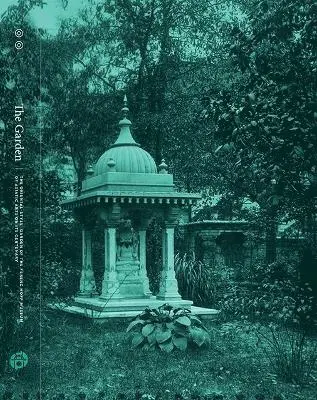
The Knorr family occupied the building for seven years, after which, for reasons unknown, they sold it to Ferenc Hopp, a well-respected businessman who had already completed his first trip around the world, and who moved there from his apartment on the Grand Boulevard as he needed more and more space for his ever-expanding collection. In his first years in his new home, he changed little on the house itself, but he transformed his garden into one of the most magical sights of Budapest. On his first tour of the globe, Hopp had visited the famous botanical gardens in Buitenzorg (now Bogor), a Dutch colonial city on West Java. The experience moved him so deeply that he decided to create similar surroundings of his own in Budapest. The Dutch name Buitenzorg can be loosely translated as 'without worries', and as his own home and garden were intended to drive away troubles, he named the villa "Buitenzorg Residence". He filled the garden with exotic plants and with curious objects he had collected on his travels, much to the amazement of the contemporary press. This volume is intended to commemorate this "worryless" garden by presenting its history, a description of the flowers, architectural features and landscaping elements it contained, and photos taken in it and of it.
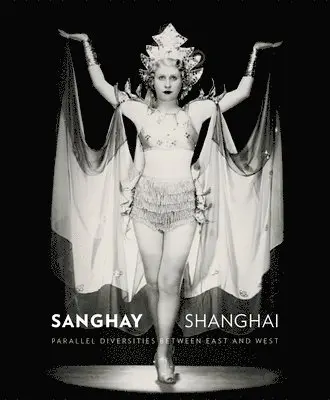
The publication related to the exhibition Shangay-Shanghai. Parallel Diversities Between East and West is intended to offer an overview of the creative activities of Hungarians who were attached to Shanghai in the first half of the twentieth century, and evoke the image of the East that was widespread in Hungary at the time. Viewed from some unconventional angles, and incorporating a plethora of associated artistic fields, the book examines a number of territories, topics and objects that have so far eluded closer inseption, and illustretes some of ways in which Far Eastern influences affected Hungary during the period in question, and how Western influences were conveyed, via Hungarian intermediaries, to the Orient, especially to Shanghai. The volume is diveded into nine units. The topic of these units beyond the historical background are travellers and traders, architects and construction, artist influences, films and movies, music, dance and theaters, fashions. The volume well illustrated with color and archive photos.