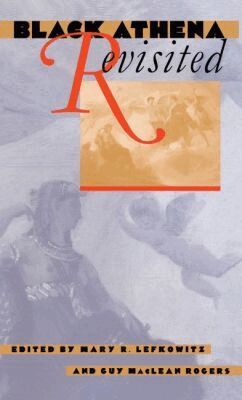
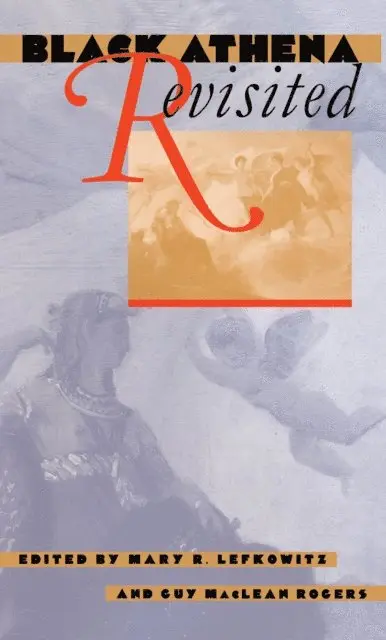
Was Western civilization founded by ancient Egyptians and Phoenicians? Can the ancient Egyptians usefully be called black? Did the ancient Greeks borrow religion, science, and philosophy from the Egyptians and Phoenicians? Have scholars ignored the Afroasiatic roots of Western civilization as a result of racism and anti-Semitism?In this collection of twenty essays, leading scholars in a broad range of disciplines confront the claims made by Martin Bernal in Black Athena: The Afroasiatic Roots of Classical Civilization. In that work, Bernal proposed a radical reinterpretation of the roots of classical civilization, contending that ancient Greek culture derived from Egypt and Phoenicia and that European scholars have been biased against the notion of Egyptian and Phoenician influence on Western civilization. The contributors to this volume argue that Bernal’s claims are exaggerated and in many cases unjustified.Topics covered include race and physical anthropology; the question of an Egyptian invasion of Greece; the origins of Greek language, philosophy, and science; and racism and anti-Semitism in classical scholarship. In the conclusion to the volume, the editors propose an entirely new scholarly framework for understanding the relationship between the cultures of the ancient Near East and Greece and the origins of Western civilization.The contributors are: John Baines, professor of Egyptology, University of Oxford Kathryn A. Bard, assistant professor of archaeology, Boston University C. Loring Brace, professor of anthropology and curator of biological anthropology in the Museum of Anthropology, University of Michigan John E. Coleman, professor of classics, Cornell University Edith Hall, lecturer in classics, University of Reading, England Jay H. Jasanoff, Jacob Gould Schurman Professor of Linguistics, Cornell University Richard Jenkyns, fellow and tutor, Lady Margaret Hall, Oxford, and university lecturer in classics, University of Oxford Mary R. Lefkowitz, Andrew W. Mellon Professor in the Humanities, Wellesley College Mario Liverani, professor of ancient near eastern history, Università di Roma, ''La Sapienza'' Sarah P. Morris, professor of classics, University of California at Los Angeles Robert E. Norton, associate professor of German, Vassar College Alan Nussbaum, associate professor of classics, Cornell University David O''Connor, professor of Egyptology and curator in charge of the Egyptian section of the University Museum, University of Pennsylvania Robert Palter, Dana Professor Emeritus of the History of Science, Trinity College, Connecticut Guy MacLean Rogers, associate professor of Greek and Latin and history, Wellesley College Frank M. Snowden, Jr., professor of classics emeritus, Howard University Lawrence A. Tritle, associate professor of history, Loyola Marymount University Emily T. Vermeule, Samuel E. Zemurray, Jr., and Doris Zemurray Stone-Radcliffe Professor Emerita, Harvard University Frank J. Yurco, Egyptologist, Field Museum of Natural History and the University of Chicago