715 kr
Skickas inom 10-15 vardagar
715 kr
Skickas inom 10-15 vardagar
2 544 kr
Skickas inom 10-15 vardagar
740 kr
Läs direkt efter köp
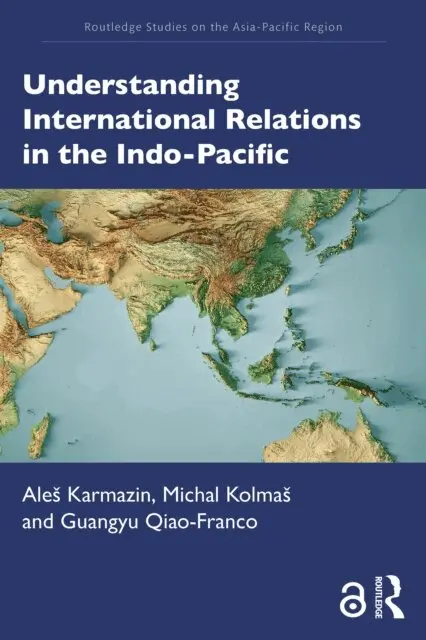
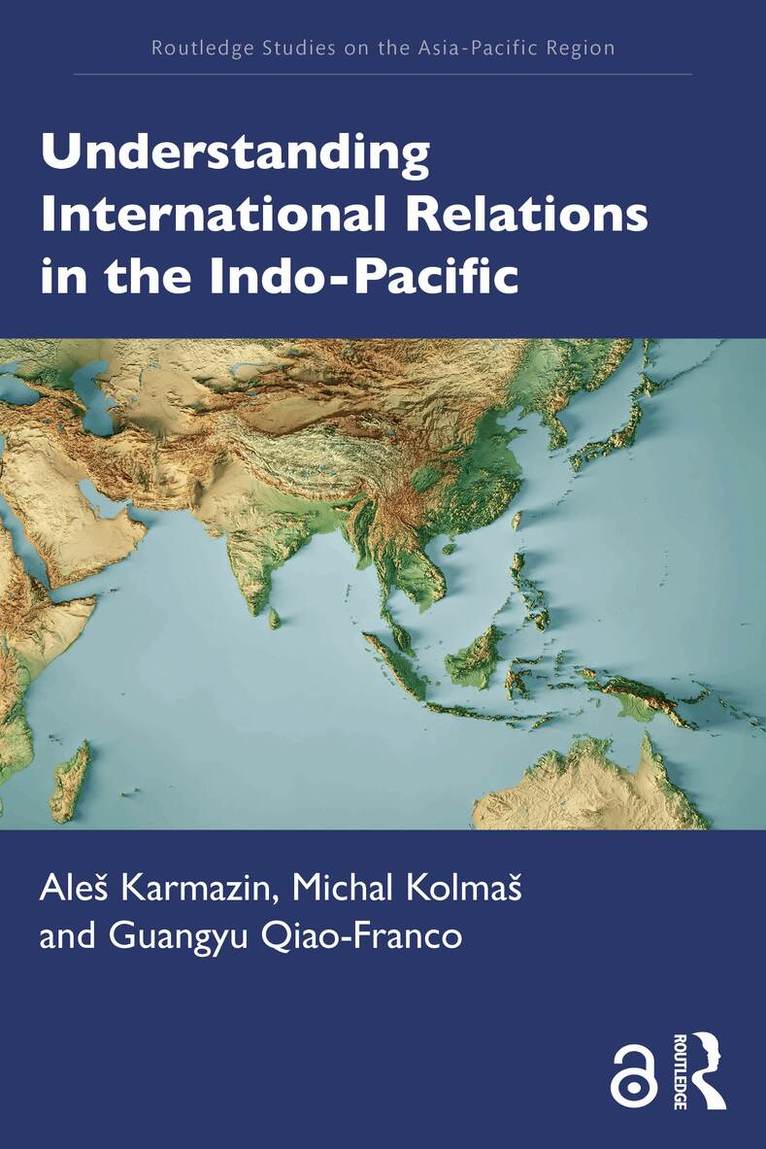
Karmazin, Kolmaš, and Qiao-Franco deconstruct the concept of the Indo-Pacific and offer a timely, comparative, and multidimensional exploration of the region’s international relations.
Addressing fundamental academic questions regarding the viability of the Indo-Pacific as a regional conception, this book examines whether the Indo-Pacific is a true regional community or a strategic invention driven by global rivalries and geopolitical interests. Drawing on a rich blend of International Relations, Security Studies, International Political Economy, Human and Political Geography, Cultural Studies, and Area Studies, the book investigates the key thematic areas that define the region’s past, present, and future. They include a historical investigation of formation, enculturation, and demarcation of the region; colonization, decolonization, and construction of the modern state; conflicts and wars in (trans)regional settings; regional economy and development; institutions and other modes of international or transnational cooperation; and cultures, societies and identities within and across the Indo-Pacific countries.
An essential read for students, scholars, and practitioners of international affairs who seek to make sense of one of the world’s most dynamic and contested regions.
Chapters 2, 3 and 5 of this book are freely available as a downloadable Open Access PDF at http://www.taylorfrancis.com under a Creative Commons Attribution-No Derivatives (CC-BY-ND) 4.0 license.
740 kr
Läs direkt efter köp
Karmazin, Kolmaš, and Qiao-Franco deconstruct the concept of the Indo-Pacific and offer a timely, comparative, and multidimensional exploration of the region’s international relations.
Addressing fundamental academic questions regarding the viability of the Indo-Pacific as a regional conception, this book examines whether the Indo-Pacific is a true regional community or a strategic invention driven by global rivalries and geopolitical interests. Drawing on a rich blend of International Relations, Security Studies, International Political Economy, Human and Political Geography, Cultural Studies, and Area Studies, the book investigates the key thematic areas that define the region’s past, present, and future. They include a historical investigation of formation, enculturation, and demarcation of the region; colonization, decolonization, and construction of the modern state; conflicts and wars in (trans)regional settings; regional economy and development; institutions and other modes of international or transnational cooperation; and cultures, societies and identities within and across the Indo-Pacific countries.
An essential read for students, scholars, and practitioners of international affairs who seek to make sense of one of the world’s most dynamic and contested regions.
Chapters 2, 3 and 5 of this book are freely available as a downloadable Open Access PDF at http://www.taylorfrancis.com under a Creative Commons Attribution-No Derivatives (CC-BY-ND) 4.0 license.
1 542 kr
Skickas inom 7-10 vardagar
459 kr
Läs direkt efter köp
Guangyu Qiao-Franco advances a conceptual framework designed to explore the coordination between the UN and ASEAN, based on theories of policy transfer, norm diffusion, regime complex, and institutional interaction. By examining an extensive case study that traces developments in Southeast Asian regional governance since the early 1980s, this book contains rich information on the UN and ASEAN’s TIP policies, lobbying and involvement of various actors, and the specific historical contexts of regional policy debates. Featuring analysis based on empirical data collected through 79 interviews with key participants in the TIP policy process across Southeast Asia, the book reveals the black box of ASEAN policymaking that has led to positive changes in human trafficking governance.
This dynamic book will interest students and scholars of international relations, law, criminology, and migration studies. Its consideration of how disparate regional states might collaborate on human trafficking issues will further benefit practitioners and professionals working in governments of ASEAN member states, international organisations, and NGOs.