E-bok
PDF, Engelska, 2016410 kr
Läs direkt efter köp
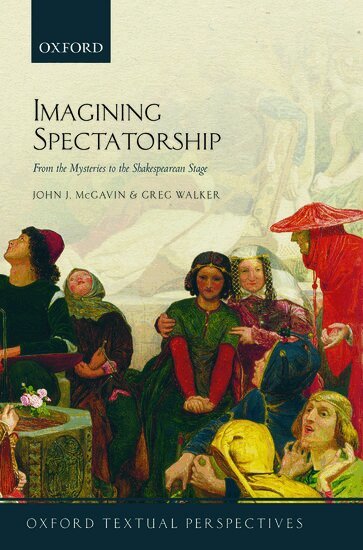
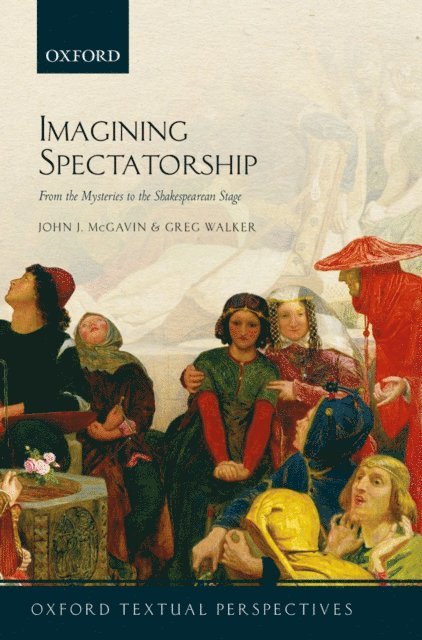
Oxford Textual Perspectives is a new series of informative and provocative studies focused upon literary texts (conceived of in the broadest sense of that term) and the technologies, cultures and communities that produce, inform, and receive them. It provides fresh interpretations of fundamental works and of the vital and challenging issues emerging in English literary studies. By engaging with the materiality of the literary text, its production, and reception history, and frequently testing and exploring the boundaries of the notion of text itself, the volumes in the series question familiar frameworks and provide innovative interpretations of both canonical and less well-known works.Imagining Spectatorship offers a new discussion of how spectators witnessed early drama in the various spaces and places in which those works were performed. It combines broad historical and theoretical reflection with closely analysed case studies to produce a comprehensive account of the ways in which individuals encountered early drama, how they were cued to respond to it, and how we might think about those issues today.It addresses the practical matters that conditioned spectatorship, principally those concerned with the location and configuration of the spaces in which a performance occurred, but also suggests how these factors intersected with social status, gender, religious commitment and affiliation, degrees of real or felt personal agency, and the operation of the cognitive processes themselves. It considers both real witnesses and those ''imagined'' spectators which are seemingly figured by both dramatic and quasi-dramatic works, and whose assumed attitudes play-makers sought to second-guess. It also looks at the spectatorial experience itself as a subject of representation in a number of early texts. Finally, it examines the complex contract entered into by audiences and players for the duration of a performance, looking at how texts cued spectators to respond to specific dramaturgical tropes and gambits and how audience response was itself a cause of potential anxiety for writers.The book resists the conventional divide between ''medieval'' and ''early-modern'' drama, using its focus on the spectators'' experience to point connections and continuities across a diverse range of genres, such as processions and tourneys as well as scripted plays, pageants, and interludes; a variety of different venues, such as city streets, great halls, and playhouses, and a period of about 150 years to the Shakespearean stage of the 1590s and 1600s. It seeks to offer routes by which inferences about early spectatorship can be made despite the relative absence of personal testimony from the period.