
Häftad, Engelska, 2017
214 kr
Skickas inom 7-10 vardagar
214 kr
Skickas inom 7-10 vardagar
247 kr
Skickas inom 7-10 vardagar
75 kr
Läs direkt efter köp
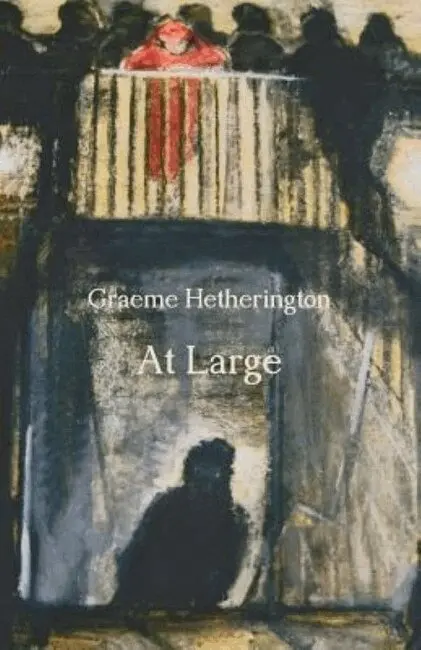
A former lecturer in Greek, Roman and Ancient Near Eastern history and literature at the University of Tasmania, Graeme Hetherington has spent much of his adult life living at large in Europe and Turkey to be closer to the source of his subject matter. More often than not, his response to his culturally charged surroundings has taken the form of poems rather than scholarly books and articles, as this collection, his sixth, bears out.
75 kr
Läs direkt efter köp
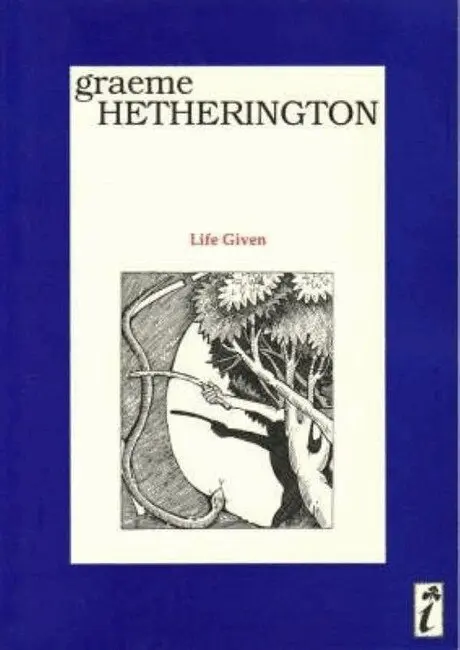
The craft in this, Graeme Hetherington’s third collection of poems, is like that of the tapestry maker. In short lyrics of sinewy tetrameter and assonantal music, the poet’s dark and bright strands of narrative, of thematic concern, are interwoven in a technique that allows the shape of an individual life to disclose itself from the commingling and recurrence of vivid personal and historical recollections. In the individual lyrics there are scenes of chill home life and school barbarities. These are haunting and intimate in their disclosures. In the cumulative effect of the poems a pattern emerges, similar to those that the Icelandic tapestry makers abstracted from their own harsh saga and mythic sources. For Graeme Hetherington takes hinterland Tasmania, with its hellish past of floggings, cannibalism, killings, and weaves into this the pattern of his own experience, his exposure to cruelty, his friendship with James McAuley, his exile in foreign lands, his intimations into Christianity and Christian art. These are lyrics of remarkable self-scrutiny, an older poet’s fierce struggle to find pattern in the life given.
190 kr
Skickas inom 7-10 vardagar
56 kr
Läs direkt efter köp
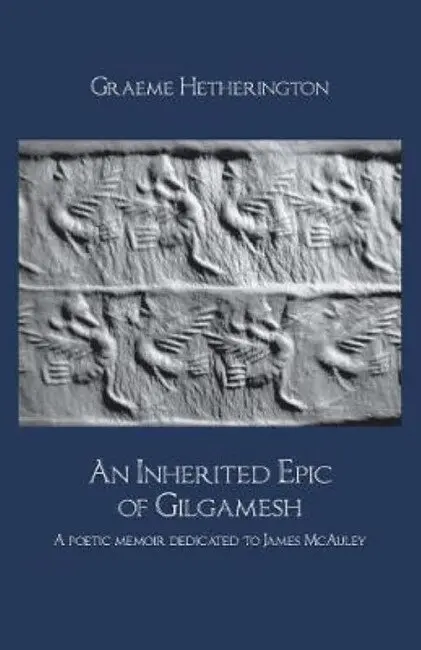
In this, his seventh book of poetry, written over a period of more than forty years, Graeme Hetherington explores how his friendship with James McAuley has parallels with that of Gilgamesh and Enkidu in the ancient Mesopotamian epic. As in the original, it is a warts and all treatment, with human behaviour in relationship to loss and the inevitability of death being the concerns that bind it together.

247 kr
Skickas inom 7-10 vardagar
75 kr
Läs direkt efter köp
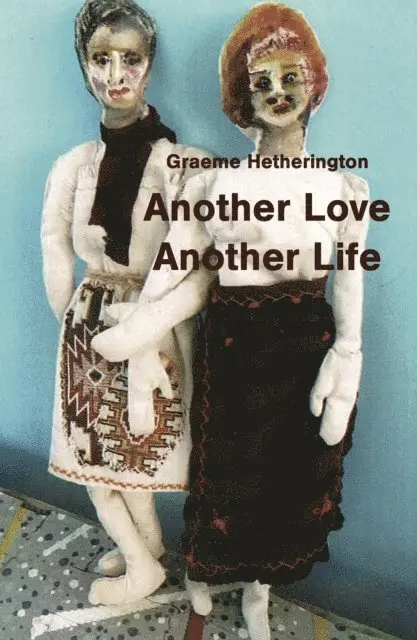
''Graeme Hetherington''s poems of loves and lives past are works of darkness describing human connections that lead ultimately to loss and loneliness. The emotional impact of the poet''s mindscape and his relationships with others is enhanced by beautifully drawn images from the natural world and references to classical myths. These features, together with skilful versification, make this collection a poetic tour de force.'' - Ralph Spaulding

Poems by Vivian Smith, Sid Harrex, Margaret Scott, Graeme Hetherington
427 kr
Skickas inom 7-10 vardagar
272 kr
Skickas inom 7-10 vardagar
149 kr
Läs direkt efter köp
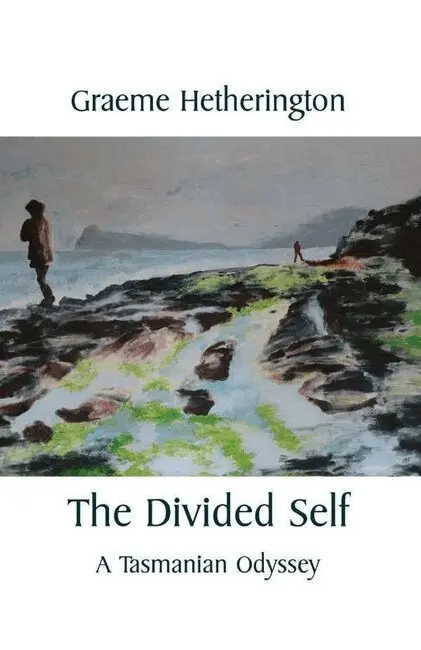
''Graeme Hetherington''s ninth collection of poems portrays the poet''s troubled journey to escape an ''afflicted self'' shadowed with loneliness and paranoia. During the journey, the poet feels ''twisted and deformed'' as he confronts a personal sense of psychological dislocation - a divided personality and confused sexual identity. Such feelings are the poet''s ''demons of despair'' that prompt in him a sense of complete dispossession, emptiness and rejection of humankind. No matter how long the journey and how far from the past the poet travels, he is trapped and haunted by these demons whose power colours the diction and imagery of his poetry. Tautly crafted short stanzas with references and images connoting blackness, punishment and curse, such as Mount Black''s shadows on Tasmania''s West Coast, the cat-o''-nine-tails, Coleridge''s albatross and the scourge of Christ''s crucifixion, convey the depth of the poet''s despair. Despite the poet''s desire to escape the ''darkness of the past'', the reader senses that the power of his personal psychological drama will challenge his search for transcendence. The poet will certainly continue to seek poems that ''soar beyond'' the theatre of the self, but they will provide perhaps only temporary respite as he continues to experience personal uncertainties and pain.'' - Ralph Spaulding
214 kr
Skickas inom 7-10 vardagar
113 kr
Läs direkt efter köp
''The majority of poems in The Persistence of History describe Graeme Hetherington''s engagement with David Keeling''s paintings. As a form of ekphrasis, Hetherington''s responses to Keeling''s art are rarely detailed descriptions of the paintings themselves, but rather personal responses to the works evoking memories of his own life''s circumstances and reflections on the human condition. The subjects of Keeling''s "Young Couple in Developing Landscape 1988", "Frontier Foundation 1994" and "To The Island 1989" stimulate memories of the poet''s unhappy first marriage by focusing on particular features of the paintings that sharpen the tragedy of that relationship - the movement of the "Glover-eucalypts" that "asphyxiate", the "convict-dug pit" representing the fall into the "hell of splitting up" compounded by the symbolic image of the pitchfork. Similarly, in poems responding to Keeling''s "Veil 1991-92", "Gate 1994", "Curios 1999" and "Everything Must Go 2003", Hetherington remembers his mother living in her "insane interior" veiled by drawn blinds and curtains, his "granny" who only lifted the veil of her black hat to terrify the young poet, and the gate at his home''s entrance on which he would perch to greet his grandfather after work and which protected him from "Bully-boys living opposite". But more striking is the poet''s "reading" in Keeling''s paintings of an "ecologically debased / And troubled earth" facing "irreversible defeat" as "the ultimate corpse". The strength of Hetherington''s response to this theme is conveyed by brutal imagery depicting the world as a concentration-like gaol in which we "dance with death" in a devastated landscape which has become a "massive mastectomy" of "dry mounds / Arranged in pairs like shorn-off breasts". Hetherington accuses humankind of "fouling" the earth. His depictions of the desecration of the symbols and rituals of the Christian Mass, and his questioning of the nature of Christ''s Second Coming in response to Keeling''s "Shroud 1994", "The Cunning Fox 1998", "Other Edens 1998" and "Plenty 1994", reinforce the poet''s feelings of misanthropy. The poet''s ultimate despair for the future of humankind is portrayed in his engagement with Keeling''s "The Persistence of History 1994". Using the timeless images of art and the theatre, the poet suggests that conflict, dispossession and murder have always been a part of the human condition, as have people''s indifference to such states of being. Confronted by this "theatre of the absurd", the poet finds some reprieve and even redemption in Keeling''s two paintings of "The Road 2002" where light appears to create "cooling transparent pools" and ultimately becomes a healing "blaze". - Ralph Spaulding
231 kr
Skickas inom 7-10 vardagar