544 kr
Skickas inom 10-15 vardagar
544 kr
Skickas inom 10-15 vardagar
1 558 kr
Skickas inom 10-15 vardagar
262 kr
Skickas inom 7-10 vardagar
588 kr
Läs direkt efter köp
"Gil Crosby has accomplished what most of us in the world of applied behavioral science, in general, and OD and T-Group training, in particular, have not—making the theoretical father of our work accessible. Thus, this book is a gift and with it we can understand more deeply and teach others more accurately what Lewin actually stated and meant. Moreover, the book is reader-friendly, visually appealing, and humorous rather than academically boring. Thank you, Gil!"
Dr. W. Warner Burke
E.L. Thorndike Professor of Psychology and Education
Teachers College, Columbia University
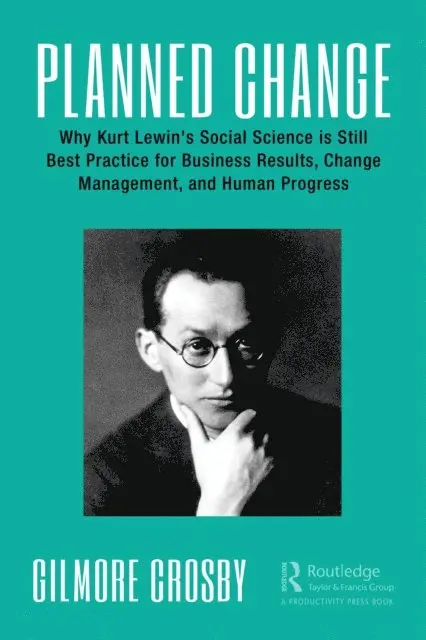
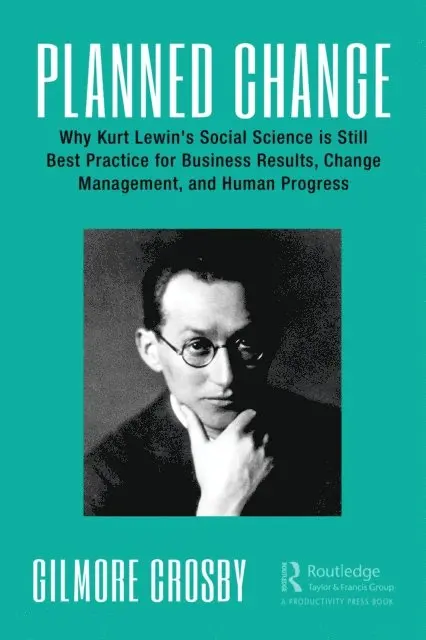
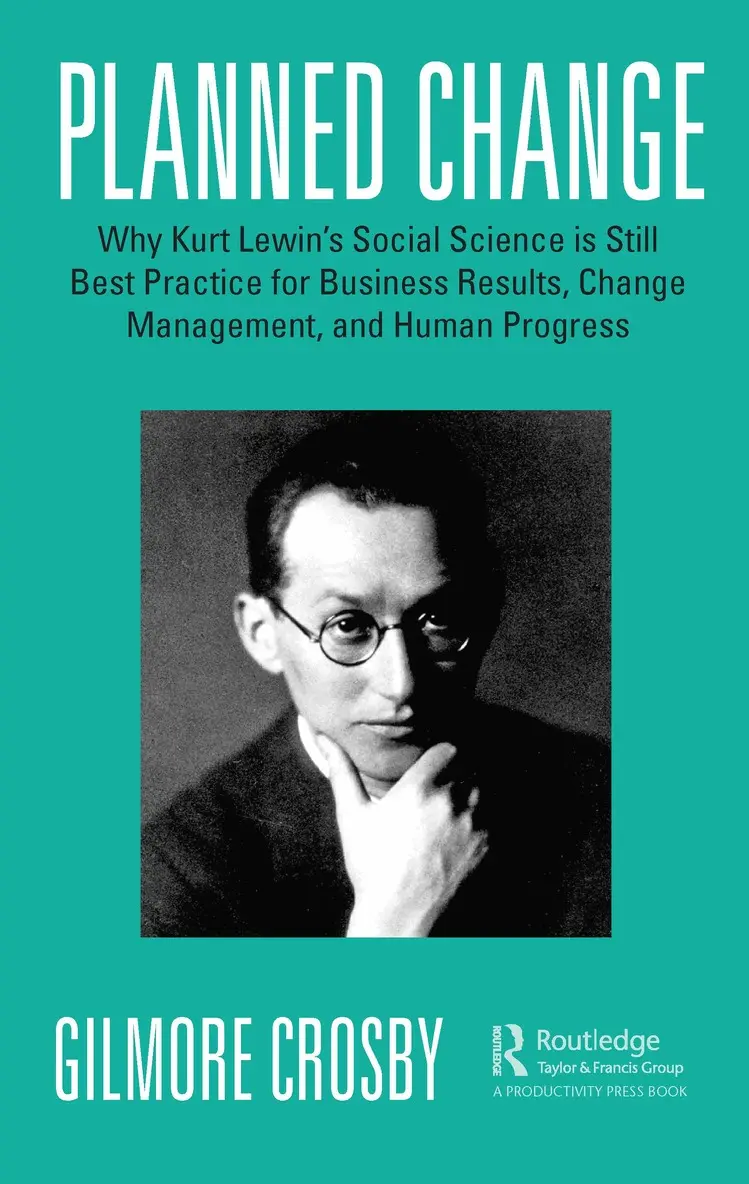
Kurt Lewin (1890-1947) was a visionary psychologist and social scientist who used rigorous research methods to establish an approach to planned change that is both practical and reliable. He mentored and inspired most of the early professionals who came to identify themselves as practitioners of organization development (OD). He also fostered the emergence of the experiential learning method known as the T-group, which uniquely structures group dynamics into a laboratory for dramatic individual and team development. In the early days, most OD professionals learned much about themselves and about group dynamics through T-group experiences.
Lewin’s methods, though little known, yield consistent business results such as increased performance and improved morale. His approaches have the rare impact of not just changing behavior, but changing the beliefs that underlie behavior. Sadly, most OD professionals today— business and organizational leaders, community organizers, and people, in general—have never read any of Lewin’s actual writing beyond a quote or two. Indeed, some in the OD profession have rejected or distanced themselves from what they think Lewin taught, even though they and many others seem to know very little about his methods or history. Because Lewin was a prolific writer, one of the author’s main goals is to organize his immense body of published work so that readers can easily explore the source material and form their own opinions.
Essentially, this book is aimed at introducing Lewin in a new way, both simplified yet substantial enough to guide anyone who is trying to plan change, whether at the individual, group/team, organizational, or societal levels. Lewin was not trying to create methods for OD professionals alone (or for social scientists as he regarded himself). In his interventions, he taught those how to do their own version of planned change. He believed social science might be the light that helps create a brighter future for humanity. This text transfers this knowledge to a broad audience so that each reader can more successfully implement organizational and social change.
584 kr
Läs direkt efter köp
"Gil Crosby has accomplished what most of us in the world of applied behavioral science, in general, and OD and T-Group training, in particular, have not—making the theoretical father of our work accessible. Thus, this book is a gift and with it we can understand more deeply and teach others more accurately what Lewin actually stated and meant. Moreover, the book is reader-friendly, visually appealing, and humorous rather than academically boring. Thank you, Gil!"
Dr. W. Warner Burke
E.L. Thorndike Professor of Psychology and Education
Teachers College, Columbia University
Kurt Lewin (1890-1947) was a visionary psychologist and social scientist who used rigorous research methods to establish an approach to planned change that is both practical and reliable. He mentored and inspired most of the early professionals who came to identify themselves as practitioners of organization development (OD). He also fostered the emergence of the experiential learning method known as the T-group, which uniquely structures group dynamics into a laboratory for dramatic individual and team development. In the early days, most OD professionals learned much about themselves and about group dynamics through T-group experiences.
Lewin’s methods, though little known, yield consistent business results such as increased performance and improved morale. His approaches have the rare impact of not just changing behavior, but changing the beliefs that underlie behavior. Sadly, most OD professionals today— business and organizational leaders, community organizers, and people, in general—have never read any of Lewin’s actual writing beyond a quote or two. Indeed, some in the OD profession have rejected or distanced themselves from what they think Lewin taught, even though they and many others seem to know very little about his methods or history. Because Lewin was a prolific writer, one of the author’s main goals is to organize his immense body of published work so that readers can easily explore the source material and form their own opinions.
Essentially, this book is aimed at introducing Lewin in a new way, both simplified yet substantial enough to guide anyone who is trying to plan change, whether at the individual, group/team, organizational, or societal levels. Lewin was not trying to create methods for OD professionals alone (or for social scientists as he regarded himself). In his interventions, he taught those how to do their own version of planned change. He believed social science might be the light that helps create a brighter future for humanity. This text transfers this knowledge to a broad audience so that each reader can more successfully implement organizational and social change.
537 kr
Läs direkt efter köp
This book weaves together spirituality and a systemic version of emotional intelligence that incorporates Kurt Lewin’s social science and other sources. Emotional intelligence calls on us to be fully present “to the moment.” It calls on us to be appreciative of ourselves and our relationships. Likewise, a calm and compassionate presence is almost universally recognized as a spiritual way of being. In other words, the overwhelming majority of the world’s spiritual sources call on us to be emotionally intelligent and that link is explored with unique clarity in this simple yet powerful text.
We are all reactive at times. Becoming more objective and less attached allows us to feel our feelings without being a prisoner to acting on them in habitual ways. From a more detached perspective, feelings are neither good nor bad, but simply clues as to how we are perceiving our environment, especially our social environment. This is especially important in terms of our relationships at work. Our perceptions about what people intend trigger our emotional reactions. Think about the difference when you perceive critical feedback as a sincere attempt to help or when you perceive it as an attack of some sort. Perception evokes different emotional responses. Objectivity about our own perception is even more important than objectivity about emotion, because the former usually precedes the later.
Paradoxically, being detached allows one to appreciate and experience one’s emotions more fully. Recognizing emotion as part of your inner guidance system instead of as something dangerous that must be controlled or denied is freeing. The less emotion runs you, the more you can accept feeling what you feel. Emotion is a form of physical energy. Fighting your own feelings takes energy. Allowing the ebb and flow of emotion is essential to physical and emotional health and to accepting ourselves as we are.
525 kr
Läs direkt efter köp
This book weaves together spirituality and a systemic version of emotional intelligence that incorporates Kurt Lewin’s social science and other sources. Emotional intelligence calls on us to be fully present “to the moment.” It calls on us to be appreciative of ourselves and our relationships. Likewise, a calm and compassionate presence is almost universally recognized as a spiritual way of being. In other words, the overwhelming majority of the world’s spiritual sources call on us to be emotionally intelligent and that link is explored with unique clarity in this simple yet powerful text.
We are all reactive at times. Becoming more objective and less attached allows us to feel our feelings without being a prisoner to acting on them in habitual ways. From a more detached perspective, feelings are neither good nor bad, but simply clues as to how we are perceiving our environment, especially our social environment. This is especially important in terms of our relationships at work. Our perceptions about what people intend trigger our emotional reactions. Think about the difference when you perceive critical feedback as a sincere attempt to help or when you perceive it as an attack of some sort. Perception evokes different emotional responses. Objectivity about our own perception is even more important than objectivity about emotion, because the former usually precedes the later.
Paradoxically, being detached allows one to appreciate and experience one’s emotions more fully. Recognizing emotion as part of your inner guidance system instead of as something dangerous that must be controlled or denied is freeing. The less emotion runs you, the more you can accept feeling what you feel. Emotion is a form of physical energy. Fighting your own feelings takes energy. Allowing the ebb and flow of emotion is essential to physical and emotional health and to accepting ourselves as we are.
468 kr
Läs direkt efter köp
Social Scientist Kurt Lewin said, "No research without action, and no action without research." Too much of the current DEI (diversity, equity, and inclusion) approach is insight-based instead of action-based. Even though institutional racism is identified as the root problem, the change effort is focused on looking inward for bias instead of taking action to eliminate institutional racism and other isms. A Lewinian approach, in contrast, is balanced. What people think is important, but no more important than what people do. If you bring people together to change things, this will change what people think! We don’t need therapy nearly as much as we need action based on dialogue! Instead of spending your energy soul-searching for evidence in your thoughts and behaviors that you have unconscious biases, this book helps put your energy into doing something practical about racism.
To get there, this book uses Lewin’s social science to build a framework for sorting through the many approaches to and positions held on race, racism, diversity, and related topics. While the framework is and must be applicable to any prejudice, systemic or individual, the bulk of this exploration is focused on racism, which to a large degree has become the primary social justice focus of our times. Painfully aware that conversations about race can easily deteriorate into polarization, the author lays a path toward finding common ground.
471 kr
Läs direkt efter köp
Social Scientist Kurt Lewin said, "No research without action, and no action without research." Too much of the current DEI (diversity, equity, and inclusion) approach is insight-based instead of action-based. Even though institutional racism is identified as the root problem, the change effort is focused on looking inward for bias instead of taking action to eliminate institutional racism and other isms. A Lewinian approach, in contrast, is balanced. What people think is important, but no more important than what people do. If you bring people together to change things, this will change what people think! We don’t need therapy nearly as much as we need action based on dialogue! Instead of spending your energy soul-searching for evidence in your thoughts and behaviors that you have unconscious biases, this book helps put your energy into doing something practical about racism.
To get there, this book uses Lewin’s social science to build a framework for sorting through the many approaches to and positions held on race, racism, diversity, and related topics. While the framework is and must be applicable to any prejudice, systemic or individual, the bulk of this exploration is focused on racism, which to a large degree has become the primary social justice focus of our times. Painfully aware that conversations about race can easily deteriorate into polarization, the author lays a path toward finding common ground.
473 kr
Skickas inom 10-15 vardagar
2 210 kr
Skickas inom 10-15 vardagar
488 kr
Skickas inom 10-15 vardagar
1 569 kr
Skickas inom 10-15 vardagar
488 kr
Skickas inom 10-15 vardagar
642 kr
Läs direkt efter köp
This book is for anyone who wants to lead change. It explains change methods through real-life experiences of frontline workers. Just as history has primarily been written by the victors, leadership and management theory have been written from the top. An exception is Kurt Lewin, whose action-research established that people on the frontlines are best positioned to create and sustain change. This book’s authors have practiced that approach over two generations for the past 70 years. They were deeply influenced by the blue-collar wisdom of the author’s grandfather, an hourly worker in the railyards of Pittsburgh.
Leadership and the Frontline Workforce teaches via interviews of those who were present both before and after Lewin‑style change, telling the stories of the workers who have experienced the good, bad, and the ugly of being targets of change at the bottom of systems.
A colleague of the author, Cotton Mears (1956–2019), intended to write this book but only got as far as a title, “View from a target.†He was a pot room tender in Alcoa’s Warrick aluminum smelter—one of the toughest jobs in the plant—when Robert P. Crosby arrived on the scene. Their relationship launched Cotton’s own organization development career. Following Cotton’s untimely death in 2019, Robert’s son, Gilmore Crosby, felt inspired to bring this book to life.
611 kr
Skickas inom 10-15 vardagar
2 602 kr
Skickas inom 10-15 vardagar
229 kr
Skickas inom 7-10 vardagar
150 kr
Läs direkt efter köp
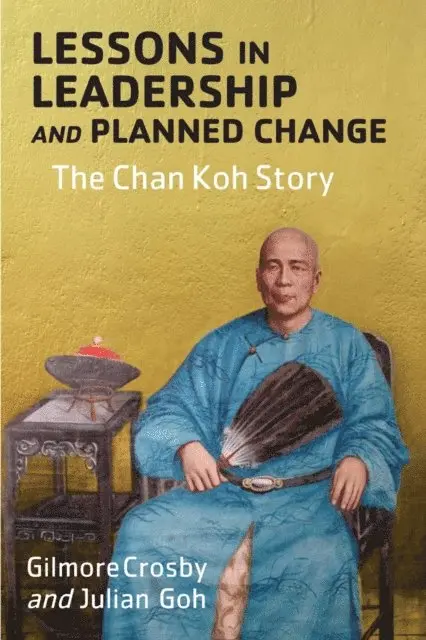
Kurt Lewin's methods of planned change and Edwin Friedman's self-differentiated leadership are blended together and illuminated through the true story of legendary Malaysian businessman Chan Koh. Crafted as a workbook with quizzes and self-assessment worksheets, this is a concise and entertaining organization development masterpiece. The author's also draw from their own decades of experience to further illustrate their approach to Lewian OD. Gilmore Crosby is a foremost expert on Lewin and brings fresh clarity to Lewin's practical and reliable concepts such as field theory and group decision. His companion work, Planned Change: Why Kurt Lewin's Social Science is What the World Needs Now for Leadership, Business Performance, Change Management & Social Change, is a deep dive into and a new organization of Lewin's original writing. It is due out in 2020 from Taylor & Francis and has been endorsed by many of the leaders of the OD profession. The Chan Koh story benefits from the same research and combines Friedman and Lewin in a simple yet powerful way. The cross-cultural element is the icing on the cake of this OD gem.
792 kr
Skickas inom 10-15 vardagar
571 kr
Läs direkt efter köp
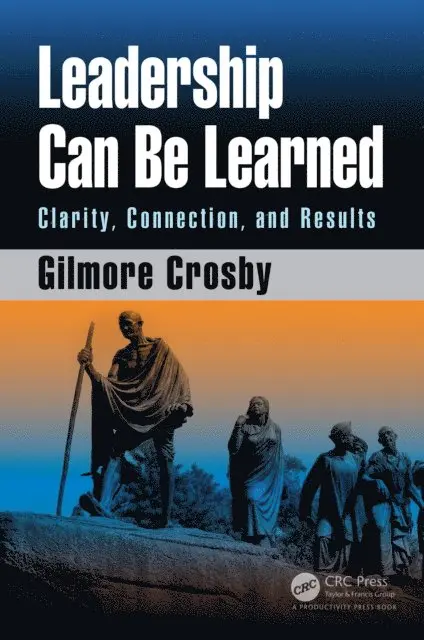
Leadership is poorly understood because human systems are poorly understood. Like the "flat earth" theory of old, modern work culture is limited by a paradigm in which problems are understood as "clashes of personality,"'' and blame is directed at the superficial level of individuals, groups, and structure.
Leadership Can Be Learned: Clarity, Connection, and Results charts the course to a new paradigm of leadership and systems and how to leverage the relationship between the two. Leadership can be learned because it is a combination of art and science. Ultimately, high- performance culture and high-performance leadership mirror each other, and leaders must use their own unique strengths to foster both.
Gilmore Crosby guides the reader by breaking the topic into four powerful sections. The first focuses on the transformational leadership model of Dr. Edwin Freidman, the second describes the systems theory from which that leadership model emerged, the third offers a unique exploration of emotional intelligence and critical interpersonal skills related to leadership, and the fourth and final section applies all the previous sections to attaining organizational results. This book:
Delivers a clear how-to guide for leading organizations to higher performance
Helps each reader understand, respect, and rise above their own authority issues
Conveys a proven approach to life-long self-development so readers can continue to mature in a more objective, non-defensive, and intentional manner. In addition, it provides the skills and framework for applying this approach to effectively coaching and developing others
Describes how leaders can be more effective in their interpersonal, group, and large-system interactions
Teaches the approach through an engaging mix of historical examples, lessons learned through the author’s experience, quizzes, and metaphors.
Provides a solid foundation for leadership development programs
With this book, readers will gain a new understanding of themselves and of human systems and learn how, in the words of Gandhi, to "be the change they wish to see in the world" so they and their colleagues can attain and sustain world-class results.