353 kr
Skickas inom 7-10 vardagar
353 kr
Skickas inom 7-10 vardagar
666 kr
Skickas inom 7-10 vardagar
653 kr
Skickas inom 5-8 vardagar
599 kr
Skickas inom 7-10 vardagar
A Study of the Phonology of Lumasaaba
586 kr
Skickas inom 7-10 vardagar
641 kr
Skickas inom 3-6 vardagar
720 kr
Skickas inom 7-10 vardagar
987 kr
Skickas inom 10-15 vardagar
1 066 kr
Skickas inom 10-15 vardagar
717 kr
Läs direkt efter köp
717 kr
Läs direkt efter köp
1 045 kr
Läs direkt efter köp
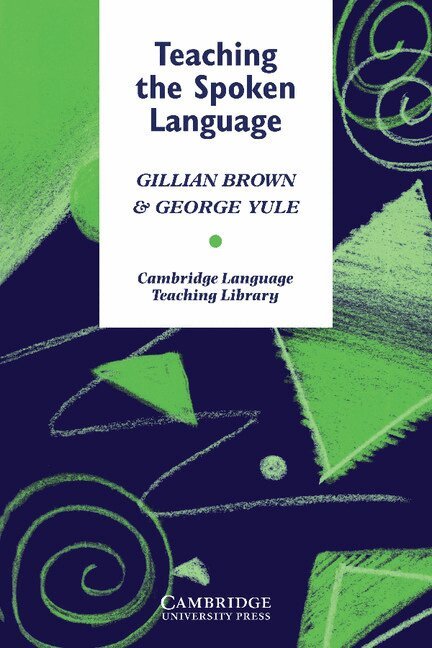
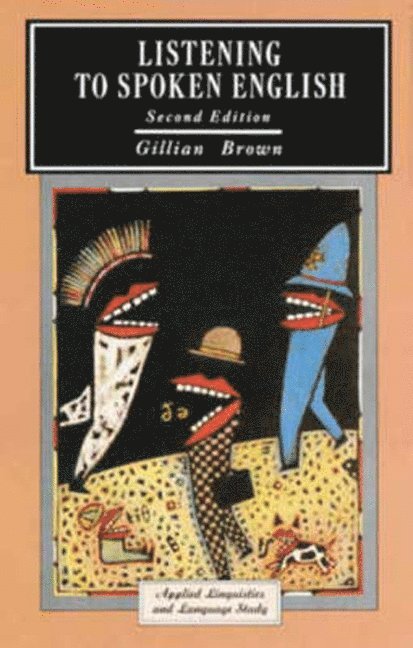
For those who are familiar with the first edition, it will be convenient to have some indication of where the main changes lie. Chapter one has been largely rewritten to give an outline of current approaches to a model of comprehension of spoken language. Chapter two has a new initial section but otherwise remains as it was. Chapter three incorporates a new section on "pause" and how this interacts with rhythm, and rather more on the function of stress. Chapter four has an extended initial section but otherwise remains largely as it was. Chapter five on intonation contains several sections which have been rewritten to varying extents. Chapter six of the first edition has disappeared: in 1977, very little work had been published on "fillers" and it seemed worthwhile incorporating a chapter that sat rather oddly with the phonetic/phonological interests of the rest of the book. Not that there is a great industry of descriptions of the forms and functions of these and similar phenomena there seems no reason to retain this early but admittedly primitive account. The chapter on "paralinguistic vocal features", now chapter six, has some rewriting in the early part but considerable rewriting in the last sections. The final chapter on "teaching listening comprehension" has grown greatly in length. It still incorporates some material from the original chapter but most of it is completely rewritten.
1 030 kr
Läs direkt efter köp
For those who are familiar with the first edition, it will be convenient to have some indication of where the main changes lie. Chapter one has been largely rewritten to give an outline of current approaches to a model of comprehension of spoken language. Chapter two has a new initial section but otherwise remains as it was. Chapter three incorporates a new section on "pause" and how this interacts with rhythm, and rather more on the function of stress. Chapter four has an extended initial section but otherwise remains largely as it was. Chapter five on intonation contains several sections which have been rewritten to varying extents. Chapter six of the first edition has disappeared: in 1977, very little work had been published on "fillers" and it seemed worthwhile incorporating a chapter that sat rather oddly with the phonetic/phonological interests of the rest of the book. Not that there is a great industry of descriptions of the forms and functions of these and similar phenomena there seems no reason to retain this early but admittedly primitive account. The chapter on "paralinguistic vocal features", now chapter six, has some rewriting in the early part but considerable rewriting in the last sections. The final chapter on "teaching listening comprehension" has grown greatly in length. It still incorporates some material from the original chapter but most of it is completely rewritten.
2 564 kr
Skickas inom 10-15 vardagar
1 553 kr
Skickas inom 10-15 vardagar
512 kr
Skickas inom 10-15 vardagar
607 kr
Läs direkt efter köp
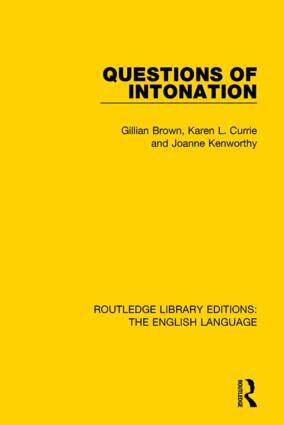
First published in 1980, this book questions many of the assumptions that have accumulated around the subject of intonation as it occurs in spontaneous speech, as well as texts read aloud. The book suggests alternative ways of examining the subject and primarily uses data derived from Edinburgh speech, which is explicitly compared with descriptions of standard southern English.
The book critically examines many conventional assumptions made about the formal features of intonation, particularly ‘tonic’ or primary stress’, and about the functions of intonation, specifically rising intonation. A model of intonation is presented which demonstrates that the limited resources of intonation are exploited by several different expressive systems. This approach is justified in detailed analysis of extensive stretches of speech, supported by instrumental analysis as well as by experiments which elicit judgements by both naïve and phonetically trained judges.
This book will be of interest to students of linguistics, English Language, speech therapy, and English as a Foreign Language, as well as historians interested in the history of language.
57 kr
Läs direkt efter köp
34 kr
Läs direkt efter köp
55 kr
Läs direkt efter köp
203 kr
Skickas inom 7-10 vardagar