Sulfur Editions proudly presents The Last Summer of Mr. Dipodoidea by Ghadah Kamal, a captivating and profoundly moving exploration of The inner world of man in an absurd realistic context in a world grappling with societal pressures, loss, and the search for meaning. This collection of interconnected stories delves into the lives of individuals navigating a dystopian landscape where dreams are suppressed, individuality is stifled, and the very essence of humanity is under threat. Through rich, evocative prose and surrealist imagery, Kamal paints a vivid portrait of a society teetering on the brink of collapse while celebrating the resilience of the human Unconscious.The Last Summer of Mr. Dipodoidea is a multifaceted and thought-provoking collection of stories that will resonate with readers from diverse cultural backgrounds. Kamal's masterful storytelling and exploration of universal themes make this book a timely and important contribution to contemporary literature. It is a must-read for anyone interested in exploring the complexities of human experience in a world grappling with change, loss, and the enduring power of the human subconscious. "e;The Last Summer of Mr. Dipodoidea"e; by Ghadah Kamal masterfully blends magical realism and surrealism, creating a captivating world where the boundaries of reality are blurred and the mundane is infused with the extraordinary. Magical realism is characterized by the introduction of fantastical elements into otherwise realistic settings, often presented matter-of-factly. Surrealism, on the other hand, seeks to liberate the subconscious mind, creating dreamlike and illogical scenarios that challenge conventional notions of reality. Kamal weaves these two elements together, creating a tapestry where the magical and the surrealist coexist and enhance one another.
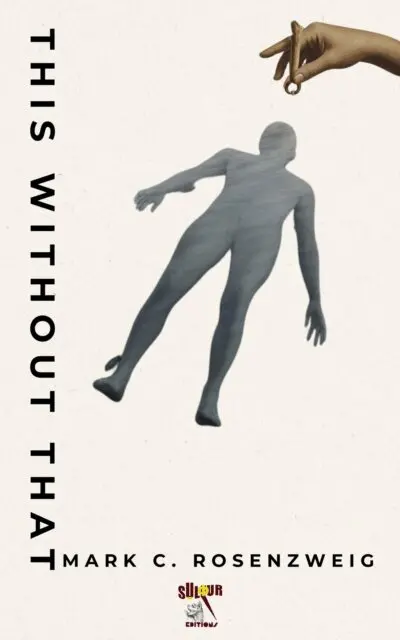
Mark C. Rosenzweig's This Without That is a collection born from the surrealist tradition but operating in a new key. Published by Sulfur Editions, a press rooted in the global, living surrealist milieu, these poems are an act of imaginative refusal. They resist the linear, the literal, and the legible, instead mapping what Rosenzweig calls "e;the architecture of absence."e; Through a poetics of ellipsis and recursion, the work aligns itself with a movement that insists on continuing—not as an echo of the past, but as a method for confronting a world that demands resolution. With artworks by Ghadah Kamal, This Without That is an essential document for our time, pointing to the unsaid, the unmapped, and the vital structures that persist in the space between things. Mark C. Rosenzweig