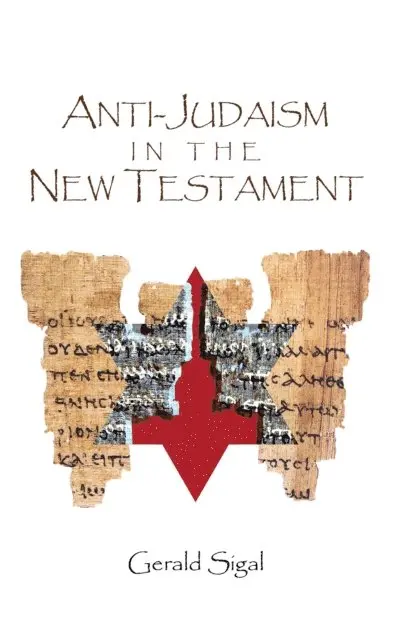
This volume is a systematic critique of the anti-Jewishness of the New Testament. Its primary purpose is to delineate what the New Testament authors intended to convey to their respective audiences concerning the Jewish people. That is, this volume is concerned with the initial meaning intended by the New Testament authors and how this intended meaning directly and with forethought contributed to Christian anti-Judaic1 thought and action. We will investigate how and why the New Testament authors created this anti-Judaic climate. Analysis of the Gospel stories demonstrates that anti-Judaism is woven into the fabric of a significant part of the New Testament narrative. This narrative has provoked bitter condemnation and persecution of Jews. The Jewish people were cast in the role of a dark satanic force as a systematic denigration and demonization of the Jews took place. It is to its harsh and bitter polemic against the entire Jewish people that one must ascribe the accusations of the Jews being Christ-killers and children of Satan and the later embellishments of Jews as host desecrators, ritual murders, and well-poisoners. Post-New Testament developments of Christian anti-Judaism are not central to this study. In pursuing our investigation we will make a distinction between what was originally intended by the New Testament authors and the usage made of their works to meet the anti-Judaic needs of the subsequent church.
Conclusions reached by later interpreters that have often been attributed to the authors of the Gospels are not our primary concern. It is not a question of how, or to what extent, the New Testament passages concerning Jews and Judaism were misused or misread in later centuries, but of what they were meant to mean in the first place. Thus, our focus will be on what the authors meant to convey to their respective contemporary audiences about the Jews.
What would the New Testaments audience have understood from the information its various authors provided? What meaning would a reader derive from a particular text? Is the New Testament anti-Jewish or is it merely an accurate report of events as they took place? Answers can only come through an examination of the relevant passages in their specific literary contexts, as well as in the context of the struggles, aspirations, and theologies of the early church. Special attention must be paid to the relationship between the church and the Roman authorities, on the one hand, and the synagogue, on the other hand, at the time the various books of the New Testament were written and to polemics within the early church community.
The New Testament was not written solely to condemn the Jews. But, in the process of developing the several story lines that evolved into the four respective canonical Gospels, the early church adopted a decidedly anti-Judaic stance. Consequently, in its final form, instances of anti-Judaic sentiment are found in much of the New Testament, the Gospels in particular. This animosity has to do as much with politics as with theological doctrine, relations with the Roman imperial authorities as with displacing Jews and Judaism. If pre-Gospel traditions already included anti-Judaic elements, they were now systematically exploited. There was a growing need to explain why Israel, Gods chosen people, had rejected Jesus and the message of his disciples. How could this be reconciled with Gods will? In presenting Jesus as the Messiah and Christianity as superseding Judaism, Paul and the authors of the Gospels and Acts, in particular, indict the Jewish people for the death of Jesus and spread antipathy of Jews and Judaism as part of a program to achieve Christian ascendancy. The historicized core myths that provide the basis for the New Testament missionary program were shaped and reshaped to show that the church possessed full authenticity and validity contra Jews and Judaism.
The New Testament auth