189 kr
Skickas inom 7-10 vardagar
189 kr
Skickas inom 7-10 vardagar
455 kr
Skickas inom 7-10 vardagar
638 kr
Skickas inom 7-10 vardagar
212 kr
Läs direkt efter köp
2 515 kr
Skickas inom 10-15 vardagar
774 kr
Läs direkt efter köp
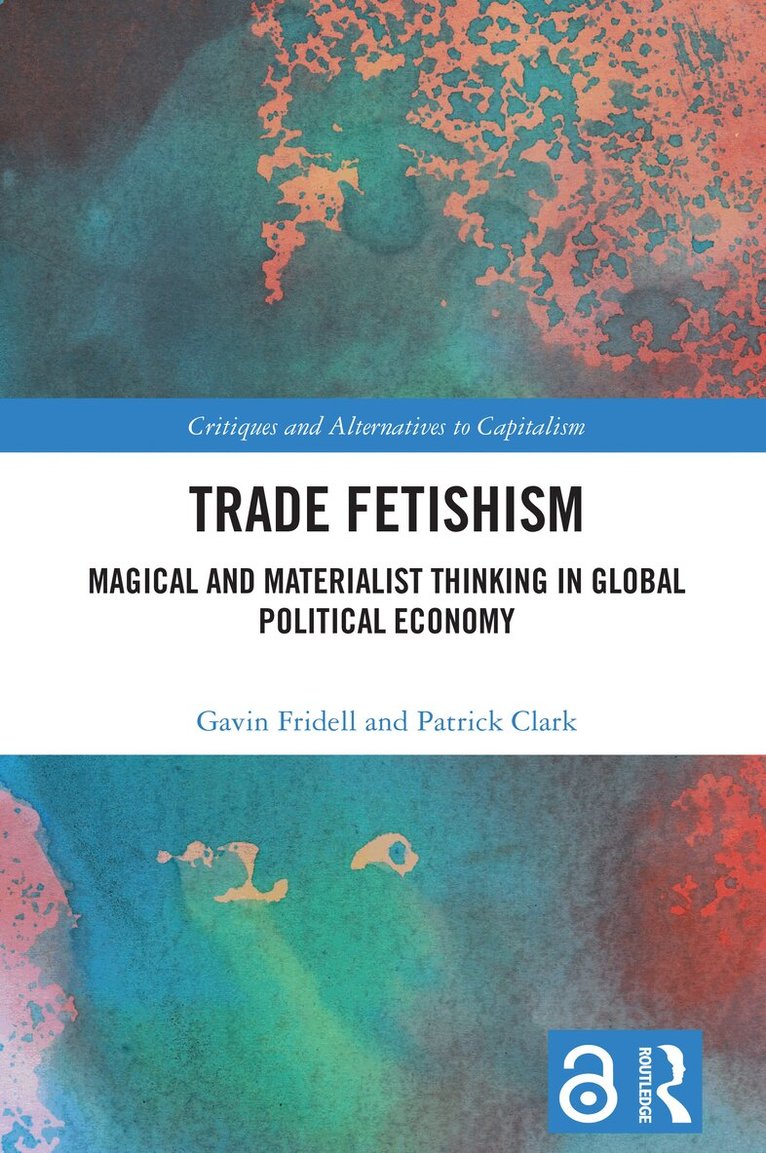
Trade Fetishism argues that “trade†not only meets material goals, but also simultaneously works as a fantasy that seeks to satisfy and soothe our unconscious desires and anxieties. Countering the idea that trade is driven ultimately by rational economic, political, and strategic logics, it argues that non-rational beliefs and unconscious desires are equally motivating in our obsession with trade and its promises of enjoyment.
Reassessing trade and trade politics, Fridell and Clark make a distinct contribution through systematic case studies that explore trade agreements in North America, between Europe and the Caribbean, and at the World Trade Organization. Drawing on case study research on specific trade agreements and trade justice movements, and engaging with a wide range of thinking about trade - from neoclassical economics and international law, to Marxist, feminist, postmodern, and other critical approaches – the book contends that trade and trade agreements are increasingly “fetishizedâ€: offered up as near-magical objects that meet our desires, soothe our anxieties, and offer simple solutions to complex problems, even if they perpetually disappoint.
An exploration of the desires and anxieties embedded in the widespread and enduring faith in global trade and free trade - a faith that persists despite abundant contradictions, gaps, and injustices – Trade Fetishism will appeal to scholars of sociology, social and political theory, and economics with interest in international trade and political economy.
Chapter 1 of this book is freely available as a downloadable Open Access PDF at http://www.taylorfrancis.com under a Creative Commons Attribution-Non Commercial-No Derivatives (CC BY-NC-ND) 4.0 license.
797 kr
Läs direkt efter köp
Trade Fetishism argues that “trade†not only meets material goals, but also simultaneously works as a fantasy that seeks to satisfy and soothe our unconscious desires and anxieties. Countering the idea that trade is driven ultimately by rational economic, political, and strategic logics, it argues that non-rational beliefs and unconscious desires are equally motivating in our obsession with trade and its promises of enjoyment.
Reassessing trade and trade politics, Fridell and Clark make a distinct contribution through systematic case studies that explore trade agreements in North America, between Europe and the Caribbean, and at the World Trade Organization. Drawing on case study research on specific trade agreements and trade justice movements, and engaging with a wide range of thinking about trade - from neoclassical economics and international law, to Marxist, feminist, postmodern, and other critical approaches – the book contends that trade and trade agreements are increasingly “fetishizedâ€: offered up as near-magical objects that meet our desires, soothe our anxieties, and offer simple solutions to complex problems, even if they perpetually disappoint.
An exploration of the desires and anxieties embedded in the widespread and enduring faith in global trade and free trade - a faith that persists despite abundant contradictions, gaps, and injustices – Trade Fetishism will appeal to scholars of sociology, social and political theory, and economics with interest in international trade and political economy.
Chapter 1 of this book is freely available as a downloadable Open Access PDF at http://www.taylorfrancis.com under a Creative Commons Attribution-Non Commercial-No Derivatives (CC BY-NC-ND) 4.0 license.
450 kr
Skickas inom 7-10 vardagar
1 250 kr
Skickas inom 7-10 vardagar
368 kr
Skickas inom 7-10 vardagar
521 kr
Läs direkt efter köp
588 kr
Läs direkt efter köp
473 kr
Läs direkt efter köp
470 kr
Läs direkt efter köp
1 387 kr
Skickas inom 7-10 vardagar
459 kr
Läs direkt efter köp
Rethinking Development Politics reassesses development in relation to three significant schools of thought: Modernization; (neo)Marxist political economy; and Postdevelopment/Decoloniality. It exposes how all three disavow the unconscious temptations of development, resulting in the rationalization of the market, the undervaluation of fantasy and fetishism, and the advocacy of an uncritical politics of authenticity. The book distinguishes the psychoanalytic approach from its predecessors by focusing on contemporary case studies, including digital and green modernization, trade, neopopulism, anti-racist training, and radical politics in present-day Iran. Crucially, these case studies speak to the extent to which the unconscious may be a political resource for reconfiguring development politics to put the subaltern first.
Proposing a distinctive method of inquiry, Rethinking Development Politics will be of great interest to students, academics, and researchers in development studies, psychology, sociology, international relations, political science, and peace and conflict studies. Its critical analysis will also be of great use to global agency officials, corporate policy-makers, public policy institutions, and activist and advocacy organizations.
778 kr
Tillfälligt slut
257 kr
Tillfälligt slut