1 514 kr
Läs direkt efter köp
1 514 kr
Läs direkt efter köp
2 055 kr
Läs direkt efter köp
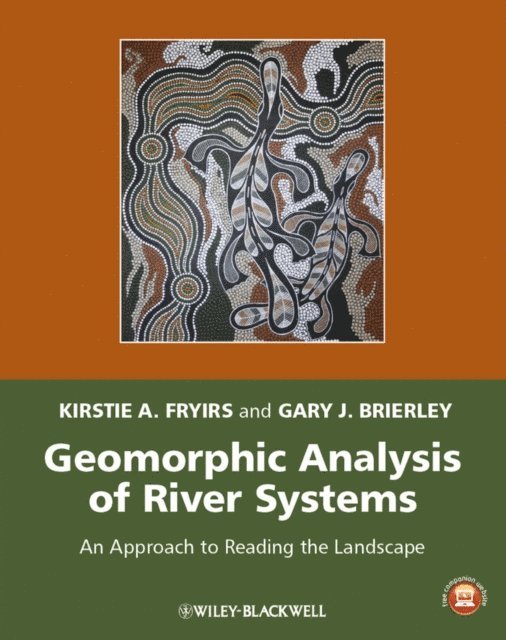
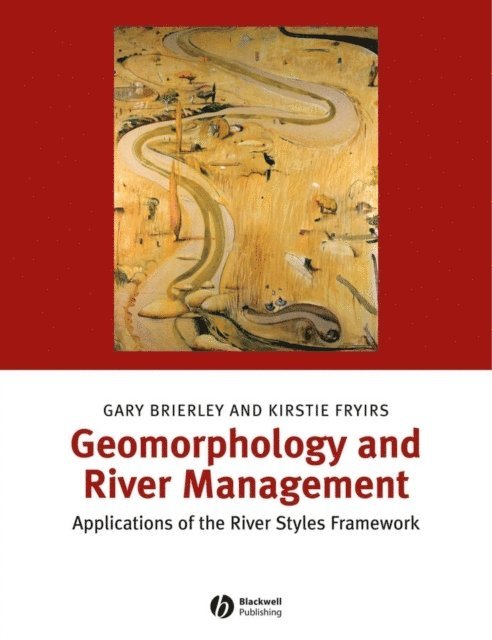
Filling a niche in the geomorphology teaching market, this introductory book is built around a 12 week course in fluvial geomorphology.
‘Reading the landscape’ entails making sense of what a riverscape looks like, how it works, how it has evolved over time, and how alterations to one part of a catchment may have secondary consequences elsewhere, over different timeframes. These place-based field analyses are framed within their topographic, climatic and environmental context. Issues and principles presented in the first part of this book provide foundational understandings that underpin the approach to reading the landscape that is presented in the second half of the book. In reading the landscape, detective-style investigations and interpretations are tied to theoretical and conceptual principles to generate catchment-specific analyses of river character, behaviour and evolution, including responses to human disturbance.
This book has been constructed as an introductory text on river landscapes, providing a bridge and/or companion to quantitatively-framed or modelled approaches to landscape analysis that are addressed elsewhere. Key principles outlined in the book emphasise the importance of complexity, contingency and emergence in interpreting the character, behaviour and evolution of any given system.
The target audience is second and third year undergraduate students in geomorphology, hydrology, earth science and environmental science, as well as river practitioners who use geomorphic understandings to guide scientific and/or management applications.
The primary focus of Kirstie and Gary’s research and teaching entails the use of geomorphic principles as a tool with which to develop coherent scientific understandings of river systems, and the application of these understandings in management practice. Kirstie and Gary are co-developers of the River Styles® Framework and Short Course that is widely used in river management, decision-making and training.
Additional resources for this book can be found at: www.wiley.com/go/fryirs/riversystems.

877 kr
Läs direkt efter köp
Filling a niche in the geomorphology teaching market, this introductory book is built around a 12 week course in fluvial geomorphology.
‘Reading the landscape’ entails making sense of what a riverscape looks like, how it works, how it has evolved over time, and how alterations to one part of a catchment may have secondary consequences elsewhere, over different timeframes. These place-based field analyses are framed within their topographic, climatic and environmental context. Issues and principles presented in the first part of this book provide foundational understandings that underpin the approach to reading the landscape that is presented in the second half of the book. In reading the landscape, detective-style investigations and interpretations are tied to theoretical and conceptual principles to generate catchment-specific analyses of river character, behaviour and evolution, including responses to human disturbance.
This book has been constructed as an introductory text on river landscapes, providing a bridge and/or companion to quantitatively-framed or modelled approaches to landscape analysis that are addressed elsewhere. Key principles outlined in the book emphasise the importance of complexity, contingency and emergence in interpreting the character, behaviour and evolution of any given system.
The target audience is second and third year undergraduate students in geomorphology, hydrology, earth science and environmental science, as well as river practitioners who use geomorphic understandings to guide scientific and/or management applications.
The primary focus of Kirstie and Gary’s research and teaching entails the use of geomorphic principles as a tool with which to develop coherent scientific understandings of river systems, and the application of these understandings in management practice. Kirstie and Gary are co-developers of the River Styles® Framework and Short Course that is widely used in river management, decision-making and training.
Additional resources for this book can be found at: www.wiley.com/go/fryirs/riversystems.
1 537 kr
Läs direkt efter köp
1 337 kr
Skickas inom 7-10 vardagar
777 kr
Skickas inom 7-10 vardagar
1 732 kr
Skickas inom 11-20 vardagar
659 kr
Skickas inom 10-15 vardagar
897 kr
Läs direkt efter köp
This book addresses societal relationships to river systems, highlighting many unexplored possibilities in how we know and manage our rivers.
Brierley contends that although we have good scientific understanding of rivers, with remarkable prospect for profound improvements to river condition, management applications greatly under-deliver. He conceptualizes approaches to river repair in two very different ways: Medean (competitive) and Gaian (cooperative). Rather than ‘managing’ rivers to achieve particular anthropogenic goals (the former option), this book adopts a more-than-human approach to ‘living with living rivers’ (the latter option), applying a river rights framework that conceptualizes rivers as sentient entities.
Chapters build on significant experience across many parts of the world, emphasizing the diverse array of river attributes and relationships to be protected and the wide range of problems to be addressed. Although the book has an environmental focus, it is framed as an argument in popular philosophy, contemplating the agency of rivers as place-beings. It will be of great value to academics, students and general readers interested in protecting river systems.
464 kr
Tillfälligt slut