Inbunden, Engelska, 2010
915 kr
Skickas inom 7-10 vardagar
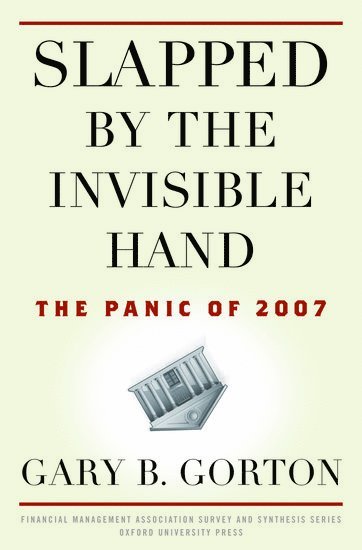
Originally written for a conference of the Federal Reserve, Gary Gorton's "The Panic of 2007" garnered enormous attention and is considered by many to be the most convincing take on the recent economic meltdown. Now, in Slapped by the Invisible Hand, Gorton builds upon this seminal work, explaining how the securitized banking system, the nexus of financial markets and instruments unknown to most people, stands at the heart of the financial crisis. The securitized banking system is, in fact, a real banking system, allowing institutional investors and firms to make large, short-term deposits. But, as any banking system, it was vulnerable to a panic. Indeed the events starting in August 2007 can best be understood as a panic-a wholesale panic, rather than a retail panic-involving financial firms "running" on other financial firms, resulting in the system becoming insolvent. As the financial crisis unfolded, Gorton was working inside an institution that played a central role in the collapse; thus this book presents the unparalleled perspective of a top scholar who was also a central insider.