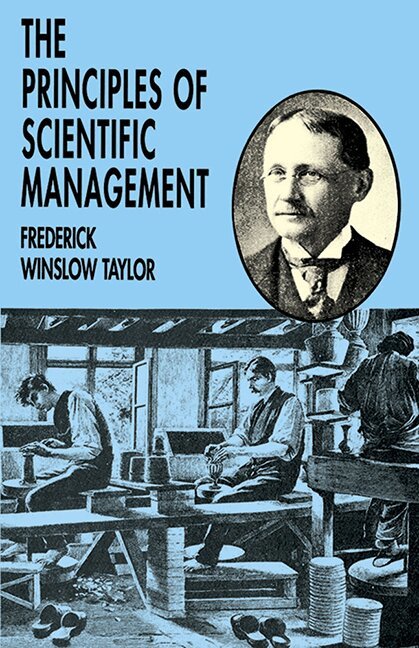
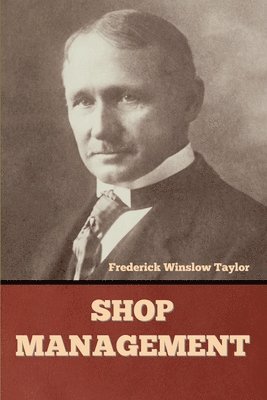
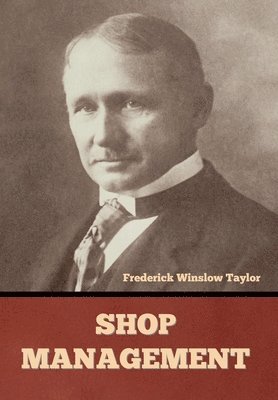
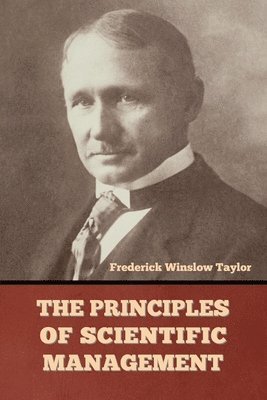
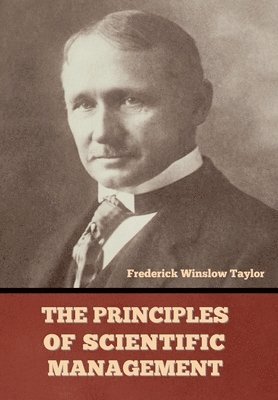
Frederick Winslow Taylor (March 20, 1856 - March 21, 1915) was an American mechanical engineer. He was widely known for his methods to improve industrial efficiency. He was one of the first management consultants. In 1911, Taylor summed up his efficiency techniques in his book The Principles of Scientific Management which, in 2001, Fellows of the Academy of Management voted the most influential management book of the twentieth century. His pioneering work in applying engineering principles to the work done on the factory floor was instrumental in the creation and development of the branch of engineering that is now known as industrial engineering. Taylor made his name, and was most proud of his work, in scientific management; however, he made his fortune patenting steel-process improvements. As a result, Scientific management is sometimes referred to as Taylorism.
...Taylor thought that by analysing work, the "one best way" to do it would be found. He is most remembered for developing the stopwatch time study, which, combined with Frank Gilbreth's motion study methods, later became the field of time and motion study. He broke a job into its component parts and measured each to the hundredth of a minute. One of his most famous studies involved shovels. He noticed that workers used the same shovel for all materials. He determined that the most effective load was 21½ pounds, and found or designed shovels that for each material would scoop up that amount. He was generally unsuccessful in getting his concepts applied, and was dismissed from Bethlehem Iron Company/Bethlehem Steel Company. Nevertheless, Taylor was able to convince workers who used shovels and whose compensation was tied to how much they produced to adopt his advice about the optimum way to shovel by breaking the movements down into their component elements and recommending better ways to perform these movements. It was largely through his disciples' efforts (most notably Henry Gantt's) that industry came to implement his ideas. Moreover, the book he wrote after parting company with the Bethlehem company, Shop Management, sold well. (wikipedia.org)