Indonesia's monetary and political crisis is examined here in relation to its impact on Indonesia's agricultural sector. The twelve essays that comprise this volume take a micro-economic approach and analysis relies on observed facts and first-hand data collected both before and after the country's crisis. This is a lively, well illustrated and instructive book.
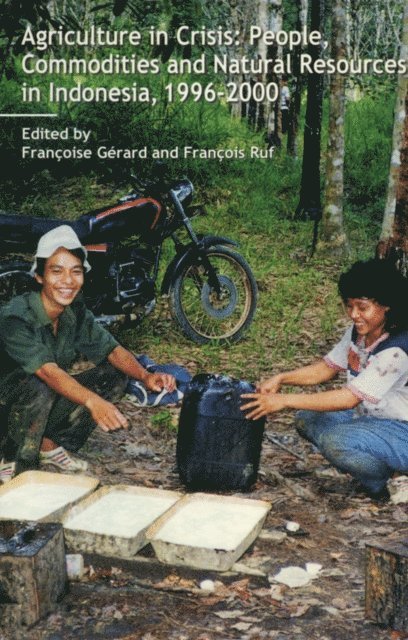
Indonesia''s monetary and political crisis is examined here in relation to its impact on Indonesia''s agricultural sector. The twelve essays that comprise this volume take a micro-economic approach and analysis relies on observed facts and first-hand data collected both before and after the country''s crisis. This is a lively, well illustrated and instructive book.
Indonesia's monetary and political crisis is examined here in relation to its impact on Indonesia's agricultural sector. The twelve essays that comprise this volume take a micro-economic approach and analysis relies on observed facts and first-hand data collected both before and after the country's crisis. This is a lively, well illustrated and instructive book.
According to standard economic theory and modelling, liberalizing agriculture will result in important welfare gains. Because of price volatility, an alternative model, based in general disequilibrium in the Wicksellian tradition, provides much less optimistic conclusions, actually supported by the recent evolution of the world agricultural system, as well as by the history of the many attempts of agricultural trade liberalization since the 18th century.