

Inbunden, Engelska, 2022
426 kr
Skickas inom 7-10 vardagar
426 kr
Skickas inom 7-10 vardagar

308 kr
Skickas inom 7-10 vardagar
193 kr
Skickas inom 7-10 vardagar

401 kr
Skickas inom 7-10 vardagar

213 kr
Skickas inom 7-10 vardagar

66 kr
Läs direkt efter köp
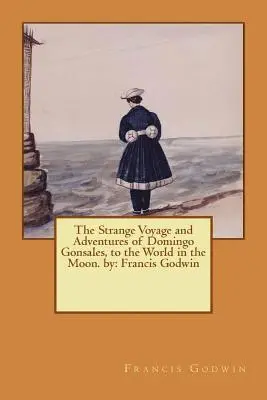
The Man in the Moone (1638) is a utopian science fiction story by Francis Godwin. Published posthumously, the book appeared under the pseudonym Domingo Gonsales, the name of its intrepid narrator. The Man in the Moone was inspired by recent discoveries in the field of astronomy by Nicolaus Copernicus, Johannes Kepler, William Gilbert, and Galileo Galielei. Godwin was particularly interested in the possibility of lunar habitation, and he wrongly believed that the dark spots on the surface of the Moon were seas. His work has many similarities to Lucian’s True History, a second-century A. D. science fiction novel that appeared in an influential English translation in the 1630s. Banished from his native Spain after killing a rival in a duel, Domingo Gonsales makes his fortune in the East Indies, but soon dreams of returning home. Struck with illness on his voyage across the Atlantic, he stops at the island of St Helena to recuperate. There, he discovers a species of swan that he incorporates into a state-of-the-art flying machine. Gonsales soon gains the strength to continue his journey, making his way past Tenerife. When an English fleet destroy his vessel, the adventurer takes flight with the help of his geese, rising through space until the Earth has all but disappeared. Before he knows it, Gonsales is standing on the Moon amidst what looks to be a utopian civilization unmatched in human history.
Since our inception in 2020, Mint Editions has kept sustainability and innovation at the forefront of our mission. Each and every Mint Edition title gets a fresh, professionally typeset manuscript and a dazzling new cover, all while maintaining the integrity of the original book.
With thousands of titles in our collection, we aim to spotlight diverse public domain works to help them find modern audiences. Mint Editions celebrates a breadth of literary works, curated from both canonical and overlooked classics from writers around the globe.
70 kr
Skickas inom 7-10 vardagar
The Man in the Moone (1638) is a utopian science fiction story by Francis Godwin. Published posthumously, the book appeared under the pseudonym Domingo Gonsales, the name of its intrepid narrator. The Man in the Moone was inspired by recent discoveries in the field of astronomy by Nicolaus Copernicus, Johannes Kepler, William Gilbert, and Galileo Galielei. Godwin was particularly interested in the possibility of lunar habitation, and he wrongly believed that the dark spots on the surface of the Moon were seas. His work has many similarities to Lucian's True History, a second-century A. D. science fiction novel that appeared in an influential English translation in the 1630s. Banished from his native Spain after killing a rival in a duel, Domingo Gonsales makes his fortune in the East Indies, but soon dreams of returning home. Struck with illness on his voyage across the Atlantic, he stops at the island of St Helena to recuperate. There, he discovers a species of swan that he incorporates into a state-of-the-art flying machine. Gonsales soon gains the strength to continue his journey, making his way past Tenerife. When an English fleet destroy his vessel, the adventurer takes flight with the help of his geese, rising through space until the Earth has all but disappeared. Before he knows it, Gonsales is standing on the Moon amidst what looks to be a utopian civilization unmatched in human history.
Since our inception in 2020, Mint Editions has kept sustainability and innovation at the forefront of our mission. Each and every Mint Edition title gets a fresh, professionally typeset manuscript and a dazzling new cover, all while maintaining the integrity of the original book.
With thousands of titles in our collection, we aim to spotlight diverse public domain works to help them find modern audiences. Mint Editions celebrates a breadth of literary works, curated from both canonical and overlooked classics from writers around the globe.
197 kr
Skickas inom 3-6 vardagar

291 kr
Skickas inom 3-6 vardagar

250 kr
Skickas inom 7-10 vardagar

217 kr
Skickas inom 7-10 vardagar

370 kr
Lyssna direkt efter köp
The Man in the Moone, first published in 1638, is considered one of the first works of science fiction. The author was an Anglican bishop who became interested in astronomy following the circulation of the works of Copernicus, Kepler, and Galileo. Much of the current speculation about the moon was concerned with whether it was populated, and if so, by what race.
In the story, Godwin’s protagonist, Gonsales, develops a flying machine that can be drawn by a flock of geese in harness, and uses it to escape capture in a sea battle. The geese mount higher and higher until they alight on the moon, which Gonsales discovers to be occupied by an advanced race called the Lunars. Later on, Gonsales returns to Earth and finds himself in China, where he establishes a favorable relationship with the court. The story ends with a discussion of his plans to return to Spain with the assistance of the local community of Jesuit priests.

217 kr
Lyssna direkt efter köp
The Man in the Moone, first published in 1638, is considered one of the first works of science fiction. The author was an Anglican bishop who became interested in astronomy following the circulation of the works of Copernicus, Kepler, and Galileo. Much of the current speculation about the moon was concerned with whether it was populated, and if so, by what race.
In the story, Godwin’s protagonist, Gonsales, develops a flying machine that can be drawn by a flock of geese in harness, and uses it to escape capture in a sea battle. The geese mount higher and higher until they alight on the moon, which Gonsales discovers to be occupied by an advanced race called the Lunars. Later on, Gonsales returns to Earth and finds himself in China, where he establishes a favorable relationship with the court. The story ends with a discussion of his plans to return to Spain with the assistance of the local community of Jesuit priests.