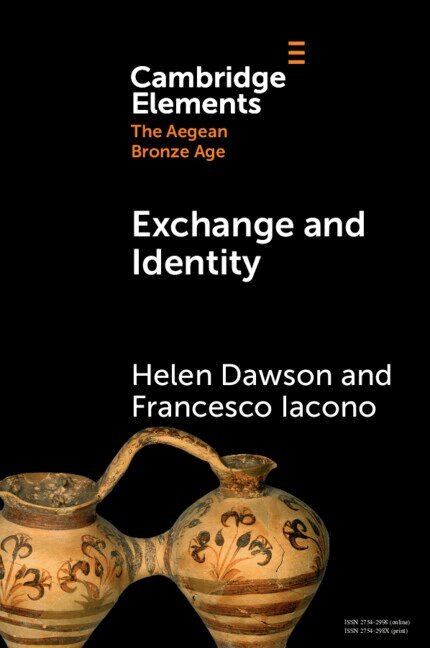
This Element highlights the coastal and island communities of the central Mediterranean as key actors in long-distance exchange networks with the Aegean and eastern Mediterranean during the Bronze Age. It presents a dynamic, interconnected landscape of people, goods, and ideas, emphasising multidirectional and multiscalar interactions and their impact on exchange and social identities. Organised thematically, geographically, and chronologically, it offers accessible insights for both specialists and non-specialists, combining detailed archaeological evidence with critical interpretation. The Element underscores the role of local conditions in shaping long-distance Bronze Age exchange networks and fostering social and cultural connections across the Mediterranean, opening fresh perspectives on exchange and identity.
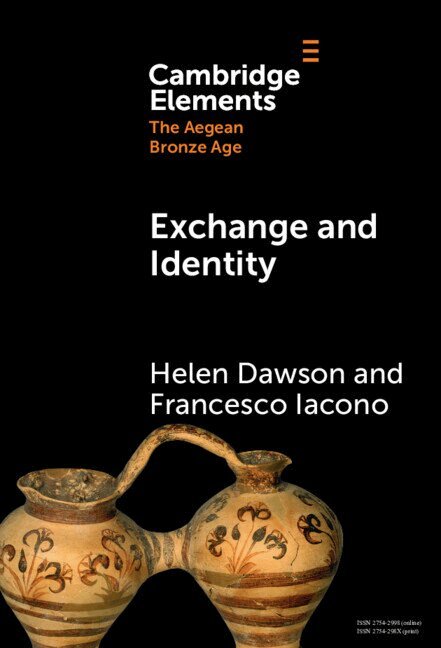
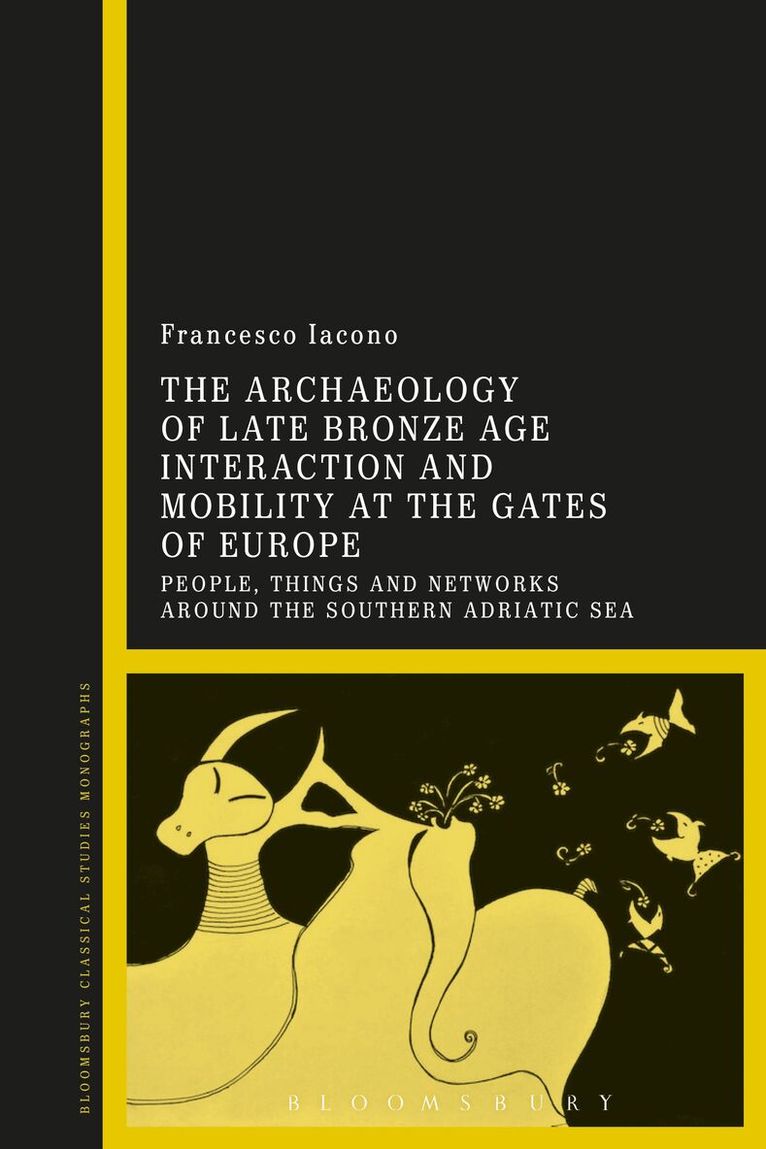
Interaction and mobility have attracted much interest in research within scholarly fields as different as archaeology, history, and more broadly the humanities. Critically assessing some of the most widespread views on interaction and its social impact, this book proposes an innovative perspective which combines radical social theory and currently burgeoning network methodologies.Through an in-depth analysis of a wealth of data often difficult to access, and illustrated by many diagrams and maps, the book highlights connections and their social implications at different scales ranging from the individual settlement to the Mediterranean. The resulting diachronic narrative explores social and economic trajectories over some seven centuries and sheds new light on the broad historical trends affecting the life of people living around the Middle Sea.The Bronze Age is the first period of intense interaction between early state societies of the Eastern Mediterranean and the small-scale communities to the west of Greece, with people and goods moving at a scale previously unprecedented. This encounter is explored from the vantage point of one of its main foci: Apulia, located in the southern Adriatic, at the junction between East and West and the entryway of one of the major routes for the resource-rich European continent.
Interaction and mobility have attracted much interest in research within scholarly fields as different as archaeology, history, and more broadly the humanities. Critically assessing some of the most widespread views on interaction and its social impact, this book proposes an innovative perspective which combines radical social theory and currently burgeoning network methodologies.Through an in-depth analysis of a wealth of data often difficult to access, and illustrated by many diagrams and maps, the book highlights connections and their social implications at different scales ranging from the individual settlement to the Mediterranean. The resulting diachronic narrative explores social and economic trajectories over some seven centuries and sheds new light on the broad historical trends affecting the life of people living around the Middle Sea. The Bronze Age is the first period of intense interaction between early state societies of the Eastern Mediterranean and the small-scale communities to the west of Greece, with people and goods moving at a scale previously unprecedented. This encounter is explored from the vantage point of one of its main foci: Apulia, located in the southern Adriatic, at the junction between East and West and the entryway of one of the major routes for the resource-rich European continent.
Interaction and mobility have attracted much interest in research within scholarly fields as different as archaeology, history, and more broadly the humanities. Critically assessing some of the most widespread views on interaction and its social impact, this book proposes an innovative perspective which combines radical social theory and currently burgeoning network methodologies.Through an in-depth analysis of a wealth of data often difficult to access, and illustrated by many diagrams and maps, the book highlights connections and their social implications at different scales ranging from the individual settlement to the Mediterranean. The resulting diachronic narrative explores social and economic trajectories over some seven centuries and sheds new light on the broad historical trends affecting the life of people living around the Middle Sea.The Bronze Age is the first period of intense interaction between early state societies of the Eastern Mediterranean and the small-scale communities to the west of Greece, with people and goods moving at a scale previously unprecedented. This encounter is explored from the vantage point of one of its main foci: Apulia, located in the southern Adriatic, at the junction between East and West and the entryway of one of the major routes for the resource-rich European continent.
This collection of essays explore affluence in pre-modern societies and derive from an international conference held in Bologna in May 2024. The focus is the circum-Mediterranean area; both pre-state Bronze Age societies and early city and territorial Bronze Age and Iron Age states are analysed, with emphasis on the Aegean world and the Italian peninsula. The essays deal with a wide range of questions to trace back affluence in the archaeological record: Did farming lie at the root of affluence? Was surplus available to communities with little arable land or located next to the coasts and/or wetlands? Was animal husbandry the key variable? What strategies were groups of herders and farmers employing to overcome the dearth of resources and, in turn, create affluence?A second set of questions relate to the relationship between individual and community affluence: How was affluence distributed among populations? Was this connected to inequality and was it translated into the archaeological record of the world of the living or the dead? How was affluence made evident and communicated?The management of affluence forms a further key topic: Was affluence a multi plier of social complexity? What was the role of feasting practices and/or the destruction of wealth? How far-reaching were the use of administrative tools aimed at bookkeeping? In a wider perspective, what was the role played by the accumulation and storage of staples, on the one hand, and the production of high-status and precious artefacts, on the other?A final topic looks at the relationship between affluence, practices, and the archaeological record: What were the means through which affluence was achieved and regenerated over time? What are its traces in the archaeological record?