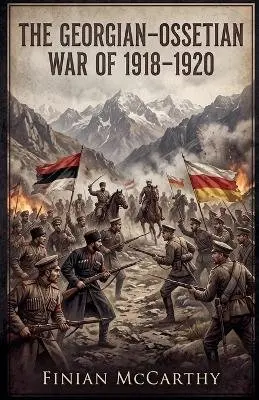
In June 1920, smoke rose from the gorges of the Liakhvi as columns of Ossetian families climbed the Roki Pass toward exile. Behind them, the People's Guard of the young Democratic Republic of Georgia was burning the villages that had sheltered a Soviet-backed insurrection. Thousands would die on the high passes and in the typhus camps beyond.The Georgian–Ossetian War of 1918–1920 traces how a quarrel over rents in a few mountain valleys became a struggle over who owned a country. From the medieval Alans and the princes of Kartli to the land hunger of the tsarist emancipation, from peasant revolt and a peace conference that ended in murder to Bolshevik subversion, a broken treaty and the executions on Zguder Hill, Finian McCarthy reconstructs a conflict in which class and ethnicity became fatally entwined.Written with literary power and scrupulous fairness, the book weighs Georgian, Ossetian and Russian memories of 1920 against the evidence, examines the contested death tolls, and follows the long afterlife of the violence: the Soviet oblast of 1922, the war of 1991, and the Russian intervention of 2008.This is the hidden history behind one of Europe's most enduring frozen conflicts, and a profound meditation on how memory becomes a weapon.