
Häftad, Engelska, 2017
907 kr
Skickas inom 7-10 vardagar
907 kr
Skickas inom 7-10 vardagar
510 kr
Läs direkt efter köp
1 544 kr
Skickas inom 10-15 vardagar
1 906 kr
Läs direkt efter köp
1 232 kr
Läs direkt efter köp
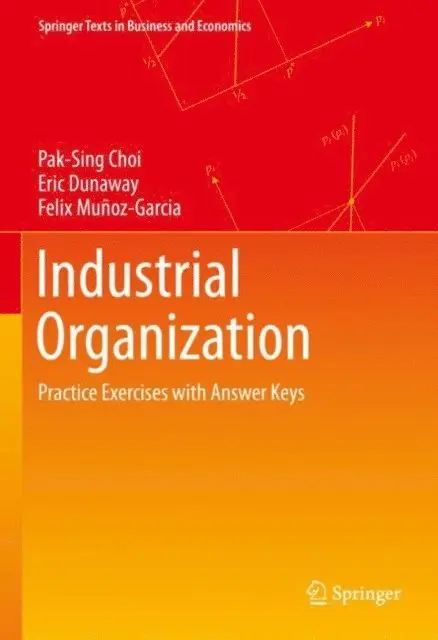
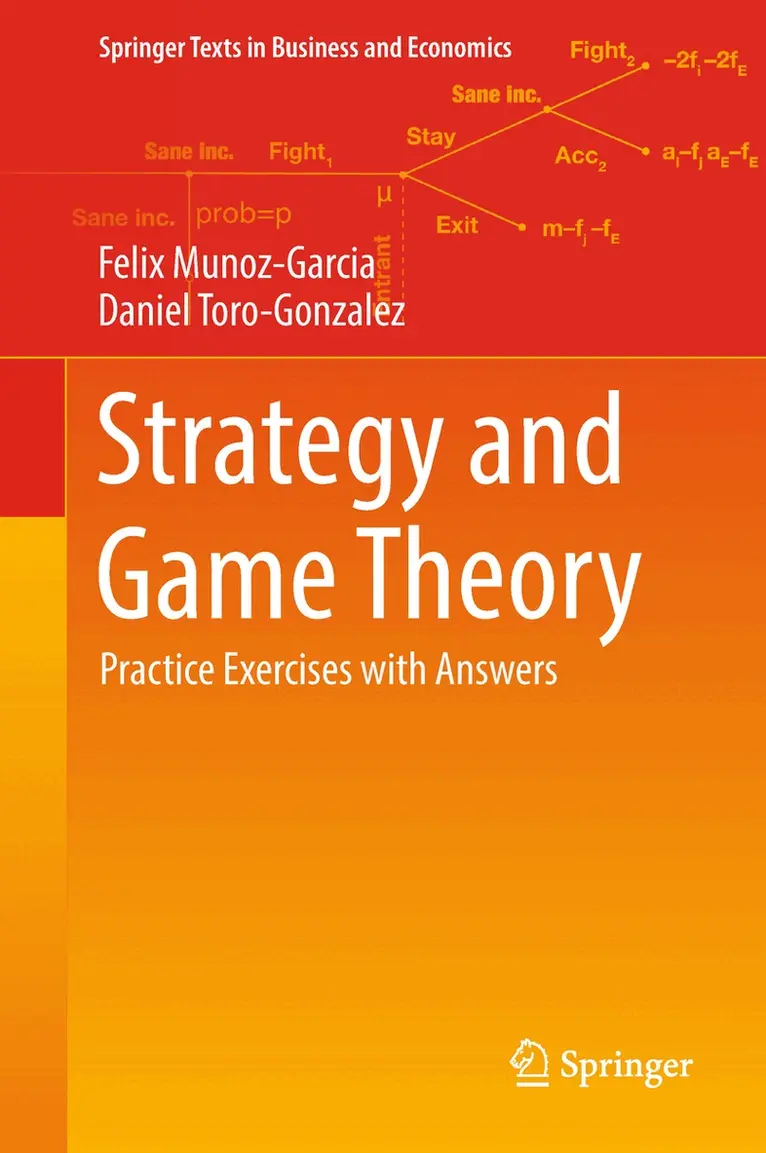
This textbook presents 122 exercises on industrial organization with detailed answer keys. While most textbooks on industrial organization focus on theory and empirical findings, this textbook offers practical examples and exercises helping predict firm behaviour in different industries. The book emphasizes the game-theoretic tools used in each type of exercise, so students can systematically apply them to other markets, forms of competition, or information environments where firms, consumers, and regulating agencies interact.
The book begins with examples that analyse different models of firm behavior and interaction; starting with monopoly and moving through the Cournot model of simultaneous quantity competition, the Bertrand model simultaneous price competition, and sequential competition. The following chapters apply game-theoretic tools to situations of increasing complexity: regulation; R&D incentives; mergers and collusion; bundling incentives; incomplete information, signalling, and competition; networks and switching costs. In addition to providing algebraic simplifications, some chapters also offer the unique feature of worked exercises based on published journal articles by leading scholars in the field. Finally, exercises are ranked according to their difficulty, with a letter (A-C) next to the exercise number, which allows students to pace their studies and instructors to structure their classes accordingly.Providing a rigorous, yet practical introduction to the field of industrial organization, this textbook is appropriate for advanced undergraduate and graduate students in economics and finance.
890 kr
Läs direkt efter köp
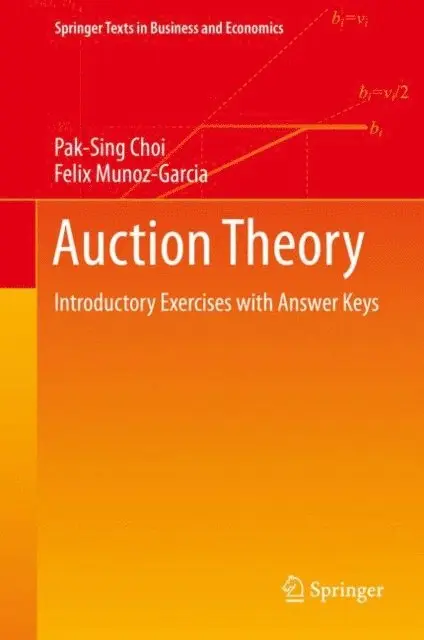
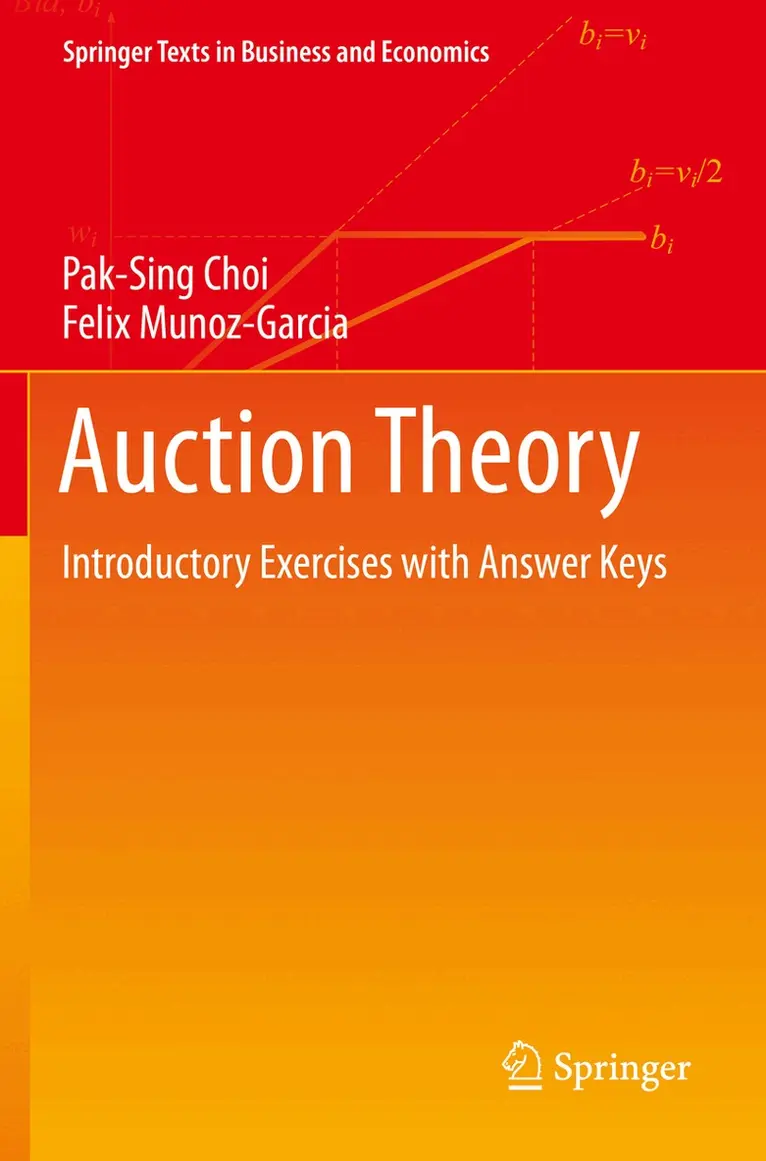
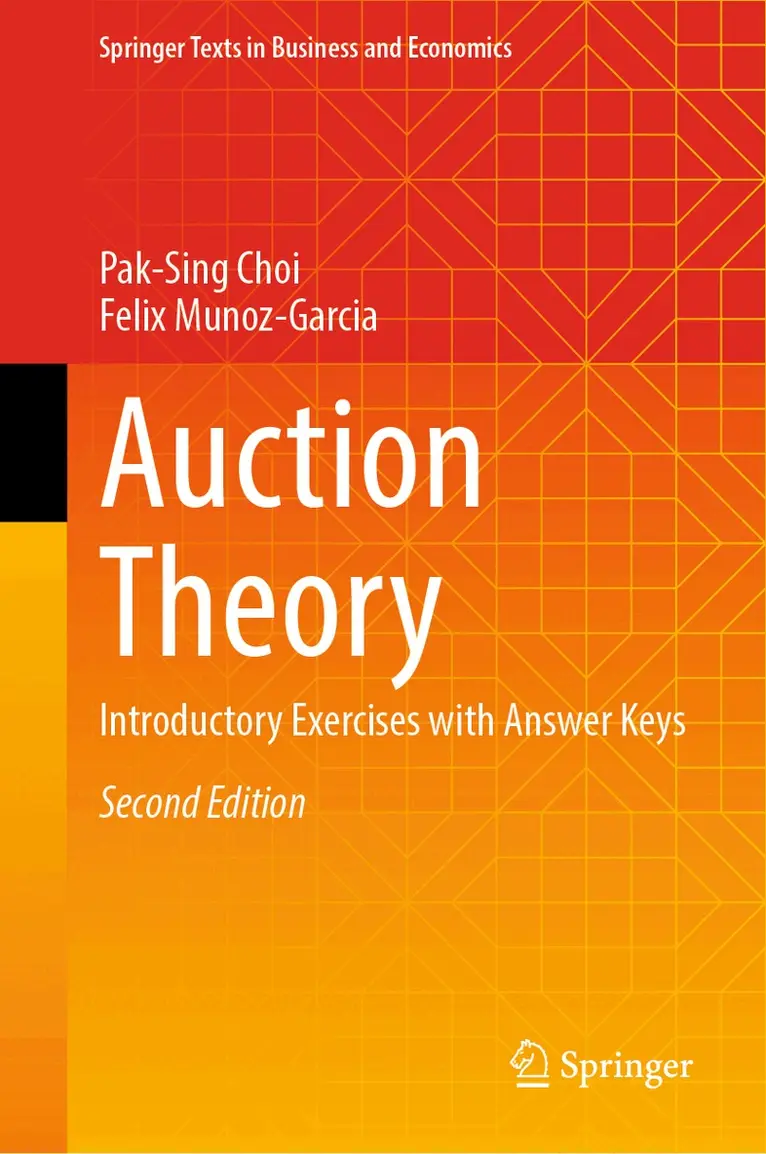
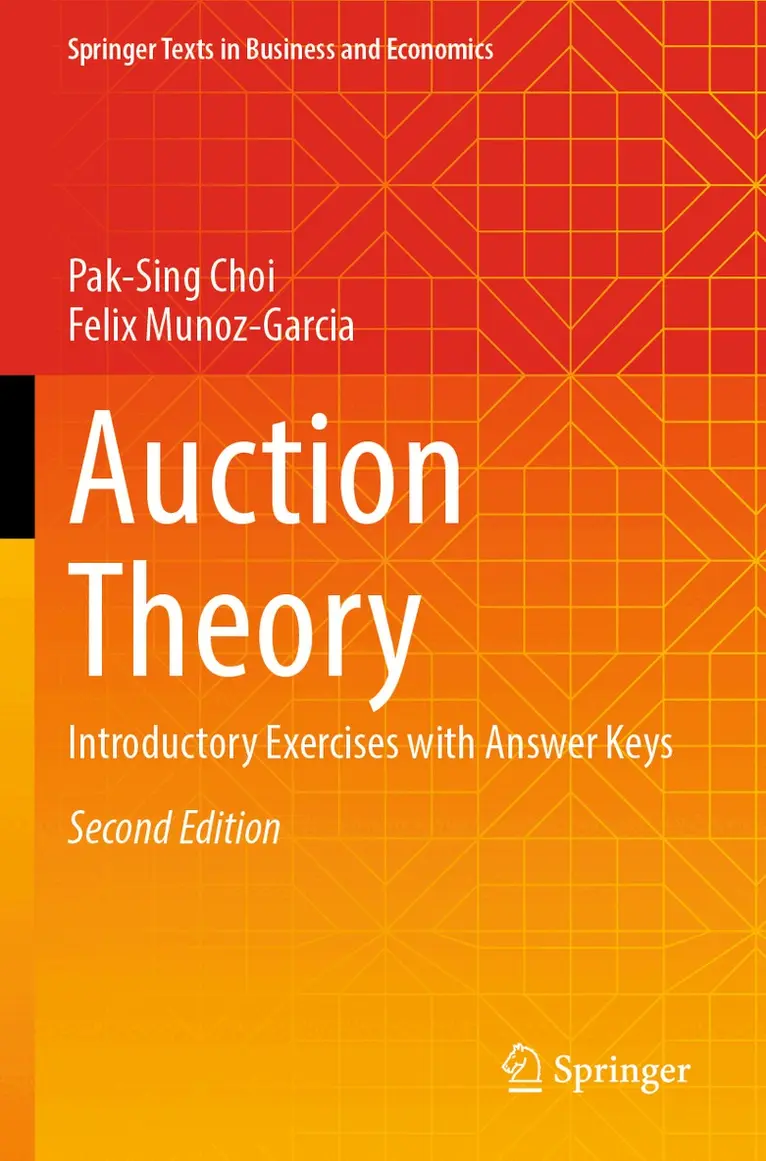
This textbook provides a short introduction to auction theory through exercises with detailed answer keys. Focusing on practical examples, this textbook offers over 80 exercises that predict bidders’ equilibrium behaviour in different auction formats, along with the seller’s strategic incentives to organize one auction format over the other. The book emphasizes game-theoretic tools, so students can apply similar tools to other auction formats. Also included are several exercises based on published articles, with the model reduced to its main elements and the question divided into several easy-to-answer parts. Little mathematical background in algebra and calculus is assumed, and most algebraic steps and simplifications are provided, making the text ideal for upper undergraduate and graduate students.
The book begins with a discussion of second-price auctions, which can be studied without using calculus, and works through progressively more complicated auction scenarios: first-price auctions, all-pay auctions, third-price auctions, the Revenue Equivalence principle, common-value auctions, multi-unit auctions, and procurement auctions. Exercises in each chapter are ranked according to their difficulty, with a letter (A-C) next to the exercise title, which allows students to pace their studies accordingly. The authors also offer a list of suggested exercises for each chapter, for instructors teaching at varying levels: undergraduate, Masters, Ph.D.Providing a practical, customizable approach to auction theory, this textbook is appropriate for students of economics, finance, and business administration. This book may also be used for related classes such as game theory, market design, economics of information, contract theory, or topics in microeconomics.
735 kr
Skickas inom 11-20 vardagar
734 kr
Läs direkt efter köp
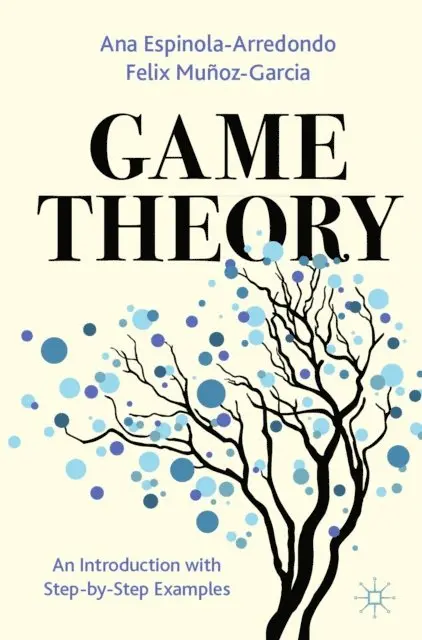
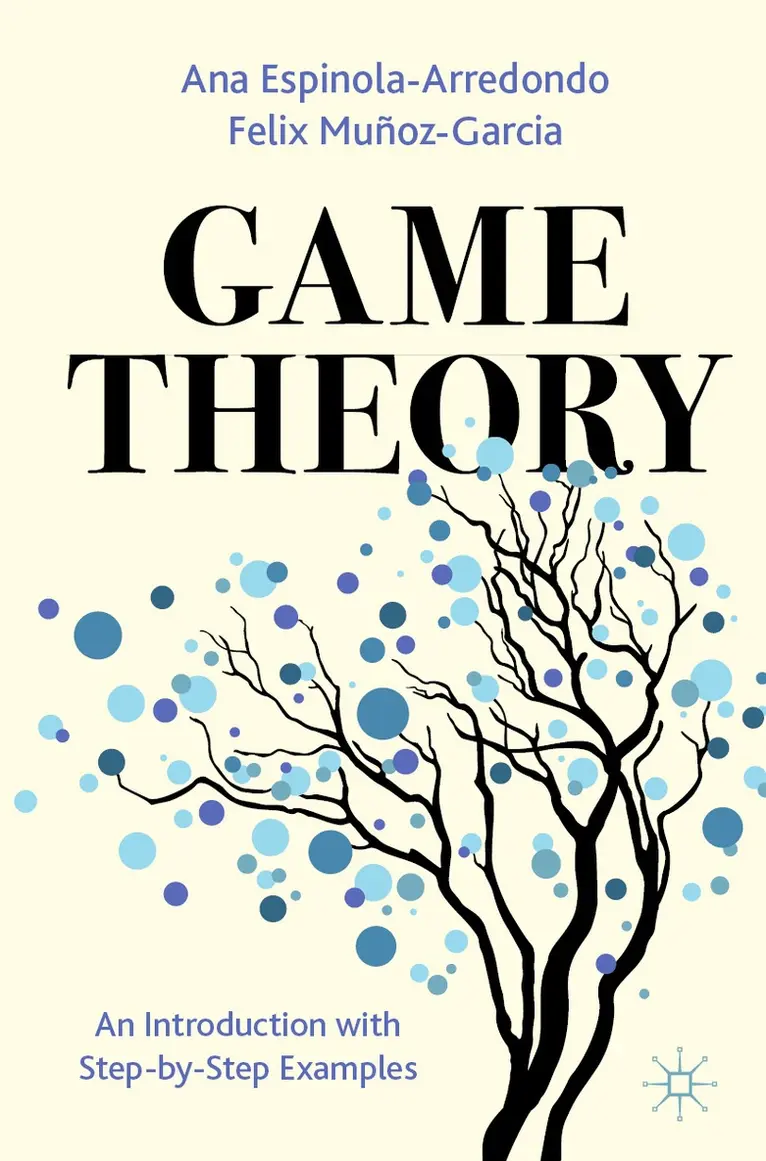
An introduction to game theory, complete with step-by-step tools and detailed examples.
This book offers condensed breakdowns of game-theory concepts. Specifically, this textbook provides “tools” or “recipes” to solve different classes of games.
Game Theory presents the information as plainly and clearly as possible. Every chapter begins with the main definitions and concepts before diving into the applications to different settings across economics, business, and other social sciences. Chapters walk readers through algebraic steps and simplifications. This makes the text accessible for undergraduate and Masters-level students in economics and finance. Paired with the exercises published on the accompanying website, students will improve both their theoretical and practical understandings of game theory.
Readers will walk away from this book understanding complete and incomplete information modelsas well as signaling games.
556 kr
Skickas inom 10-15 vardagar
1 544 kr
Skickas inom 10-15 vardagar
1 457 kr
Läs direkt efter köp
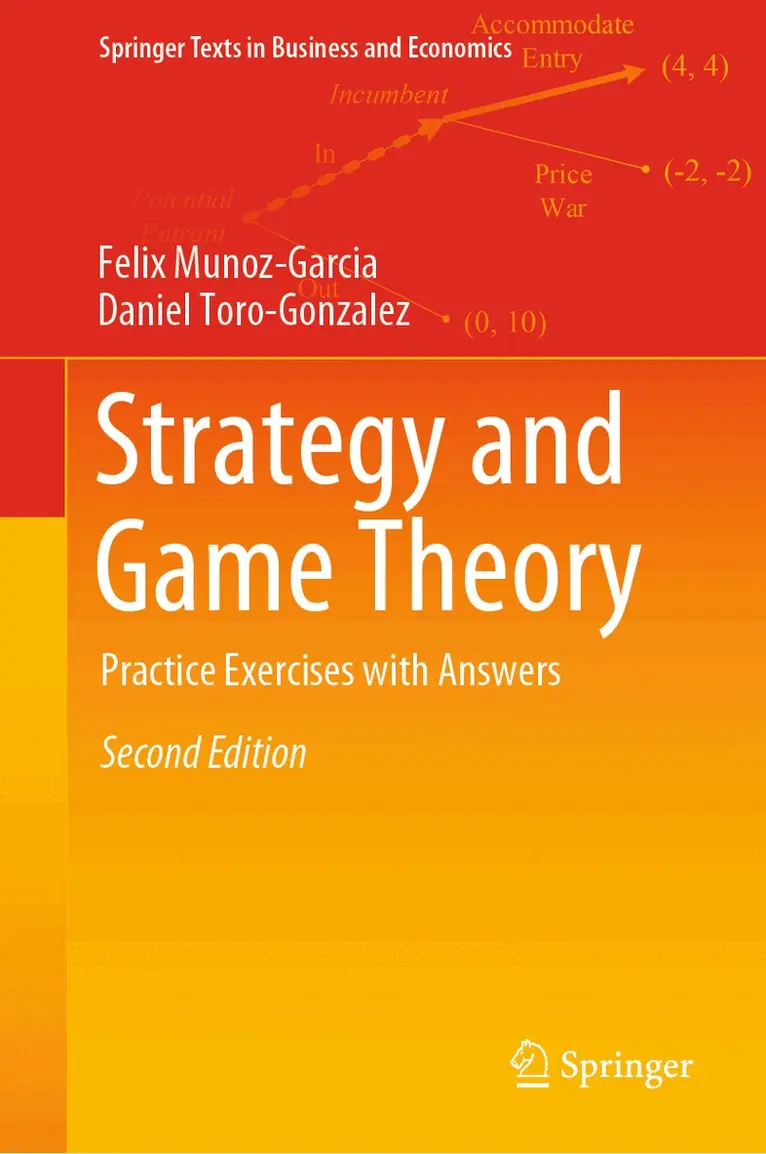
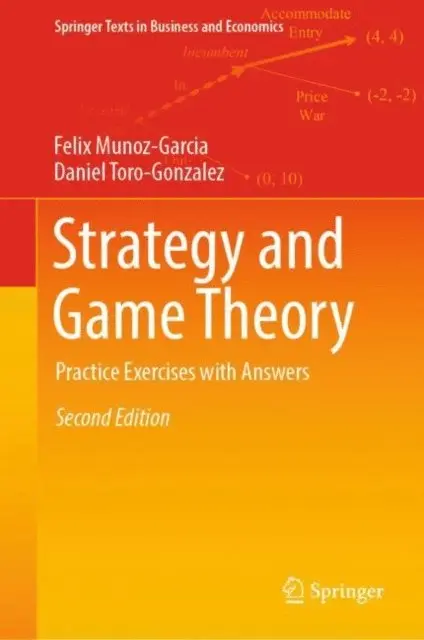
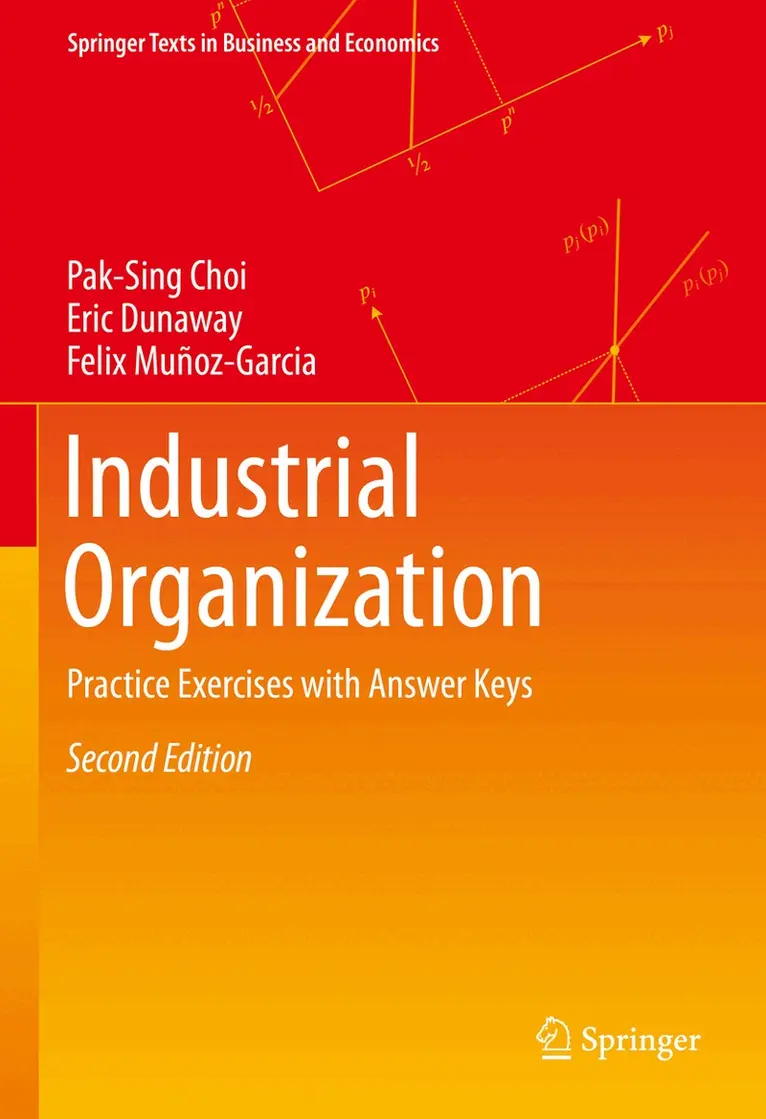
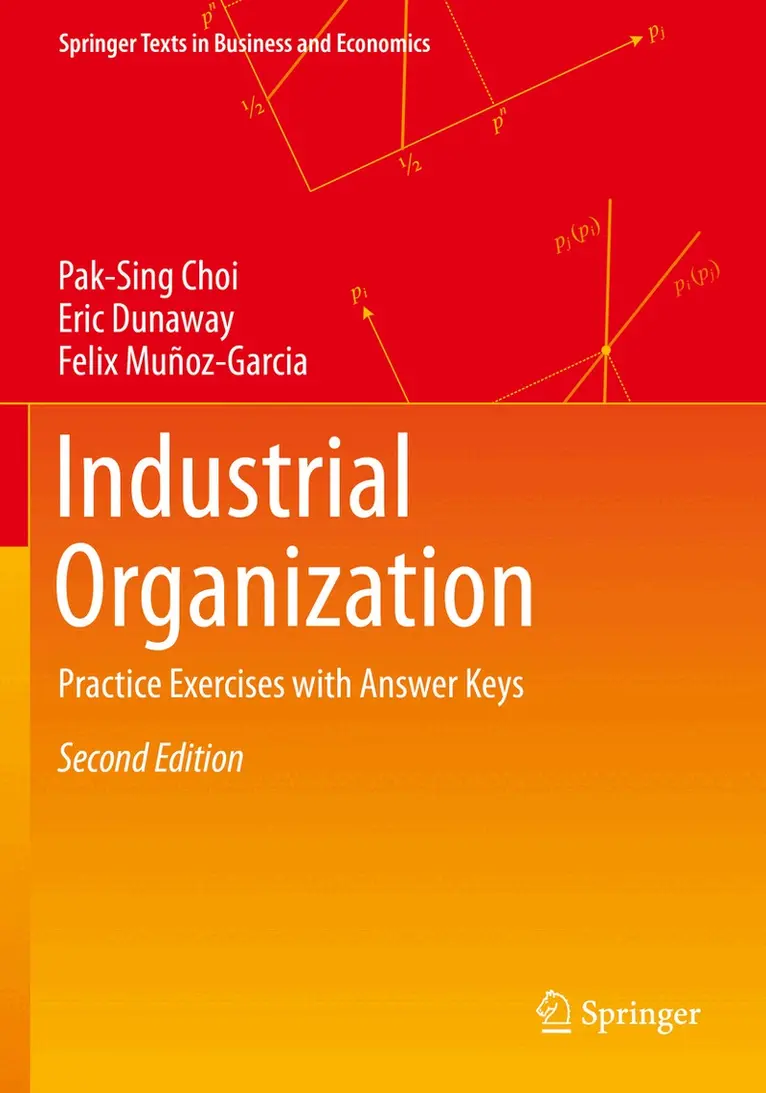
Revised and updated for the second edition, this textbook presents over 100 exercises on industrial organization with detailed answer keys. While most textbooks on industrial organization focus on theory and empirical findings, this textbook offers practical examples and exercises helping predict firm behavior in different industries. The book emphasizes the game-theoretic tools used in each type of exercise, so students can systematically apply them to other markets, forms of competition, or information environments where firms, consumers, and regulating agencies interact.
The book begins with examples that analyze different models of firm behavior and interaction; starting with monopoly and moving through the Cournot model of simultaneous quantity competition, the Bertrand model simultaneous price competition, and sequential competition. The following chapters apply game-theoretic tools to situations of increasing complexity: regulation; R&D incentives; mergers and collusion;bundling incentives; incomplete information, signaling, and competition; networks and switching costs. In addition to providing algebraic simplifications, some chapters also offer the unique feature of worked exercises based on published journal articles by leading scholars in the field. Finally, exercises are ranked according to their difficulty, with a letter (A-C) next to the exercise number, which allows students to pace their studies and instructors to structure their classes accordingly. The second edition contains additional exercises optimized for study at the upper undergraduate level.Providing a rigorous, yet practical introduction to the field of industrial organization, this textbook is appropriate for advanced undergraduate and graduate students in economics and finance.
1 105 kr
Skickas inom 10-15 vardagar
1 215 kr
Skickas inom 10-15 vardagar
1 570 kr
Läs direkt efter köp
885 kr
Skickas inom 10-15 vardagar
1 287 kr
Läs direkt efter köp
1 059 kr
Skickas inom 11-20 vardagar

1 059 kr
Kommande

599 kr
Kommande
1 019 kr
Tillfälligt slut