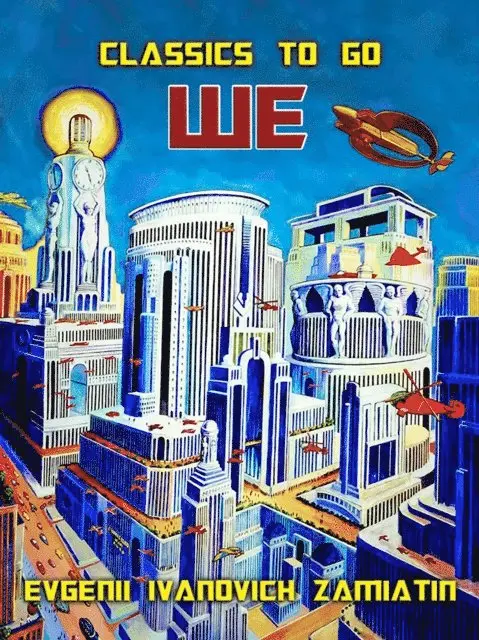
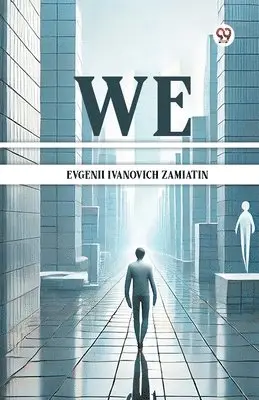
We is a dystopian novel by Russian writer Yevgeny Zamyatin, written 1920–1921. It was first published as an English translation by Gregory Zilboorg in 1924 by E. P. Dutton in New York, with the original Russian text first published in 1952. The novel describes a world of harmony and conformity within a united totalitarian state. It influenced the emergence of dystopia as a literary genre. George Orwell claimed that Aldous Huxley''s 1931 Brave New World must be partly derived from We, but Huxley denied this.
We is a novel set in a highly controlled society where individuality is suppressed in favor of conformity. The protagonist, a mathematician and builder, documents life within this structured world, initially expressing pride in the regimented existence that dominates his every action. His worldview is deeply rooted in the belief that happiness can only be achieved through order, reflecting the mechanized nature of the society. As the story unfolds, the protagonist begins to question these beliefs and the uniformity around him, especially when he encounters a mysterious individual who awakens feelings and ideas he had long suppressed. This encounter triggers an internal conflict as he grapples with the allure of freedom and creativity versus the oppressive desire for structure and control. The narrative explores the struggle between the desire for personal freedom and the constraints of a society built on order. The protagonist's journey becomes one of self-discovery, as his internal battle challenges the rigid ideologies of the world he inhabits.