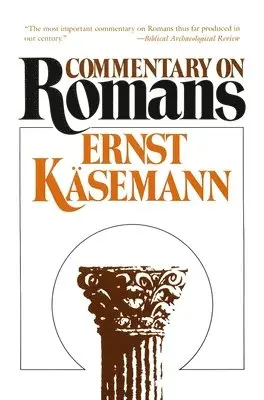
This commentary on Paul's letter to the Romans summarizes and completes Ernst Käsemann's lifelong study of Paul's theology and of this epistle in particular. As is common in his writings, Käsemann in this commentary has gone his own, frequently provocative way. He has emphasized theological rather than historical questions; as a result, this commentary divides Romans into sections according to what Käsemann sees as the key theological concept of the letter — the righteousness of God. That Käsemann has, however, considered seriously the historical as well as theological questions in the extensive literature on Romans is evident in the numerous references in the text and in the bibliographies provided for the major and minor subdivisions of the sections. This commentary has been translated from the German by Geoffrey W. Bromiley, who has translated, among other works, Kittel's Theological Dictionary of the New Testament. Long paragraphs in the original have been divided to provide easier reading, and the references have been converted to English- translation equivalents wherever possible. In addition, this translation incorporates changes that Käsemann made in the German original for the 4th edition.
In this book Ernst Käsemann - celebrated initiator of the twentieth-century "New Quest of the Historical Jesus" - examines the problem of the relation between discipleship and faith. / Käsemann first tackles specific passages in the Synoptic Gospels dealing with the summons to discipleship. He makes clear the relevance of the biblical message to human existence even today. In the second half he explores how themes relating to specific contemporary problems fulfill that message. / Here is a theologian who is radically and passionately committed to discipleship of the crucified Jesus of Nazareth - and who is not afraid to share that commitment.
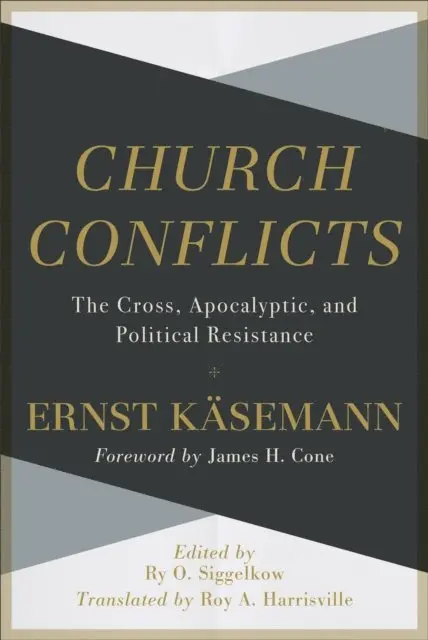
This important work by one of the most significant New Testament scholars of the modern period, now available in English for the first time, explores the significance of Christian apocalyptic for the church in times of conflict and crisis. Engaging with global social and political realities that are still very much with us, Ernst Käsemann offers a theological indictment of global white supremacy, capitalism, and militarism and passionately articulates an apocalyptic theology of liberation. The book includes a foreword by James H. Cone and an introduction by Ry O. Siggelkow.