1 882 kr
Skickas inom 7-10 vardagar
1 882 kr
Skickas inom 7-10 vardagar
1 303 kr
Läs direkt efter köp
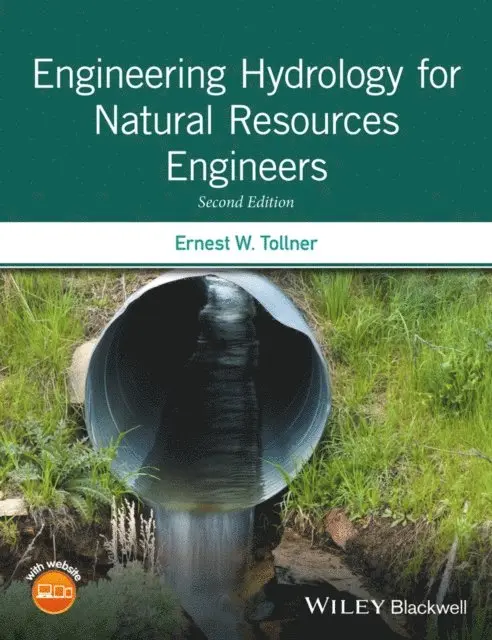
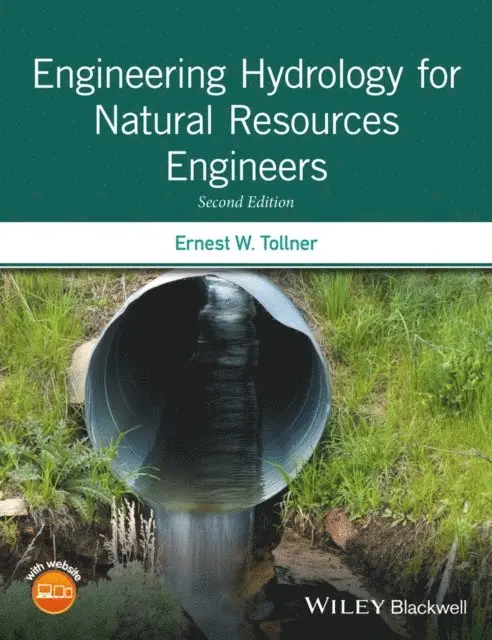
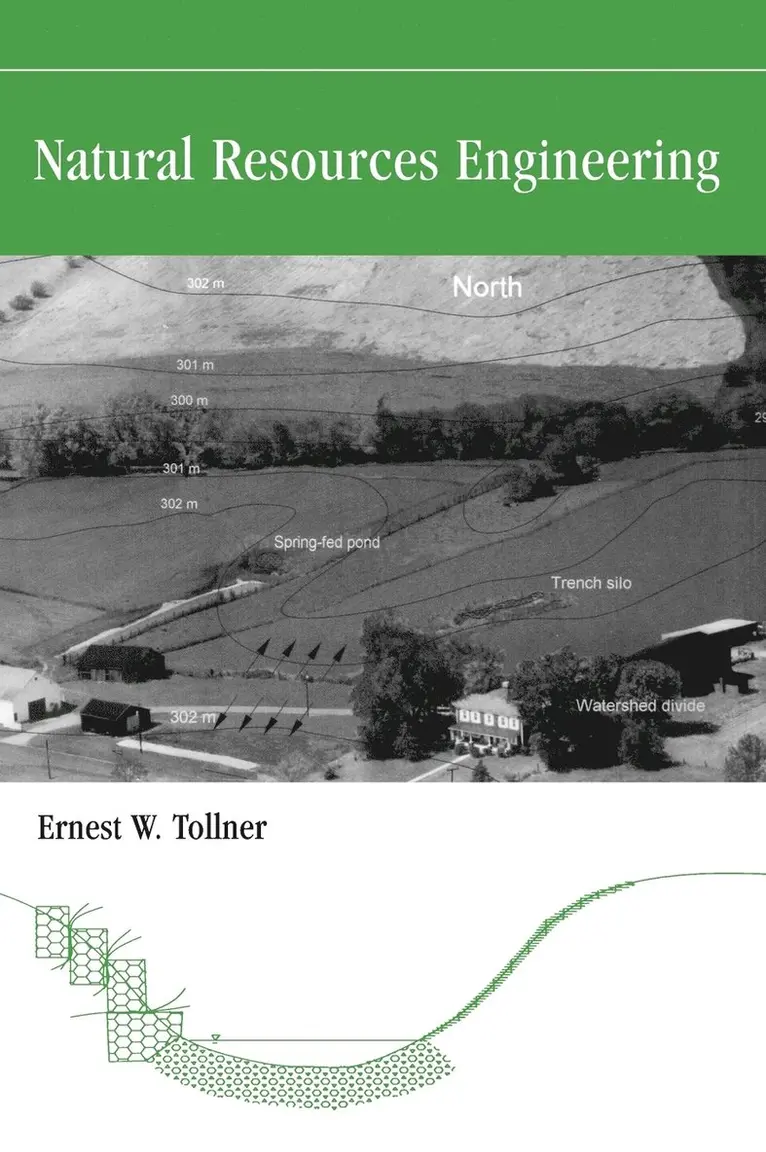
This fully revised edition provides a modern overview of the intersection of hydrology, water quality, and water management at the rural-urban interface. The book explores the ecosystem services available in wetlands, natural channels and ponds/lakes. As in the first edition, Part I examines the hydrologic cycle by providing strategies for quantifying each component: rainfall (with NOAH 14), infiltration, evapotranspiration and runoff. Part II examines field and farm scale water quality with an introduction to erosion prediction and water quality. Part III provides a concise examination of water management on the field and farm scale, emphasizing channel design, field control structures, measurement structures, groundwater processes and irrigation principles. Part IV then concludes the text with a treatment of basin-scale processes. A comprehensive suite of software tools is available for download, consisting of Excel spreadsheets, with some public domain models such as HY-8 culvert design, and software with public domain readers such as Mathematica, Maple and TK solver.
1 531 kr
Skickas inom 7-10 vardagar
1 808 kr
Läs direkt efter köp
A fundamental knowledge of flow in open channels is essential for the planning and design of systems to manage water resources. Open channel design has applications within many fields, including civil engineering, agriculture, hydrology, geomorphology, sedimentology, environmental fluid and sediment dynamics and river engineering.
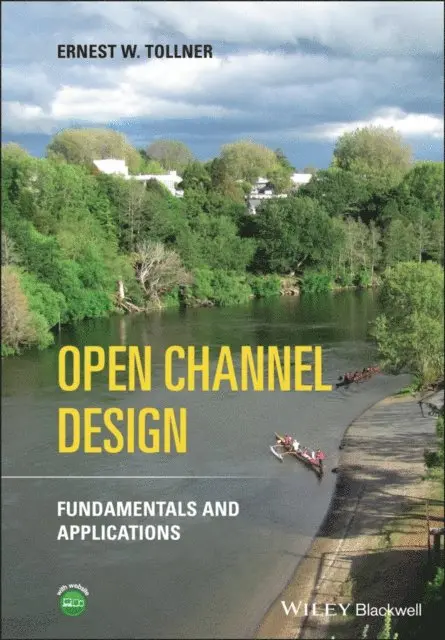
Open Channel Design: Fundamentals and Applications covers permissible velocity, tractive force, and regime theory design methodologies and applications. Hydraulic structures for flow control and measurement are covered. Flow profiles and their design implications are covered. Sediment transport mechanics and moveable boundaries in channels are introduced. Finally, a brief treatment of the St. Venant equations and Navier-Stokes equations are introduced as topics to be explored in more advanced courses. The central goal is to prepare students for work in engineering offices where they will be involved with aspects of land development and related consulting work. Students will also be prepared for advanced courses that will involve computational fluid dynamics approaches for solving 2-d and 3-d problems in advanced graduate level courses.
Offering a fresh approach, Open Channel Design: Fundamentals and Applications prepares students for work in engineering offices where they will be involved with aspects of land development and related consulting work. It also introduces the reader to software packages including Mathematica, HecRas and HY8, all widely used in professional settings.
1 769 kr
Läs direkt efter köp
A fundamental knowledge of flow in open channels is essential for the planning and design of systems to manage water resources. Open channel design has applications within many fields, including civil engineering, agriculture, hydrology, geomorphology, sedimentology, environmental fluid and sediment dynamics and river engineering.
Open Channel Design: Fundamentals and Applications covers permissible velocity, tractive force, and regime theory design methodologies and applications. Hydraulic structures for flow control and measurement are covered. Flow profiles and their design implications are covered. Sediment transport mechanics and moveable boundaries in channels are introduced. Finally, a brief treatment of the St. Venant equations and Navier-Stokes equations are introduced as topics to be explored in more advanced courses. The central goal is to prepare students for work in engineering offices where they will be involved with aspects of land development and related consulting work. Students will also be prepared for advanced courses that will involve computational fluid dynamics approaches for solving 2-d and 3-d problems in advanced graduate level courses.
Offering a fresh approach, Open Channel Design: Fundamentals and Applications prepares students for work in engineering offices where they will be involved with aspects of land development and related consulting work. It also introduces the reader to software packages including Mathematica, HecRas and HY8, all widely used in professional settings.
John Wiley and Sons Ltd
1 717 kr
Tillfälligt slut