559 kr
Skickas inom 10-15 vardagar
559 kr
Skickas inom 10-15 vardagar
750 kr
Läs direkt efter köp
559 kr
Skickas inom 10-15 vardagar
846 kr
Skickas inom 10-15 vardagar
1 084 kr
Läs direkt efter köp
This book demonstrates how a novel decision-aid, called a Benefit-Risk Characterization Theater (BRCT), can be used to:
· Significantly improve accurate communication of health risks from exposure to COVID-19; and
· Assess how to best contain and control COVID-19.
To date, there have been far-reaching ramifications based on ineffective risk communication when clarifying these health endpoints.
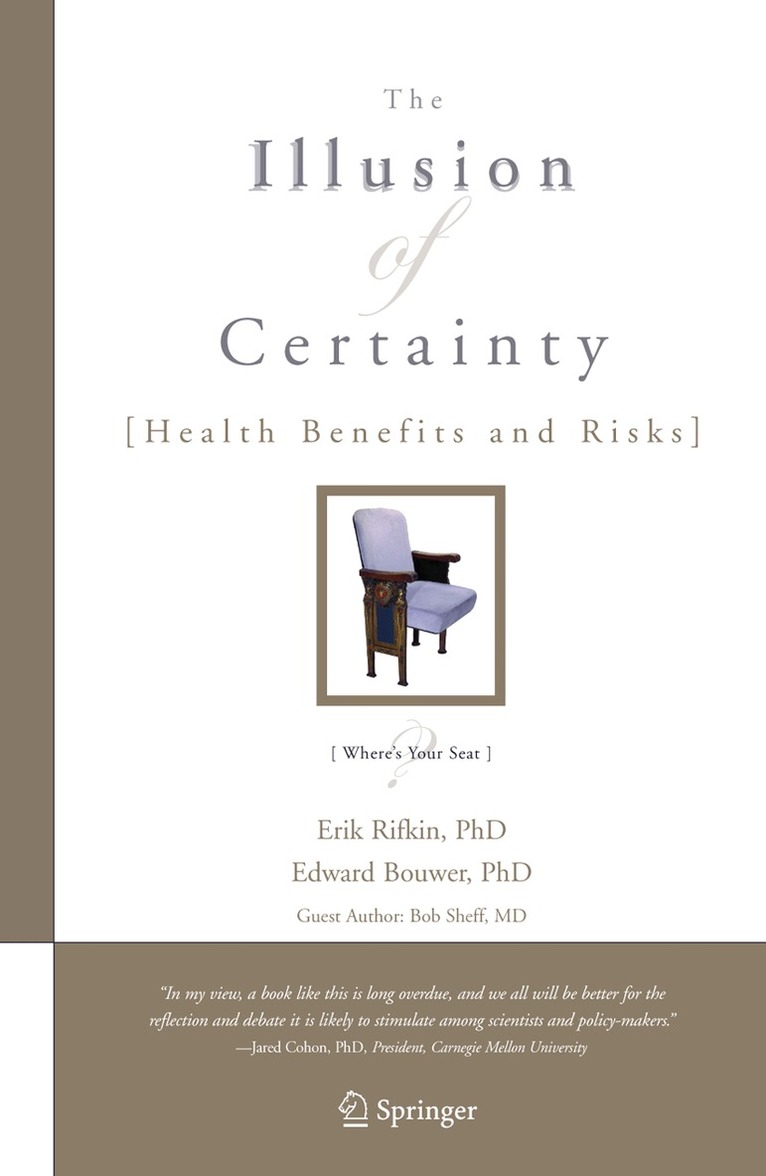
A BRCT is a familiar, theatrical chart representation of 1,000 people, with the risks and benefits shown by blackened seats. Since health outcomes can easily be put into such a chart, we show how BRCTs can be used objectively by professionals, the media and lay people. It allows characterization and communication of health benefits and risks of COVID-19 treatment and containment in an undemanding and straightforward way.BRCTs have been successfully used to assist patients in determining:
· Their level of acceptable risk of various medical interventions;
· If the benefits of intervention outweigh the risks;
· Who should make the final decision regarding medical intervention; and
· Whether the decision is evidence-based.
Written by experts in the field, this book fills in a gap in communication between the medical community, the public and patients. It also provides an area of expertise in communication that is beneficial for medical providers and medical students.
1 015 kr
Skickas inom 10-15 vardagar
1 335 kr
Läs direkt efter köp
This timely guide to communication in patient-centered medicine argues for greater clarity in explaining health risks versus benefits of an array of screening tests, procedures, and drug regimens. It reviews the growing trend toward patients'' involvement in their own care, particularly in terms of chronic conditions, and details approaches physicians can use to prepare patients (and themselves) for collaborative decision-making based on informed choices and clear, meaningful knowledge. Chapters apply this lens to a wide range of common interventions as contentious as estrogen replacement therapy and antibiotics, and as widely prescribed as the daily aspirin and the annual physical. With this goal in mind, the authors also introduce an innovative decision-making tool that translates risks and benefits into a clear graphic format for fewer chances of miscommunication or misunderstanding.
Among the topics covered:
Involving the patient in decision making.Towards a universal decision aid.BRCT: the Benefit/Risk Characterization Theater.Breast Cancer Screening—Mammograms.Prostate Cancer Screening.Colon cancer screening with colonoscopy.Screening for and treating dementia.Statins, cholesterol, and coronary heart disease.Physicians in family and internal medicine will find Interpreting Health Benefits and Risks: A Practical Guide to Facilitate Doctor- Patient Communication a valuable resource for communicating with patients and new possibilities for working toward their better health and health education.
This book considers several common and important situations where faulty decision-making makes overtreatment a serious risk. Clear, fair, referenced, and useful information is provided. And a powerful intuitive technique is introduced which allows patient and doctor to talk as equals as they work together in the exam room. The authorsemphasize that some patients who have been fully educated will still accept high risks of harm for a small chance of avoiding premature death. But as this book is accepted and its ideas and technique are extended, I feel sure that net harm to patients will be curtailed. And what is more, the integrity of the decision-making process will be improved.
—Thomas Finucane, MD, Professor of Medicine, Division of Gerontology and Geriatric Medicine, The Johns Hopkins University School of Medicine