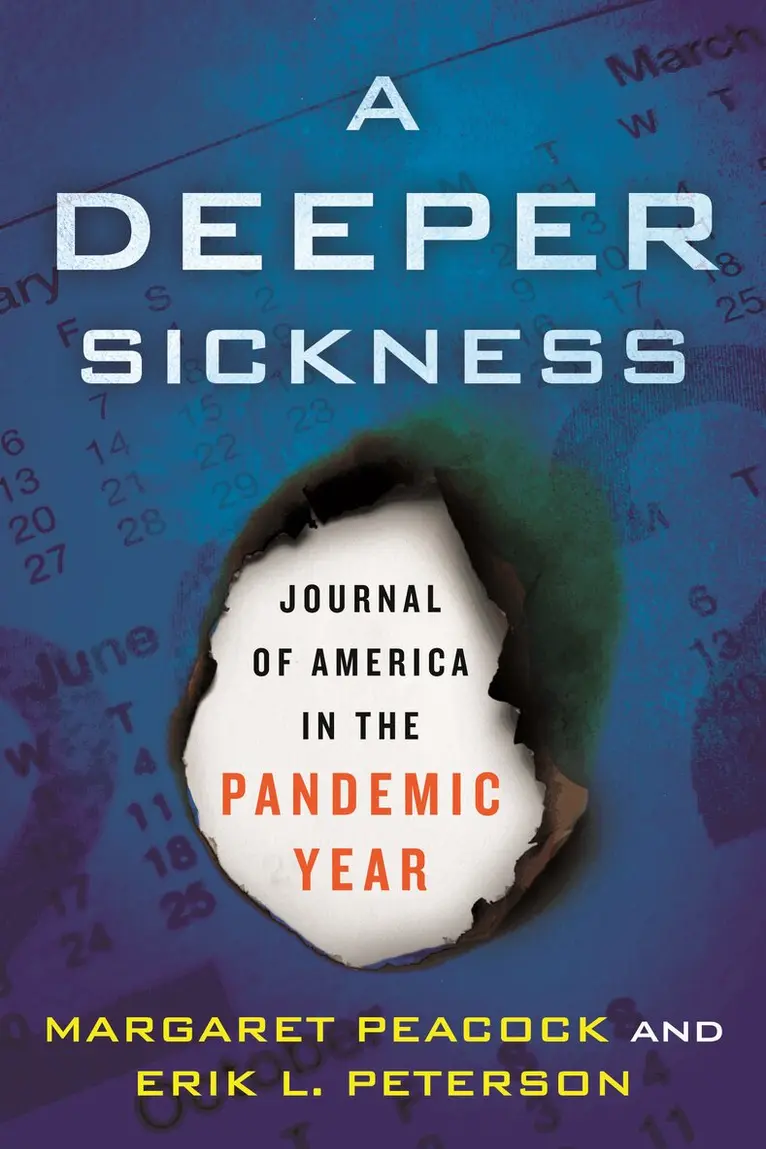
A harrowing chronicle by two leading historians, capturing in real time the events of a year marked by multiple devastations.When we look back at the year 2020, how can we describe what really happened? In A Deeper Sickness, award-winning historians Margaret Peacock and Erik Peterson set out to preserve what they call the “focused confusion,” and to probe deeper into what they consider the Four Pandemics that converged around the 12 astonishing months of 2020: • Disease • Disinformation • Poverty • Violence Drs. Peacock and Peterson use their interdisciplinary expertise to extend their analysis beyond the viral science, and instead into the social, political, and historical dimensions of this crisis. They consulted with dozens of experts and witnesses from a wide range of fields—from leading epidemiologists and health care workers to leaders of the Black Lives Matter movement, district attorneys, political scientists, philosophers, and more. Their journey revealed a sick country that believed it was well, a violent nation that believed it was peaceful; one that mistook poverty for prosperity and accountability for rebellion.Organized into the journal-entries along with dozens of archival images, A Deeper Sickness will help readers sift through the chaos and misinformation that characterized those frantic days. It is both an unflinching indictment of a nation that is still reeling and a testament to the power of human resilience and collective memory.Readers can share their story and become a contributing author by visiting an interactive digital museum, where the authors have preserved dozens of more stories and interviews.Visit Margaret Peacock and Erik L. Peterson’s digital museum at adhc.lib.ua.edu/pandemicbook/.
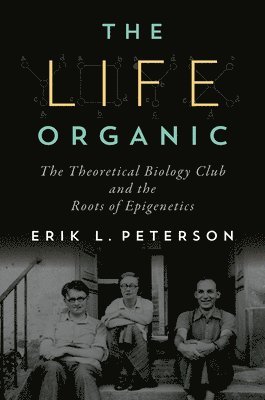
As scientists debated the nature of life in the nineteenth century, two theories predominated: vitalism, which suggested that living things contained a “vital spark,” and mechanism, the idea that animals and humans differed from nonliving things only in their degree of complexity. Erik L. Peterson tells the forgotten story of the pursuit of a Third Way in biology, known by many names, including “the organic philosophy,” which gave rise to C. H. Waddington’s work in the subfield of epigenetics: an alternative to standard genetics and evolutionary biology that captured the attention of notable scientists from Francis Crick to Stephen Jay Gould. The Life Organic chronicles the influential biologists, mathematicians, philosophers, and biochemists from both sides of the Atlantic who formed Joseph Needham’s Theoretical Biology Club, defined and refined Third-Way thinking through the 1930s, and laid the groundwork for some of the most cutting-edge achievements in biology today. By tracing the persistence of organicism into the twenty-first century, this book also raises significant questions about how we should model the development of the discipline of biology going forward.
The legend of Charles Darwin has never been more alive or more potent, but by virtue of this, his legacy has become susceptible to myths and misunderstandings. Understanding Charles Darwin examines key questions such as what did Darwin's work change about the world? In what ways is 'Darwinism' reflective of Darwin's own views? What problems were left unsolved? In our elevation of Darwin to this iconic status, have we neglected to recognise the work of other scientists? The book also examines Darwin's struggle with his religious beliefs, considering his findings, and whether he was truly an atheist. In this engaging account, Peterson paints an intimate portrait of Darwin from his own words in private correspondence and journals. The result is the Darwin you never knew.