212 kr
Skickas inom 7-10 vardagar
212 kr
Skickas inom 7-10 vardagar
772 kr
Skickas inom 5-8 vardagar
594 kr
Läs direkt efter köp
2 810 kr
Skickas inom 10-15 vardagar
3 873 kr
Kommande
2 602 kr
Skickas inom 10-15 vardagar
728 kr
Skickas inom 10-15 vardagar
850 kr
Läs direkt efter köp
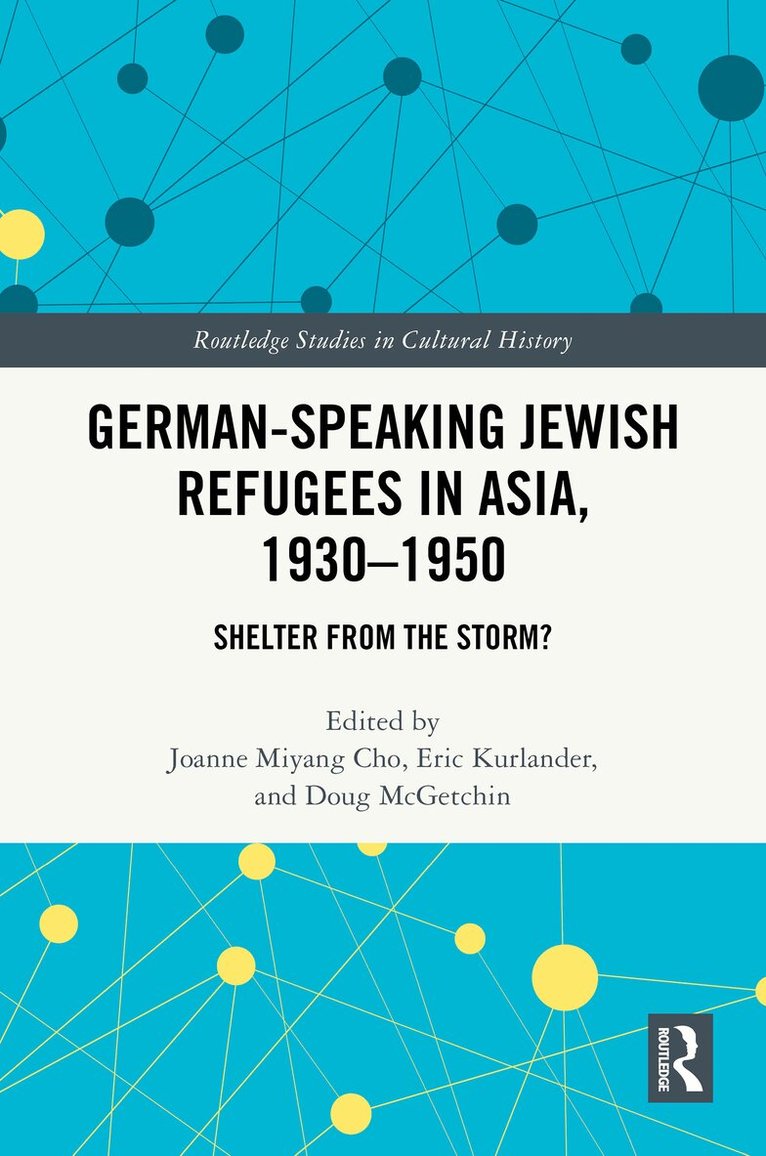
Although most perished, hundreds of thousands of Central European Jews escaped the Holocaust; tens of thousands of these Jewish refugees ended up in East Asia, Southeast Asia, or South Asia. Taking a global and transnational approach, this volume examines the cultural, political, and socioeconomic encounters among and between Asian and European states and empires, Central European Jews, and Asians between 1930 and 1950, offering important case studies that address the policies toward and experiences of German-speaking Jews across East Asia, Southeast Asia, and South Asia.
The strength of this volume lies not only in its efforts to include multiple theoretical perspectives, which integrate German, Jewish, Asian, and Migration Studies, but also in the original empirical research on which it is based. Engaging directly with the rich and growing historiography on the origins, course, and consequences of the Holocaust in East, Southeast, and South Asia, this volume provides a framework in which we can better understand how global traditions of empire and colonialism matter in our efforts to understand the Holocaust, while indicating that Asian states and peoples were keenly aware of the so-called “Jewish Question” and made efforts, though widely differentiated, to provide shelter from the Nazi storm.
German-Speaking Jewish Refugees in Asia, 1930–1950 will appeal to students and scholars alike interested in the history of Jewish refugees in the twentieth century, as well as all those interested in the modern history of German-speaking Central Europe and Asia.
856 kr
Läs direkt efter köp
Although most perished, hundreds of thousands of Central European Jews escaped the Holocaust; tens of thousands of these Jewish refugees ended up in East Asia, Southeast Asia, or South Asia. Taking a global and transnational approach, this volume examines the cultural, political, and socioeconomic encounters among and between Asian and European states and empires, Central European Jews, and Asians between 1930 and 1950, offering important case studies that address the policies toward and experiences of German-speaking Jews across East Asia, Southeast Asia, and South Asia.
The strength of this volume lies not only in its efforts to include multiple theoretical perspectives, which integrate German, Jewish, Asian, and Migration Studies, but also in the original empirical research on which it is based. Engaging directly with the rich and growing historiography on the origins, course, and consequences of the Holocaust in East, Southeast, and South Asia, this volume provides a framework in which we can better understand how global traditions of empire and colonialism matter in our efforts to understand the Holocaust, while indicating that Asian states and peoples were keenly aware of the so-called “Jewish Question” and made efforts, though widely differentiated, to provide shelter from the Nazi storm.
German-Speaking Jewish Refugees in Asia, 1930–1950 will appeal to students and scholars alike interested in the history of Jewish refugees in the twentieth century, as well as all those interested in the modern history of German-speaking Central Europe and Asia.
852 kr
Skickas inom 10-15 vardagar
999 kr
Läs direkt efter köp
999 kr
Läs direkt efter köp
1 306 kr
Kommande
359 kr
Lyssna direkt efter köp
The Nazi fascination with the occult is legendary, yet today it is often dismissed as Himmler’s personal obsession or wildly overstated for its novelty. Preposterous though it was, however, supernatural thinking was inextricable from the Nazi project. The regime enlisted astrology and the paranormal, paganism, Indo-Aryan mythology, witchcraft, miracle weapons, and the lost kingdom of Atlantis in reimagining German politics and society and recasting German science and religion. In this eye-opening history, Eric Kurlander reveals how the Third Reich’s relationship to the supernatural was far from straightforward. Even as popular occultism and superstition were intermittently rooted out, suppressed, and outlawed, the Nazis drew upon a wide variety of occult practices and esoteric sciences to gain power, shape propaganda and policy, and pursue their dreams of racial utopia and empire.
Histories, Realities, Legacies
1 319 kr
Skickas inom 10-15 vardagar
Histories, Realities, Legacies
400 kr
Skickas inom 10-15 vardagar
Ethnicity, National Identity, and the Decline of German Liberalism, 1898-1933
2 186 kr
Skickas inom 7-10 vardagar
342 kr
Tillfälligt slut