2 324 kr
Skickas inom 10-15 vardagar
2 324 kr
Skickas inom 10-15 vardagar
791 kr
Läs direkt efter köp
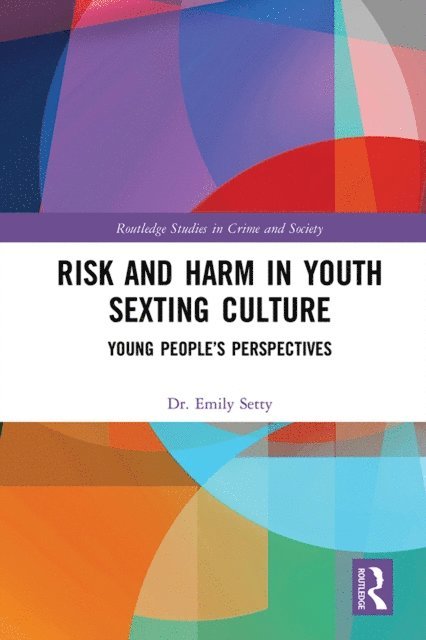
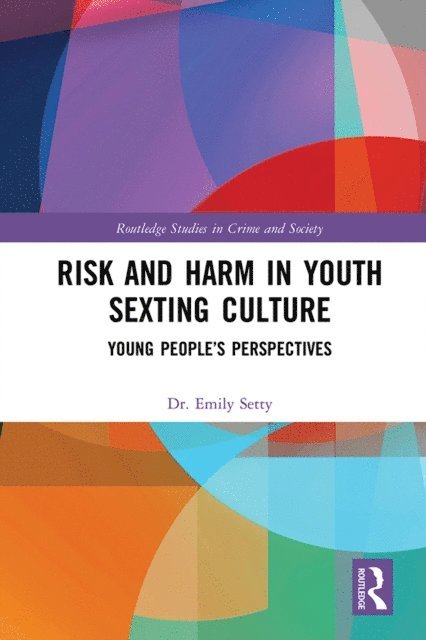
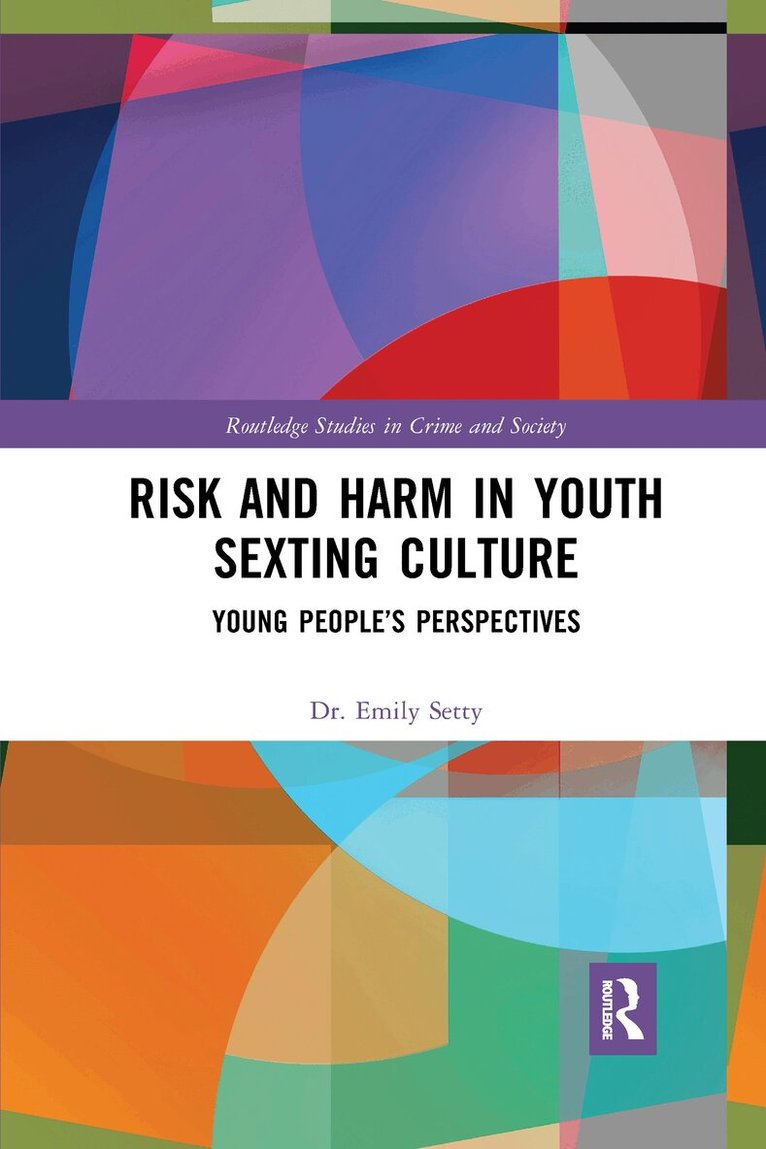
This book explores young people’s perspectives on risk and harm in youth sexting, specifically privacy violations and unwanted, pressured and coerced sexting. This book engages with key debates, academic literature and evidence, as well as findings of a study into young people’s perceptions of, attitudes toward and experiences of sexting. It challenges predominant assumptions that youth sexting is inherently risky and deviant and sets out the specific contexts in which privacy violations and unwanted sexting occur. It explores the sociocultural contexts underpinning harm, including gender, sexism, sexuality, status and power, and associated constructs of risk and shame, as well as broader youth cultural contexts that create and giving meaning to sexters and sexting practices, particularly related to victim-blaming, social shaming, bullying, harassment and abuse. Finally, it discusses young people’s attitudes and beliefs about interventions to reduce the prevalence of youth sexting. In doing so, the book critically engages with young people’s perspectives in order make practical recommendations for encouraging a ‘digital sexual ethics’ based on rights to bodily and sexual expression, autonomy and integrity, positive bystander intervention, and anti-victim blaming and abuse messages. This book will be of great interest to scholars and students of criminology, education, social care, sociology and health. It will also be a valuable resource for those working in educational and social care settings such as sex educators, youth and social workers, youth counsellors and mental health professionals.
814 kr
Läs direkt efter köp
This book explores young people’s perspectives on risk and harm in youth sexting, specifically privacy violations and unwanted, pressured and coerced sexting. This book engages with key debates, academic literature and evidence, as well as findings of a study into young people’s perceptions of, attitudes toward and experiences of sexting. It challenges predominant assumptions that youth sexting is inherently risky and deviant and sets out the specific contexts in which privacy violations and unwanted sexting occur. It explores the sociocultural contexts underpinning harm, including gender, sexism, sexuality, status and power, and associated constructs of risk and shame, as well as broader youth cultural contexts that create and giving meaning to sexters and sexting practices, particularly related to victim-blaming, social shaming, bullying, harassment and abuse. Finally, it discusses young people’s attitudes and beliefs about interventions to reduce the prevalence of youth sexting. In doing so, the book critically engages with young people’s perspectives in order make practical recommendations for encouraging a ‘digital sexual ethics’ based on rights to bodily and sexual expression, autonomy and integrity, positive bystander intervention, and anti-victim blaming and abuse messages. This book will be of great interest to scholars and students of criminology, education, social care, sociology and health. It will also be a valuable resource for those working in educational and social care settings such as sex educators, youth and social workers, youth counsellors and mental health professionals.
673 kr
Skickas inom 10-15 vardagar
664 kr
Läs direkt efter köp
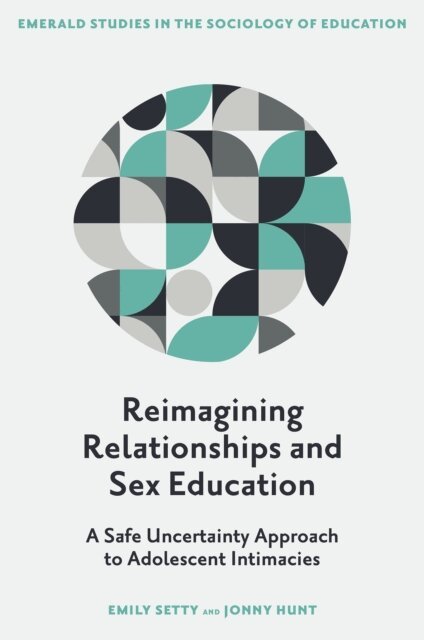
At a time when concerns about sexual violence, online harms and the efficacy of Relationships and Sex Education (RSE) frameworks are at the forefront of public discourse, this book offers a timely and necessary intervention. Presenting the concept of ‘safe uncertainty’ as a transformative framework for understanding adolescent intimacies and relationships, authors Setty and Hunt critique current deficit models in relationships and sex education in place of a more nuanced engagement with digital intimacies, online sexual learning and sex media, healthy relationships, gender and consent.
Traditional approaches to RSE, while well-intentioned, can reduce complex social and emotional dynamics to simplistic binaries, leaving young people ill-equipped to navigate the inherent ambivalences and ambiguities of intimacy and relationality. Drawing on original research and case studies from the authors’ practice, this text demonstrates how safe uncertainty acknowledges ambiguity and ambivalence as integral parts of relationships and intimacy and involves creating environments where young people can explore their perspectives and experiences without fear of judgment or rigid moral or legal solutions. Aligned with a broader need for relational, developmental and contextual approaches to understanding adolescent intimacies, Setty and Hunt explore how this framework encourages educators, policymakers and researchers to move beyond knowledge-transfer models and instead focus on equipping young people with the skills to navigate uncertainty in ways that promote emotional resilience and ethical decision-making as sexual citizens.
Connecting the concept of safe uncertainty with critical debates on consent, gender and digital culture, this timely contribution bridges gaps between research, practice and policy on both a national and an international scale.
620 kr
Skickas inom 7-10 vardagar
664 kr
Läs direkt efter köp
At a time when concerns about sexual violence, online harms and the efficacy of Relationships and Sex Education (RSE) frameworks are at the forefront of public discourse, this book offers a timely and necessary intervention. Presenting the concept of ‘safe uncertainty’ as a transformative framework for understanding adolescent intimacies and relationships, authors Setty and Hunt critique current deficit models in relationships and sex education in place of a more nuanced engagement with digital intimacies, online sexual learning and sex media, healthy relationships, gender and consent.
Traditional approaches to RSE, while well-intentioned, can reduce complex social and emotional dynamics to simplistic binaries, leaving young people ill-equipped to navigate the inherent ambivalences and ambiguities of intimacy and relationality. Drawing on original research and case studies from the authors’ practice, this text demonstrates how safe uncertainty acknowledges ambiguity and ambivalence as integral parts of relationships and intimacy and involves creating environments where young people can explore their perspectives and experiences without fear of judgment or rigid moral or legal solutions. Aligned with a broader need for relational, developmental and contextual approaches to understanding adolescent intimacies, Setty and Hunt explore how this framework encourages educators, policymakers and researchers to move beyond knowledge-transfer models and instead focus on equipping young people with the skills to navigate uncertainty in ways that promote emotional resilience and ethical decision-making as sexual citizens.
Connecting the concept of safe uncertainty with critical debates on consent, gender and digital culture, this timely contribution bridges gaps between research, practice and policy on both a national and an international scale.
1 522 kr
Skickas inom 7-10 vardagar
1 826 kr
Läs direkt efter köp
This book presents research conducted with children and young people about online harms, with a UK focus, while aiming to stimulate comparative analyses of other countries too. While the chapters vary in how data-driven they are, each will explore conceptualisations of online harm, children and young people’s experiences of online harms, and their perspectives on interventions to educate about and address online harms. While the UK government claimed in 2019 to be introducing ‘tough new measures to make the UK the safest place to be online’, it has been noted that there may be a limited capacity for formal legislation to address the complexities of contemporary digital life for children and young people; instead, tackling online harms has to be part of a broader agenda and must account for the diverse and socially contingent nature of children''s and young people’s experiences online, as evidenced by extensive research undertaken with children and young people.
With the finalisation of legislation surrounding online harms in the UK imminent, the objective of this collection is to shape the implementation of policy in practice settings. To support practice development, the book offers vignette-style pieces that will describe examples of policy and practice models and how these models can support children''s and young people’s active participation in understanding online harms. As a result of this, the findings of this book will minimise the disparity between the practice, policy and research through speaking to the interface between these fields in the UK context.
1 487 kr
Skickas inom 10-15 vardagar