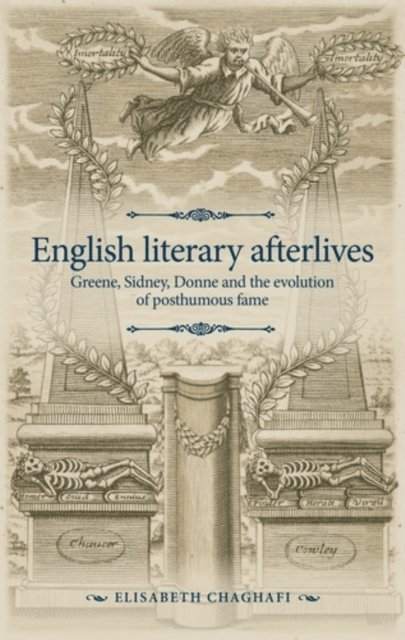
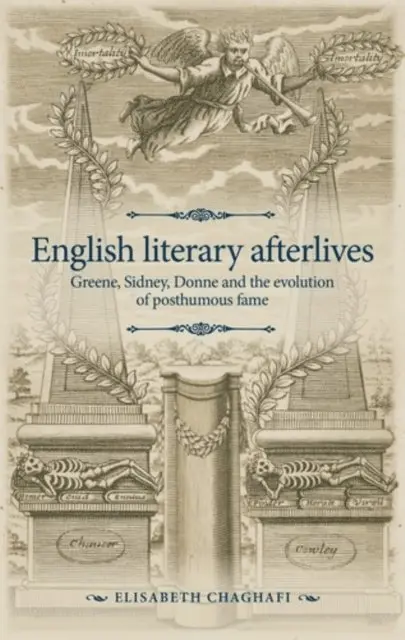
English Literary Afterlives traces life narratives of early modern authors created for them after their deaths by readers or publishers, who retrospectively tried to make sense of the author’s life and works. In a series of case-studies of the reception history of major poets – Sidney, Spenser, Donne, Herbert, as well as Robert Greene, the first ‘celebrity author’ – within a generation of their deaths, it shows how those authors were posthumously fashioned and refashioned. It argues that during the early modern period there is a gradual movement towards biographical readings that attempt to find the author in the works, which in turn led to the emergence of written lives that consider poets not in terms of their ‘public’ lives but in terms of their poetic activity, i.e. the beginnings of literary biography.Will be of interest to students and scholars of several canonical early modern authors.
This is a new edition of Spenser’s Complaints (1591), which provides unrivalled support in the reading and interpretation of these crucial poems. The introduction surveys the publication in terms of Spenser’s life, his experiments with the complaint mode, the scandal of the original publication, and the creative-critical aspects of the poems. It also considers in depth the text of the poems and the evidence of its early reception through a thorough re-evaluation of surviving manuscript copies of the poems, all of which were copied from print versions. The edition provides new support for the reading of the translation Virgils Gnat in the shape of a new translation of the text Spenser used by Syrithe Pugh, supplemented by a commentary that considers his choices as a translator. The volume also includes Daphnaïda, a poem printed at the same time as the rest of the volume and responding to analogous literary stimuli.
Modern readers mostly know Sir Philip Sidney’s Arcadia in its complete ‘old’ version, but it is the New Arcadia (published in 1590), a revised version of his pastoral romance The Countess of Pembroke’s Arcadia, that was the most influential and most widely imitated literary text of the sixteenth century. Preserving the basic plot, New Arcadia adds further narrative strands and introduces ambitious revisions, demonstrating Sidney’s brilliance as a prose writer.This edition of the New Arcadia is the first in nearly four decades, preserving the text of Victor Skretkowicz’ celebrated 1987 edition, whilst making the text accessible through modern spelling and supplementing it with a substantially expanded scholarly commentary, an updated glossary, and additional long notes on the book’s history and Sidney’s use of rhetorical devices, as well as his contributions to the English language.
English Literary Afterlives traces life narratives of early modern authors created for them after their deaths by readers or publishers, who retrospectively tried to make sense of the author’s life and works. In a series of case-studies of the reception history of major poets – Sidney, Spenser, Donne, Herbert, as well as Robert Greene, the first ‘celebrity author’ – within a generation of their deaths, it shows how those authors were posthumously fashioned and refashioned. It argues that during the early modern period there is a gradual movement towards biographical readings that attempt to find the author in the works, which in turn led to the emergence of written lives that consider poets not in terms of their ‘public’ lives but in terms of their poetic activity, i.e. the beginnings of literary biography.Will be of interest to students and scholars of several canonical early modern authors.