1 508 kr
Skickas inom 10-15 vardagar
1 508 kr
Skickas inom 10-15 vardagar
1 033 kr
Skickas inom 10-15 vardagar
384 kr
Skickas inom 10-15 vardagar
424 kr
Läs direkt efter köp
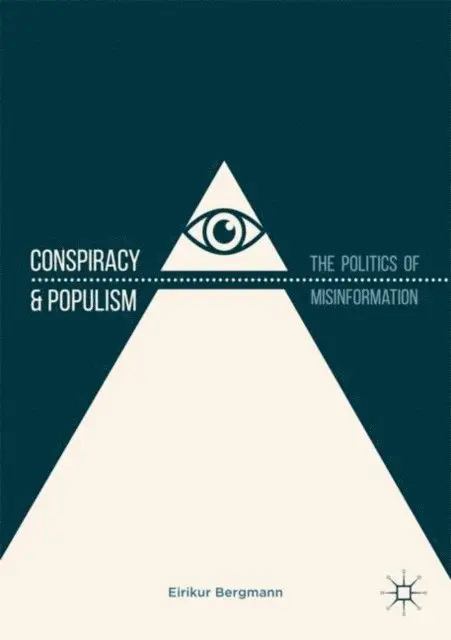
This book explores the relevance of conspiracy theories in the modern social and political history of the Nordic countries.
The Nordic countries have traditionally imagined themselves as stable, wealthy, egalitarian welfare states. Conspiracy theories, mistrust and disunity, the argument goes, happened elsewhere in Europe (especially Eastern Europe), the Middle East or in the United States. This book paints a different picture by demonstrating that conspiracy theories have always existed in the Nordic region, both as a result of structural tensions between different groups and in the aftermath of traumatic events, but seem to have become more prominent over the last 30 or 40 years. While the book covers events and developments in each of the Nordic countries (Sweden, Norway, Denmark, Iceland and Finland), it is not a comparative country analysis. Rather, the book focuses on conspiracy theories in and about the Nordic region as a region, arguing that similarities in the trajectories of conspiratorial thinking are interesting to examine in cultural, social, and political terms. The book takes a thematic approach, including looking at states and elites; family, gender and sexuality; migration and the outside view on the Nordic region; conspiracy theories about the Nordic countries; and Nordic noir.
This book will be of great interest to researchers on extremism, conspiracy theories and the politics of the Nordic countries.
430 kr
Läs direkt efter köp
This book explores the relevance of conspiracy theories in the modern social and political history of the Nordic countries.
The Nordic countries have traditionally imagined themselves as stable, wealthy, egalitarian welfare states. Conspiracy theories, mistrust and disunity, the argument goes, happened elsewhere in Europe (especially Eastern Europe), the Middle East or in the United States. This book paints a different picture by demonstrating that conspiracy theories have always existed in the Nordic region, both as a result of structural tensions between different groups and in the aftermath of traumatic events, but seem to have become more prominent over the last 30 or 40 years. While the book covers events and developments in each of the Nordic countries (Sweden, Norway, Denmark, Iceland and Finland), it is not a comparative country analysis. Rather, the book focuses on conspiracy theories in and about the Nordic region as a region, arguing that similarities in the trajectories of conspiratorial thinking are interesting to examine in cultural, social, and political terms. The book takes a thematic approach, including looking at states and elites; family, gender and sexuality; migration and the outside view on the Nordic region; conspiracy theories about the Nordic countries; and Nordic noir.
This book will be of great interest to researchers on extremism, conspiracy theories and the politics of the Nordic countries.
637 kr
Skickas inom 10-15 vardagar
2 526 kr
Skickas inom 10-15 vardagar
658 kr
Läs direkt efter köp
This book analyses the discursive weaponization of conspiracy theories.
In an era where truth and fiction converge, nativist populist leaders wield conspiracy theories as political weapons. This text examines the interplay between populism and conspiracism, probing their impact on democratic processes and exploring their broader political implications. The work dissects three predominant conspiracy theories: The Eurabia theory in Europe, the Deep State in the United States, and anti-Western narratives in Russia. It shows their evolution from fringe ideas to mainstream political tools and reveals the leaders’ triple strategy: Constructing external threats, demonizing internal elites, and positioning themselves as protectors of the ‘true people.’ It also examines how digital media facilitates the spread of these narratives, undermining institutional trust and fuelling extremism.
Weaponizing Conspiracy Theories serves as a guide to recognize and navigate the distorted realities reshaping our world. It offers essential insights into the complex dynamics of 21st-century global politics. The author argues that to properly understand the functions of contemporary politics, into which conspiracy theories and populism are now deeply integrated, we must both examine the impact that conspiracy theories have on people’s understandings of the world and how populist politicians can appeal to these beliefs.
The book will be of interest to students and scholars of conspiracy theories, populism, and contemporary politics.
550 kr
Skickas inom 10-15 vardagar
847 kr
Läs direkt efter köp
2 069 kr
Läs direkt efter köp
Based on a constructivist approach, this book offers a comparative analysis into the causes of nationalist populist politics in each of the five Nordic independent nation states. Behind the social liberal façade of the economically successful, welfare-orientated Nordic states, right-wing populism has found support in the region. Such parties emerged first in Denmark and Norway in the 1970s, before becoming prominent in Sweden and Finland after the turn of the millennium and in Iceland in the wake of the financial crisis of 2008, when populist parties surged throughout the Nordics. The author traces these Nationalist trails of thoughts back to the National Socialistic movements of the 1920s and 1930s (the respective Nordic version Nazi parties) and before, to the birth of the Nordic nation states in the nineteenth century following the failure of integration. Since then, as the book argues, separate nationalisms have grown strong in each of the countries. This study will appeal to students and scholars as well as wider audiences interested in European Politics, Nordic Politics, Nationalism, and Populism.

603 kr
Skickas inom 10-15 vardagar
1 524 kr
Skickas inom 10-15 vardagar
315 kr
Skickas inom 10-15 vardagar
408 kr
Läs direkt efter köp
418 kr
Skickas inom 7-10 vardagar
728 kr
Läs direkt efter köp