This landmark work represents an imaginative and important new analysis of the basic development of the Scriptures through the centuries. Christensen explores the overall unity of the entire Bible, not just as a collection of sixty-six or seventy-two individual books, nor just as the Old and New Testaments, but as a single literary work that comprises today's Christian Bible. He shows how it emerged over the course of centuries in distinct stages. The Hebrew Scriptures or Old Testament developed in three steps from the formation of the Pentateuch and Prophets that took place up to the time of Josiah in the seventh century B.C.E., followed by the production of the Deuteronomic Canon during and following the Exile, and then the completion of the whole Hebrew Canon as we now have it. This was followed by a second major phase - the development of the Apostolic writings to be added to the First Testament as a Second (or New) Testament. After tracing the growth of the Bible in these stages, Christensen examines the structure and literary art of each major section from the Pentateuch (Torah) to the New Testament.
The Former Prophets are usually called 'History Books' by most Christians. Learn why Yeshua (Jesus) and the first generation of Christians included these books among the 'Prophets' and how they relate to the Latter Prophets.
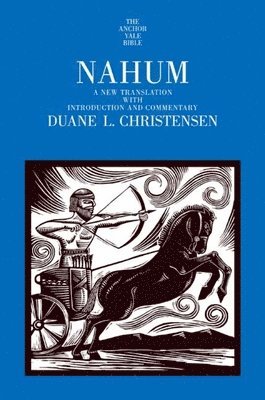
This volume demonstrates the intricate literary structure and high poetic quality of the book of Nahum and represents a significant break-through in the study of Hebrew prosody with important implications for understanding the formation of the canon of the Hebrew Bible.This volume represents a significant breakthrough in the study of Hebrew prosody with important implications for understanding the formation of the canon of the Hebrew Bible. Duane Christensen, a renowned biblical scholar, offers a detailed analysis of the Hebrew text of Nahum and demonstrates the intricate literary structure and high poetic quality of the work.Nahum is a book about God’s justice and portrays God as strong, unyielding, and capable of great anger. This view of God’s nature stands in contrast to that found in Jonah, another book in the section of the Hebrew Bible known as the Book of the Twelve Prophets, which presents God as “compassionate, gracious . . . [and] abounding in steadfast love.” Christensen shows how Nahum and Jonah present complementary aspects of God’s nature, each essential for an understanding of the divine being. The commentary includes the most extensive bibliography published to date of works cited.
The very nature of the Book of Deuteronomy attracts the attention of all who work in the disciplines of biblical theology and historical-critical methodology. This volume collects twenty-five seminal articles (several published for the first time in English) that provide a vital introduction to the major interpretive issues surrounding Deuteronomy. This volume will serve as a primary or supplementary textbook in upper-level Deuteronomy or Pentateuch courses and will be an invaluable resource to all students and scholars working in the Book of Deuteronomy.