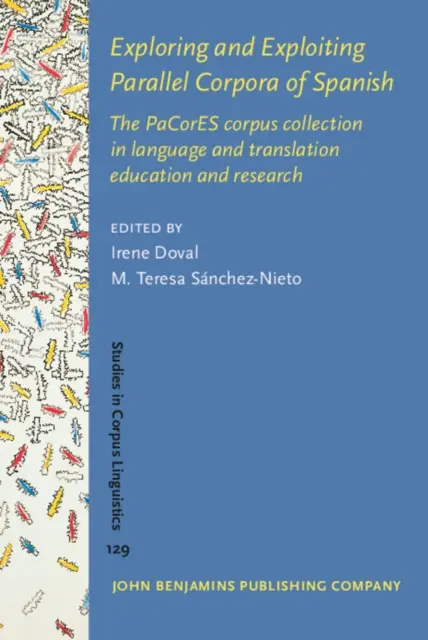
This volume assesses the state of the art of parallel corpus research in the era of Artificial Intelligence, reporting on the development and exploitation of the Parallel Corpora of Spanish (PaCorES) collection, which comprises bidirectional, balanced resources bridging Spanish with German, English, and Chinese. The volume addresses core methodological issues-such as corpus design, annotation, retrieval, and the alignment of typologically distant languages-positioning these resources as a strategic benchmark for both descriptive linguistics and technological applications. The volume is structurally divided into two main thematic sections. The first section explores the role of parallel corpora in foreign language learning and translator training, focusing on Data-Driven Learning (DDL), linguistic awareness, and the development of translation competence. The second section brings together empirical studies within contrastive linguistics and translation studies, examining cross-linguistic asymmetries, semantic correspondences, and translator behavior through authentic textual data. The volume will be of interest to scholars in contrastive linguistics, translation studies, translator education, second language pedagogy, and critical AI literacy.
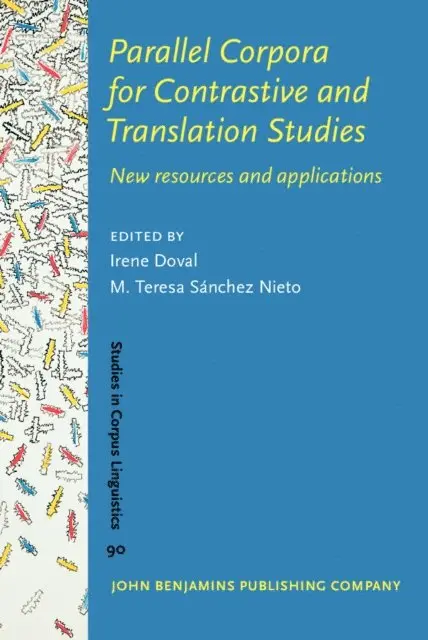
This volume assesses the state of the art of parallel corpus research as a whole, reporting on advances in both recent developments of parallel corpora – with some particular references to comparable corpora as well– and in ways of exploiting them for a variety of purposes. The first part of the book is devoted to new roles that parallel corpora can and should assume in translation studies and in contrastive linguistics, to the usefulness and usability of parallel corpora, and to advances in parallel corpus alignment, annotation and retrieval. There follows an up-to-date presentation of a number of parallel corpus projects currently being carried out in Europe, some of them multimodal, with certain chapters illustrating case studies developed on the basis of the corpora at hand. In most of these chapters, attention is paid to specific technical issues of corpus building. The third part of the book reflects on specific applications and on the creation of bilingual resources from parallel corpora. This volume will be welcomed by scholars, postgraduate and PhD students in the fields of contrastive linguistics, translation studies, lexicography, language teaching and learning, machine translation, and natural language processing.