3 883 kr
Skickas inom 7-10 vardagar
3 883 kr
Skickas inom 7-10 vardagar
5 112 kr
Skickas inom 7-10 vardagar
1 612 kr
Skickas inom 7-10 vardagar
428 kr
Skickas inom 7-10 vardagar
503 kr
Läs direkt efter köp
346 kr
Skickas inom 10-15 vardagar
1 123 kr
Skickas inom 7-10 vardagar
427 kr
Skickas inom 7-10 vardagar
428 kr
Skickas inom 7-10 vardagar
307 kr
Skickas inom 7-10 vardagar
293 kr
Skickas inom 7-10 vardagar
1 115 kr
Skickas inom 7-10 vardagar
527 kr
Läs direkt efter köp
An in-depth look at the rising American generation entering the Black professional classDespite their diversity, Black Americans have long been studied as a uniformly disadvantaged group. Drawing from a representative sample of over a thousand Black students and in-depth interviews and focus groups with over one hundred more, Young, Gifted and Diverse highlights diversity among the new educated Black elite—those graduating from America’s selective colleges and universities in the early twenty-first century.Differences in childhood experiences shape this generation, including their racial and other social identities and attitudes, and beliefs about and interactions with one another. While those in the new Black elite come from myriad backgrounds and have varied views on American racism, as they progress through college and toward the Black professional class they develop a shared worldview and group consciousness. They graduate with optimism about their own futures, but remain guarded about racial equality more broadly. This internal diversity alongside political consensus among the elite complicates assumptions about both a monolithic Black experience and the future of Black political solidarity.
385 kr
Skickas inom 7-10 vardagar
822 kr
Läs direkt efter köp
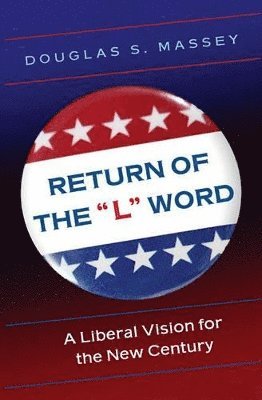
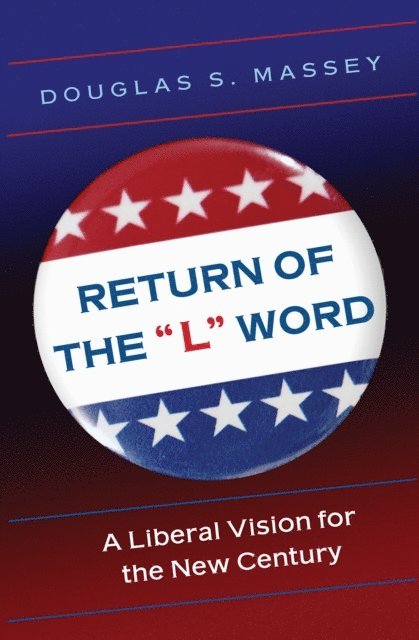
Somewhere in the 1970s liberals in the United States lost their way. After successes like the New Deal, they became arrogant. So argues Douglas Massey in Return of the "L" Word. Faced with the difficult politics of race and class, liberals used the heavy hand of government to impose policies on a resentful public. Conservatives capitalized on this with a staunch ideology of free markets, limited government, and conservative social values. The time is ripe for a liberal realignment, declares Massey, but what has been lacking is a consistent liberal ideology that explains to voters, in simple terms, government''s vital role in producing a healthier, more financially equitable, less divided society. This book supplies that ideology. Massey begins his powerful manifesto by laying out the liberals'' mistakes over the past twenty years. Drawing on insights from the expanding field of economic sociology, he then sets forth a clear set of liberal principles to explain how markets work in society, principles he applies to articulate salable liberal policies. After outlining a new liberal political philosophy, Massey traces liberalism''s opposition and says plainly: liberals should have no illusions about the competition''s resolve and skill. He closes with a practical approach to liberal coalition-building in America. The political economy conservatives have constructed in recent decades has benefited 20 percent of the people. Liberal success requires a return to material rather than symbolic politics, showing most Americans why it is in their economic as well as moral interest to support the liberal cause.
413 kr
Läs direkt efter köp
Building on their important findings in The Source of the River, the authors now probe even more deeply into minority underachievement at the college level. Taming the River examines the academic and social dynamics of different ethnic groups during the first two years of college. Focusing on racial differences in academic performance, the book identifies the causes of students'' divergent grades and levels of personal satisfaction with their institutions. Using survey data collected from twenty-eight selective colleges and universities, Taming the River considers all facets of student life, including who students date, what fields they major in, which sports they play, and how they perceive their own social and economic backgrounds. The book explores how black and Latino students experience pressures stemming from campus racial climate and "stereotype threat"--when students underperform because of anxieties tied to existing negative stereotypes. Describing the relationship between grade performance and stereotype threat, the book shows how this link is reinforced by institutional practices of affirmative action. The authors also indicate that when certain variables are controlled, minority students earn the same grades, express the same college satisfaction, and remain in school at the same rates as white students. A powerful look at how educational policies unfold in America''s universities, Taming the River sheds light on the social and racial factors influencing student success.
578 kr
Läs direkt efter köp
African Americans and Latinos earn lower grades and drop out of college more often than whites or Asians. Yet thirty years after deliberate minority recruitment efforts began, we still don''t know why. In The Shape of the River, William Bowen and Derek Bok documented the benefits of affirmative action for minority students, their communities, and the nation at large. But they also found that too many failed to achieve academic success. In The Source of the River, Douglas Massey and his colleagues investigate the roots of minority underperformance in selective colleges and universities. They explain how such factors as neighborhood, family, peer group, and early schooling influence the academic performance of students from differing racial and ethnic origins and differing social classes. Drawing on a major new source of data--the National Longitudinal Survey of Freshmen--the authors undertake a comprehensive analysis of the diverse pathways by which whites, African Americans, Latinos, and Asians enter American higher education. Theirs is the first study to document the different characteristics that students bring to campus and to trace out the influence of these differences on later academic performance. They show that black and Latino students do not enter college disadvantaged by a lack of self-esteem. In fact, overconfidence is more common than low self-confidence among some minority students. Despite this, minority students are adversely affected by racist stereotypes of intellectual inferiority. Although academic preparation is the strongest predictor of college performance, shortfalls in academic preparation are themselves largely a matter of socioeconomic disadvantage and racial segregation. Presenting important new findings, The Source of the River documents the ongoing power of race to shape the life chances of America''s young people, even among the most talented and able.
428 kr
Läs direkt efter köp
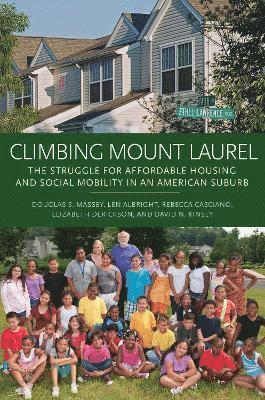
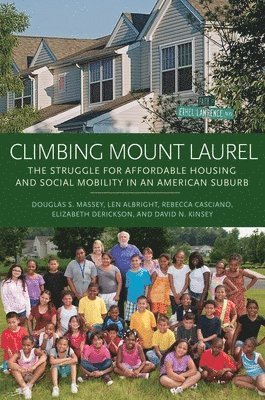
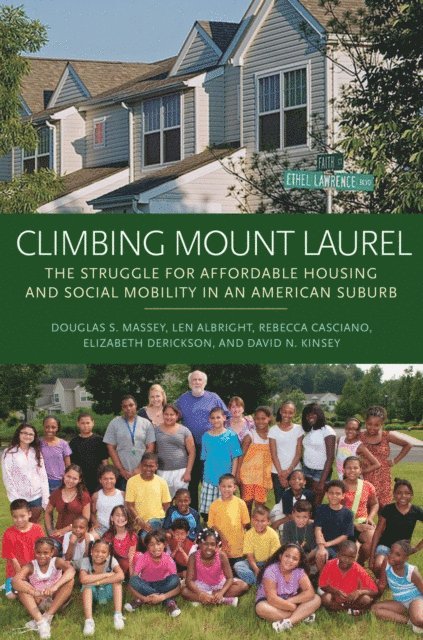
A close look at the aftereffects of the Mount Laurel affordable housing decisionUnder the New Jersey State Constitution as interpreted by the State Supreme Court in 1975 and 1983, municipalities are required to use their zoning authority to create realistic opportunities for a fair share of affordable housing for low- and moderate-income households. Mount Laurel was the town at the center of the court decisions. As a result, Mount Laurel has become synonymous with the debate over affordable housing policy designed to create economically integrated communities. What was the impact of the Mount Laurel decision on those most affected by it? What does the case tell us about economic inequality?Climbing Mount Laurel undertakes a systematic evaluation of the Ethel Lawrence Homes—a housing development produced as a result of the Mount Laurel decision. Douglas Massey and his colleagues assess the consequences for the surrounding neighborhoods and their inhabitants, the township of Mount Laurel, and the residents of the Ethel Lawrence Homes. Their analysis reveals what social scientists call neighborhood effects—the notion that neighborhoods can shape the life trajectories of their inhabitants. Climbing Mount Laurel proves that the building of affordable housing projects is an efficacious, cost-effective approach to integration and improving the lives of the poor, with reasonable cost and no drawbacks for the community at large.
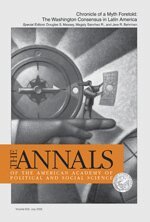
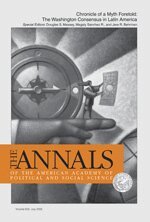
The Washington Consensus in Latin America
2 040 kr
Skickas inom 3-6 vardagar
During the 1990s, the United States encountered an unprecedented economic upsurge. The duration and scope of this boom led many policymakers in D.C., to believe they had finally found a magic formula for sustained economic growth and seamless national development. Labeled the Washington Consensus, this free-market approach was a shift away from regulation and government intervention toward allowing the markets work themselves out on a global level. Was it magic?
After all, this was an era where the markets for goods, services, capital, and labor burst forth from North America, Western Europe, and Japan to stretch across the globe. The Soviet Union had collapsed and East and Southeast Asian economies were flourishing. Globalization and A New World Order became the slogans of the day.
In what some scholars and policymakers view as a massive social experiment, the U.S. Treasury and the International Monetary Fund (IMF) began leaning on Latin American countries to dismantle their economic regime of import substitution industrialization (ISI). Without a firm understanding of the complexities involved, international lenders pressed for implementation of the Washington Consensus – advocating governments to step out of the way and let the markets do their work.
Yet every nation has a different history when it comes to the process of market creation. The attempt to apply a blanket formula on countries with divergent political, social, and cultural legacies flopped miserably. Supporters of the Washington Consensus discovered their magic formula was merely a myth.
Although Chile, which already had strong institutional foundations, came closest to succeeding in the implementation of the Washington Consensus, places like Mexico, Peru, Venezuela, and Argentina met with political and economical turmoil that shook their countries to the core.
Pulling from a wellspring of knowledge, expertise, and experience from representatives of sociology, economics, demography, anthropology, and urban studies, this special issue of The ANNALS provides a coherent chain of evidence that reveals how the idea for structural adjustment in Latin America arose, how it was applied, the negative consequences it had, and the lessons learned.
Sprung from a request by the Andrew W. Mellon Foundation on "Urban Studies and Demography," this collection of thought-provoking articles is the result of a two-year pilot research project conducted by faculty and students affiliated with the Population Studies Center and the Urban Studies program at the University of Pennsylvania.
Students, researchers, and policymakers in public affairs, economics, anthropology, international affairs, sociology, urban studies, population studies, and others will gain clarity and insight into this complex phase of world economic history.
The Washington Consensus in Latin America
1 115 kr
Skickas inom 3-6 vardagar
During the 1990s, the United States encountered an unprecedented economic upsurge. The duration and scope of this boom led many policymakers in D.C., to believe they had finally found a magic formula for sustained economic growth and seamless national development. Labeled the Washington Consensus, this free-market approach was a shift away from regulation and government intervention toward allowing the markets work themselves out on a global level. Was it magic?
After all, this was an era where the markets for goods, services, capital, and labor burst forth from North America, Western Europe, and Japan to stretch across the globe. The Soviet Union had collapsed and East and Southeast Asian economies were flourishing. Globalization and A New World Order became the slogans of the day.
In what some scholars and policymakers view as a massive social experiment, the U.S. Treasury and the International Monetary Fund (IMF) began leaning on Latin American countries to dismantle their economic regime of import substitution industrialization (ISI). Without a firm understanding of the complexities involved, international lenders pressed for implementation of the Washington Consensus – advocating governments to step out of the way and let the markets do their work.
Yet every nation has a different history when it comes to the process of market creation. The attempt to apply a blanket formula on countries with divergent political, social, and cultural legacies flopped miserably. Supporters of the Washington Consensus discovered their magic formula was merely a myth.
Although Chile, which already had strong institutional foundations, came closest to succeeding in the implementation of the Washington Consensus, places like Mexico, Peru, Venezuela, and Argentina met with political and economical turmoil that shook their countries to the core.
Pulling from a wellspring of knowledge, expertise, and experience from representatives of sociology, economics, demography, anthropology, and urban studies, this special issue of The ANNALS provides a coherent chain of evidence that reveals how the idea for structural adjustment in Latin America arose, how it was applied, the negative consequences it had, and the lessons learned.
Sprung from a request by the Andrew W. Mellon Foundation on "Urban Studies and Demography," this collection of thought-provoking articles is the result of a two-year pilot research project conducted by faculty and students affiliated with the Population Studies Center and the Urban Studies program at the University of Pennsylvania.
Students, researchers, and policymakers in public affairs, economics, anthropology, international affairs, sociology, urban studies, population studies, and others will gain clarity and insight into this complex phase of world economic history.
1 115 kr
Skickas inom 3-6 vardagar
1 115 kr
Skickas inom 3-6 vardagar
1 074 kr
Skickas inom 3-6 vardagar
1 074 kr
Skickas inom 3-6 vardagar
2 010 kr
Skickas inom 3-6 vardagar
563 kr
Skickas inom 3-6 vardagar
894 kr
Tillfälligt slut