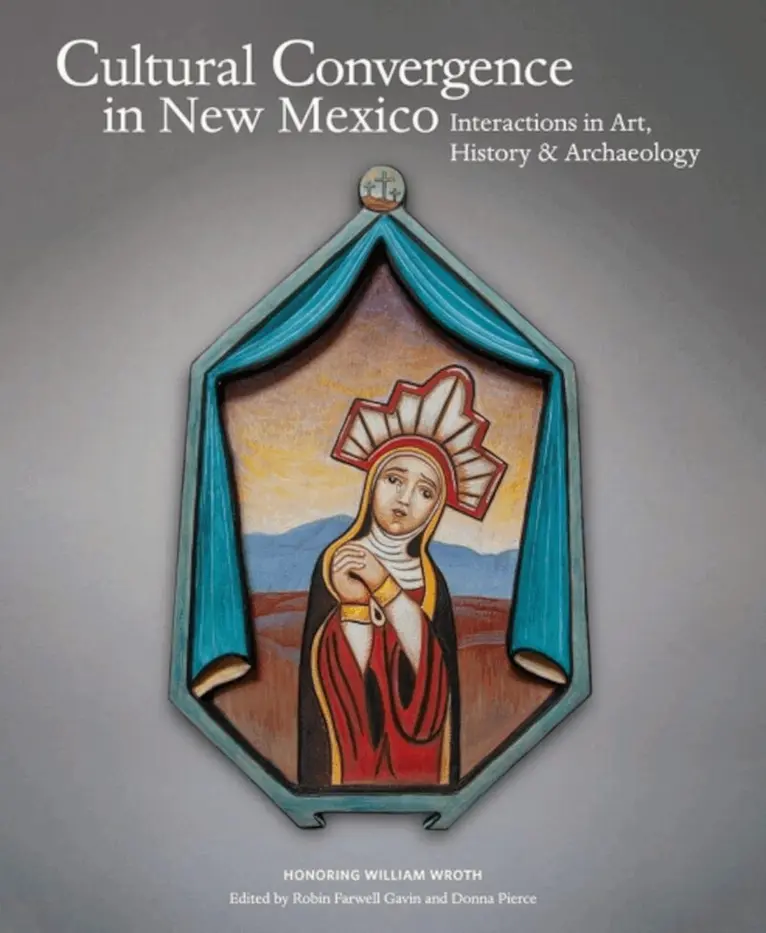
Cultural Convergence in New Mexico is a volume in honor of William Wroth, whose career as a cultural historian and curator contributed greatly to our understanding of Spanish Colonial art in the Americas. Wroth’s endeavors were not limited to Spanish Colonial art. In 2000, Wroth’s exhibition and book Ute Indian Arts and Culture from Prehistory to the New Millennium were considered groundbreaking for placing Ute art in the context of Ute history and world view. In 2010, he brought together years of research to the exhibition and book Converging Streams: Art of the Hispanic and Native American Southwest. This volume explores themes important to Wroth broadly related to the art, history, and culture of New Spain, as well as cross-cultural interactions of Hispanos and Native Americans. With more than 180 color illustrations, Cultural Convergence presents interdisciplinary essays by an esteemed group of scholars and writers, and a selection of works by artists he knew and admired.
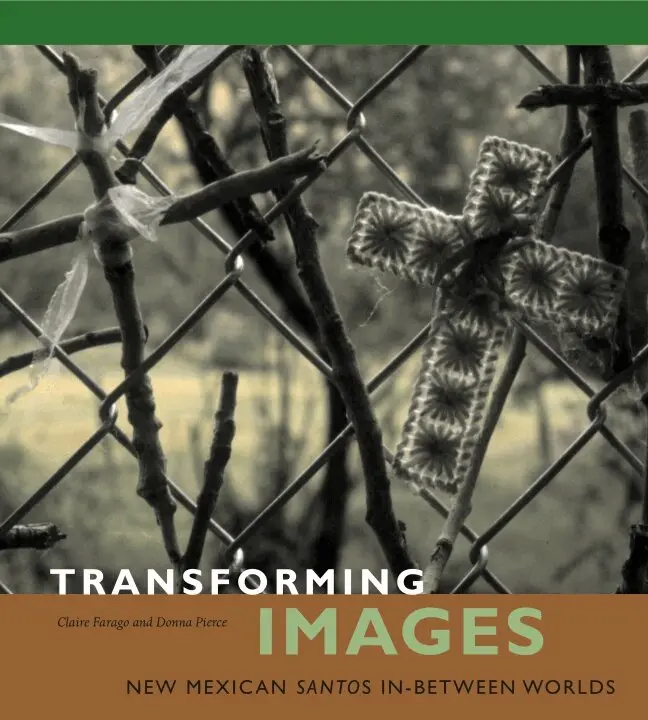
“Style” has been one of the cornerstones not only of the modern discipline of art history but also of social and cultural history. In this volume, the writers consider the inadequacy of the concept of style as essential to a person, people, place, or period. While the subject matter of this book is specific to religious practices and artifacts from New Mexico between the eighteenth and twentieth centuries, the implications of these investigations are far reaching historically, methodologically, and theoretically.The essays collected here explore the Catholic instruments of religious devotion produced in New Mexico from around 1760 until the radical transformation of the tradition in the twentieth century. The writers in this volume make three key arguments. First, they make a case for bringing new theoretical perspectives and research strategies to bear on the New Mexican materials and other colonial contexts. Second, they demonstrate that the New Mexican materials provide an excellent case study for rethinking many of the most fundamental questions in art-historical and anthropological study. Third, the authors collectively argue that the New Mexican images had, and still have, importance to diverse audiences and makers. The distinctiveness of New Mexican santos consists not only in their subjects (which conformed to Catholic Reformation tastes) but also in elements that may appear to have been “merely decorative”: graphically striking and frequently elaborate abstract design motifs and landscape references. Despite their anonymity, the images are, as a group, readily distinguished from local products anywhere else in the Spanish colonial world. This distinctiveness suggests that we should inquire not so much about the individual identities of their makers as about the collective identity of the society and place that produced and used them.
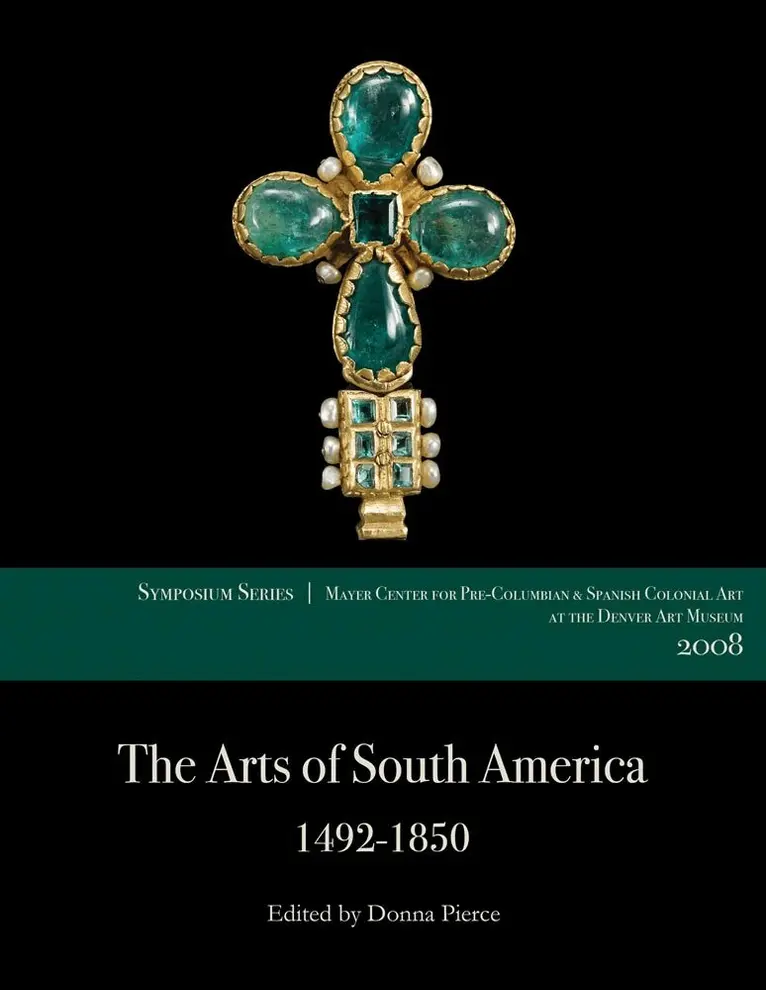
The Mayer Center for Pre-Columbian and Spanish Colonial Art at the Denver Art Museum held a symposium in 2008 to examine the arts of South America during the culturally complex period of Spanish and Portuguese colonialism in the early modern era. Specialists in the arts and history of Latin America traveled from Venezuela, Spain, Portugal, and the United States to present recent research. The topics ranged from architecture, painting, and sculpture to furniture and the decorative arts. Edited by Denver Art Museum curator Donna Pierce, this volume presents revised and expanded versions of the papers presented at the symposium.Thomas B. F. Cummins (Harvard University) opens the volume with a discussion of the reception and reinterpretation of American motifs by European artists in the centuries after contact. Through a detailed analysis of the architecture of Franciscan churches in Brazil, Nuno Senos (Universidade Nova de Lisboa) discerns political alliances and posits a structural timeline. Susan Verdi Webster (College of William and Mary) uses new evidence from Ecuadorian archive documents to recover the names and works of native artists in colonial Quito. Sabine MacCormack (University of Notre Dame) analyzes a series of mural paintings in the church of St. Augustine in colonial Lima and traces their graphic and theological sources. Luisa Elena Alcala (Universidad Autónoma de Madrid) examines the treatise of one of the earliest documented Indian artists in Peru, Francisco Tito Yupanqui, and his famous carving of the Virgin of Copacabana. Through a detailed analysis of manuscipt drawings of furniture and architecture by native artist Guaman Poma of Cuzco, Jorge Rivas Pérez (Colección Cisneros, Venezuela) assesses their accuracy and relationship to actual examples of the early colonial era. Michael Brown (Denver Art Museum) concludes the volume with an essay on Daniel Casey Stapleton and the collection of Spanish colonial art now housed at the Denver Art Museum, acquired while he was working and traveling in South America at the turn of the century.An interdisciplinary study bringing together new research on an understudied era and area, this illustrated volume will be an important resource for scholars and enthusiasts of Latin American art and history.
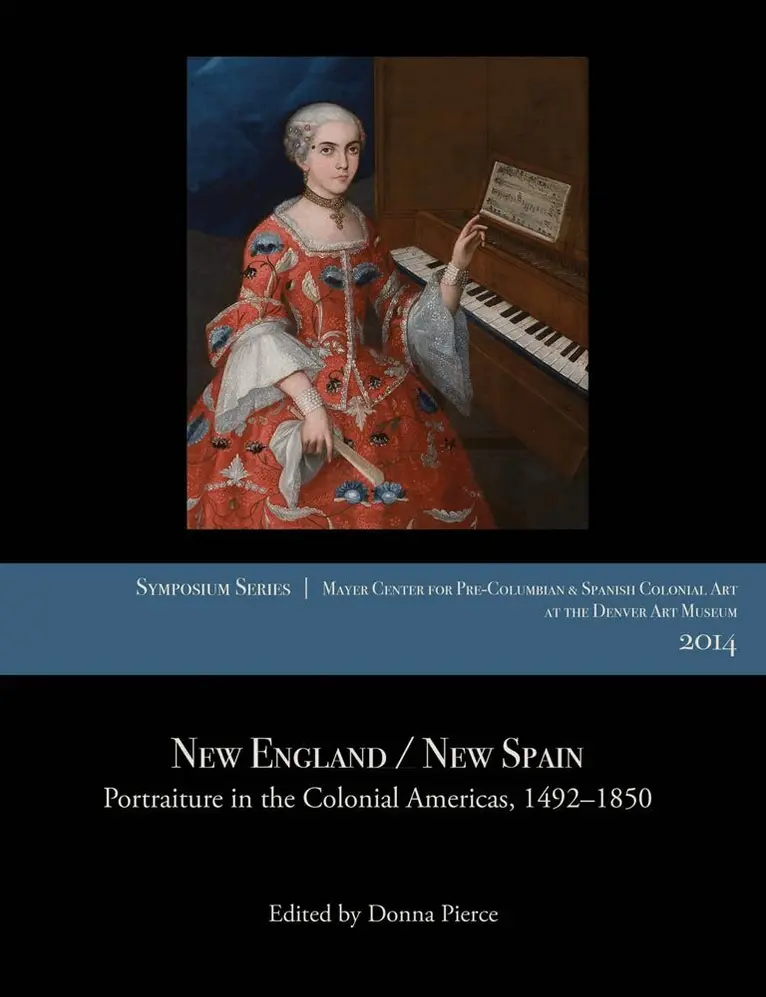
In 2014 the Denver Art Museum held a symposium hosted by the Frederick and Jan Mayer Center for Pre-Columbian and Spanish Colonial Art and co-organized by Donna Pierce and Emily Ballew Neff, Director of the Brooks Museum, Memphis. They assembled an international group of scholars to present recent research on portraiture in the Spanish colony of New Spain (Mexico) and the British colonies of North America. This volume presents revised and expanded versions of papers presented at the symposium. Michael Schreffler (University of Notre Dame) opens the volume with a discussion of portraits of Cortés and Moctezuma in sixteenth-century New Spain. Clare Kunny (Art Muse, Los Angeles) examines portraits of Antonio de Mendoza (1490-1552), the first viceroy of Mexico. Susan Rather (University of Texas, Austin) analyzes portraiture in colonial British America and landscapes included in them. Karl Kusserow (Princeton University Art Museum) explores selfhood and surroundings in British American portraits.Paula Mues Orts (National School of Conservation, Mexico) examines the portrait series commissioned and displayed in colonial Mexico by religious and civic organizations as a claim to power and prestige. James Middleton (independent scholar, New York) discusses clothing and accessories in New Spanish portraiture that allow a more precise dating of works. Jennifer Van Horn (George Mason University) follows the trans-Atlantic travels of portraitist Joseph Blackburn from England to New England and Bermuda. Kaylin Weber (Museum of Fine Arts, Houston) explores the career of American Benjamin West and his trans-Atlantic move from Boston to London. Elizabeth Kornhauser (Metropolitan Museum of Art) addresses the portraits of New England painter Ralph Earl, who struggled to fashion a new style for the young American republic. Michael Brown (San Diego Museum of Art) closes the volume by comparing the fate of portraits from New England and New Spain in nineteenth- and early twentieth-century America.
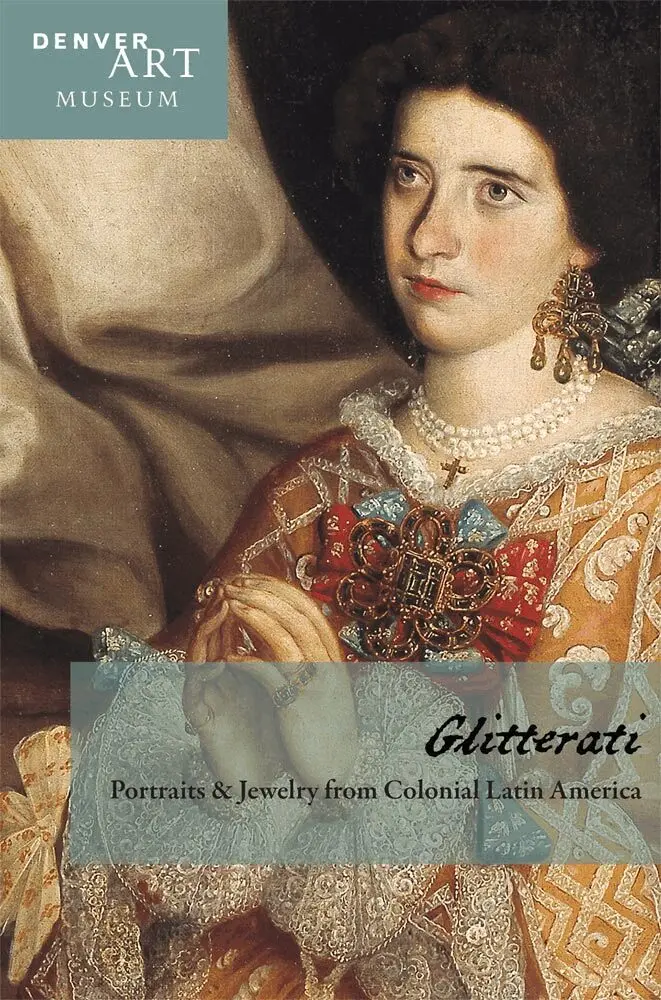
During the Spanish Colonial period in Latin America (1521-1850), precious gold and silver were crafted into elegant jewelry, then embellished with emeralds from Colombia, coral from Mexico, and pearls from Venezuela. To demonstrate their wealth and status, people were painted wearing their finest dress and elaborate jewelry. Selecting from its permanent collection, the Denver Art Museum installed the long-running exhibition Glitterati: Portraits and Jewelry in Colonial Latin America in its Spanish Colonial galleries in December 2014. This lavishly illustrated publication serves as a companion to the Glitterati exhibition and, on a larger scale, to the collection of Spanish Colonial jewelry and portraiture at the museum.The Spanish Colonial collection at the Denver Art Museum is the most comprehensive of its kind in the United States and one of the best in the world with outstanding examples of painting, sculpture, furniture, decorative arts, silver and goldwork, and jewelry from all over Latin America during the time of the Spanish colonies. The Stapleton Foundation of Latin American Colonial Art, made possible by the Renchard family, gifted art acquired by the intrepid Daniel C. Stapleton between 1895 and 1914, when he worked in Ecuador, Colombia, and Venezuela overseeing plantations and emerald mines. Frederick and Jan Mayer worked closely with museum curators to build a collection of Mexican colonial art rich in many subjects and media, notably portrait paintings. Examples from both of these major collections are augmented by other pieces of jewelry and portraiture from the museum's permanent collection in the Glitterati exhibition and in this volume.
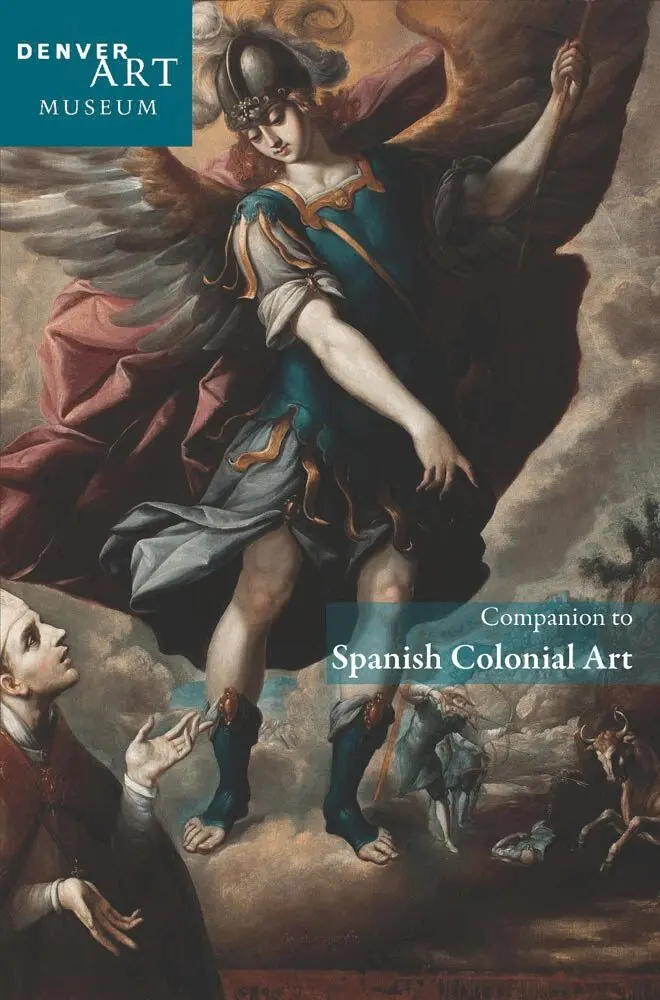
The Denver Art Museum counts among its greatest resources a world-renowned Spanish Colonial collection rich in art from all over Latin America. Initiated in 1936, the Spanish Colonial collection has grown dramatically over the years to include more than 3,000 objects. It is the best collection of its type in the United States, and in many areas, it is the most comprehensive collection outside the country of origin. The museum's Spanish Colonial galleries include significant paintings, sculpture, furniture, silver, and decorative arts from the period.This lavishly illustrated volume - the first ever devoted to the museum's Spanish Colonial collection as a whole - serves as a primer to this stellar art collection, framing it within the historical context of the early modern world and the first era of global trade. Organized by theme rather than chronology, it features photographs of more than 100 objects from all areas of Spanish America and the southwestern United States. Subjects discussed include, but are not limited to, the continuity of native traditions, church and mission art, hybrid art forms, regional styles, and the art of everyday life.
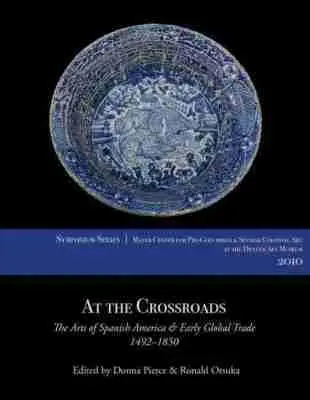
The Denver Art Museum held a symposium in 2010, which was cohosted by the Frederick and Jan Mayer Center for Pre-Columbian and Spanish Colonial Art and by the Asian Art Department William Sharpless Jackson Jr. Endowment, to examine the impact of early modern globalization on the arts of Spanish America. The museum assembled an international group of scholars specializing in the arts and history of Asia, Europe, and Latin America to present recent research, with topics ranging from discussions of architecture, painting, and sculpture to engravings, ceramics, clothing, and decorative arts of the period. Edited by Denver Art Museum curators Donna Pierce and Ronald Otsuka, this volume presents revised and expanded versions of papers presented at the symposium.Dana Liebsohn (Smith College) opens the volume with a thought-provoking discussion of the reception and reinterpretation of Asian motifs in the various art forms of viceregal New Spain (Mexico) and the complexities of interpreting those today. Through a detailed analysis of shipping records, María Bonta de la Pezuela (Sotheby's, New York) addresses the Manila galleon trade and the exportation of Chinese porcelain to the Americas. William Sargent (Peabody-Essex) expands on this topic by examining a set of specific pieces of Chinese porcelain produced for export. Jaime Mariazza (Universidad de San Marcos, Lima, Peru) describes the importation of funerary traditions from Europe to Peru via books and engravings and their implementation in Peru by local artists. And independent scholar Suzanne Stratton-Pruitt analyzes the exportation of paintings ""by the dozens"" from Spain to Peru, examining their impact on local painting traditions.Two papers then address the exportation of distinctively American objects to Europe. Sara Ryu (Yale University) presents the results of recent research on corn-paste sculptures from Mexico, which were sent to Europe during the early modern era, and their reception there. The unique genre of casta (caste) paintings, invented in New Spain and exported to Europe, is examined by Claire Farago and James Córdova (University of Colorado). Donna Pierce closes the volume with a case study on the global range of trade objects, presenting documentary evidence for the presence of Asian trade goods in New Mexico - the northern-most province of the Spanish Americas.An interdisciplinary study bringing together new research on an understudied era and area, this well-illustrated volume will be an important resource for scholars and enthusiasts of early modern history in general and Latin American art and history in particular.
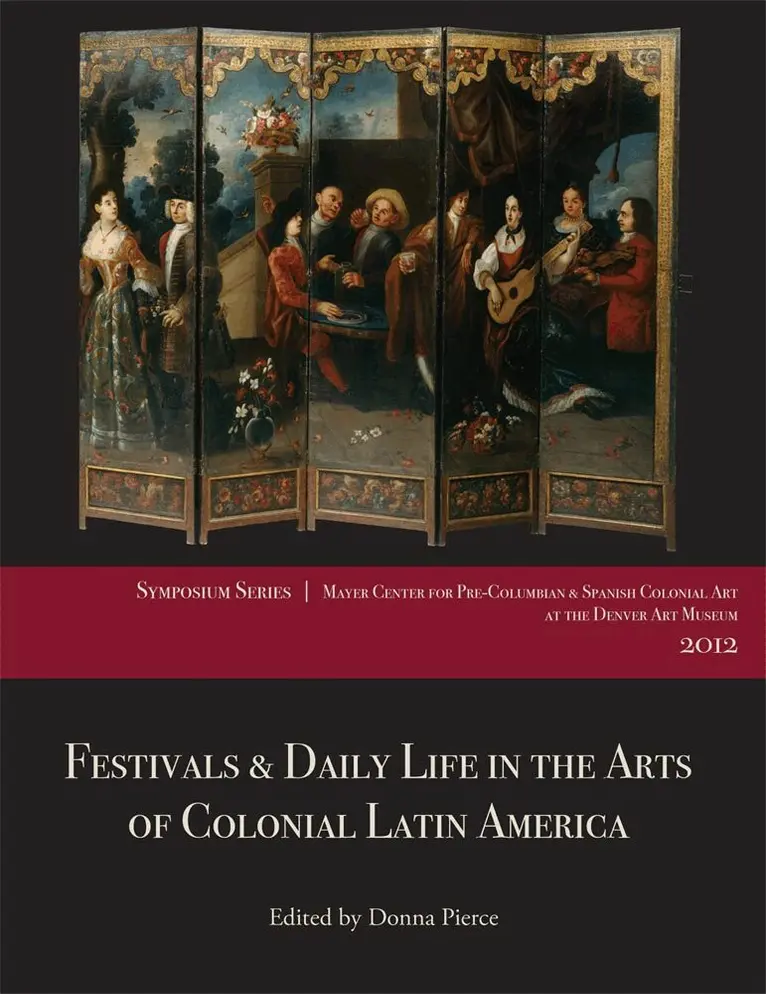
The Denver Art Museum held a symposium in 2012 hosted by the Frederick and Jan Mayer Center for Pre-Columbian and Spanish Colonial Art. The museum assembled an international group of scholars specializing in the arts and history of colonial Latin America to present recent research with topics ranging from ephemeral architecture, painting, and sculpture to engravings, decorative arts, costumes and clothing of the period. This volume presents revised and expanded versions of papers presented at the symposium. Barbara Mundy (Fordham University) opens this volume with a thought-provoking discussion of pre-Columbian dance festivals and their associated costumes and accoutrements, their continuation and reinterpretation in colonial Mexico, and their remaining vestiges in modern times. Gustavo Curiel (Universidad Nacional Autónoma de México) presents a moving discussion of the mourning activities performed in Mexico City in 1666 to commemorate the death of Philip IV; Curiel then reconstructs a vision of the ephemeral monument erected by the Inquisition by comparing documentary sources, such as the artist's contract, with surviving engravings of a similar monument.Frances Ramos (University of South Florida) brings the volume into the eighteenth century by examining celebrations and art in honor of Saint Joseph in the city of Puebla, Mexico. Beatriz Berndt (Universidad Nacional Autónoma de México) continues the festival theme by analyzing extant engravings, written descriptions, and political motivations in the ephemeral façade designed to celebrate the enthronement of Charles IV in Mexico City in 1789. Kelly Donahue-Wallace (University of North Texas) closes the festival section with a discussion of ephemeral structures and related public art works under the direction of the newly founded Royal Academy of Art of San Carlos in the late colonial era.Jorge Rivas begins the discussion of daily life by presenting recent research on a uniquely American furniture form, the butaca (easy) chair, tracing its origins in Venezuela and its eventual spread throughout pan-Caribbean Latin America. Susan Socolow closes the volume with an examination of women's quotidian clothing in colonial Argentina based on documentary evidence found in travelers' descriptions and extant estate inventories.Alexandra Troya-Kennedy (Universidad de Cuenca, Ecuador) closes the volume by tracing Ecuadorian costumbrista images of daily life from their origin in colonial-era Enlightenment discourse to their production for the tourist market and use by politicians in the nineteenth and early twentieth centuries.