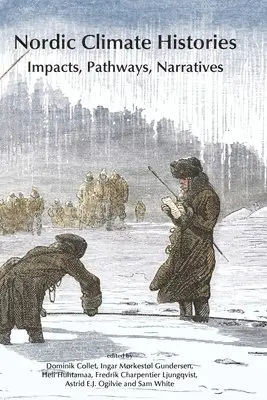
This volume is the first to collect climate histories from across all the Nordic countries. It combines research from climatologists, historians, archaeologists and museologists to explore how climate and culture interacted in the past and what we might learn from these interactions today.Down the centuries, the people of the Nordic countries have confronted challenges from climatic variability and change and sought ways to survive and adapt. In a time of accelerating global warming, these climate histories take on new contemporary significance. Drawing on tools from the natural and historical sciences, the innovative scholarship in this volume addresses questions such as: How did Nordic societies cope with past climatic hazards? What was the historical significance of the 'Little Ice Age' or the 'Medieval Climate Anomaly' for Nordic countries? And how do we study, narrate and learn from these past experiences?This volume is the first to collect climate histories from across all the Nordic countries. It combines research from climatologists, historians, archaeologists and museologists to explore how climate and culture interacted in the past and what we might learn from these interactions today.The chapters range from in-depth case studies to reflexive meta-histories; cover periods from the Bronze Age to the present; and draw on sources from tree rings to material culture to poetry. They also discuss how these histories can be communicated today, including how museums and literature can bring them into conversation with a current audience looking for lived experiences of climate adaptation.The volume was conceived during an international conference at the University of Oslo in May 2024. This interdisciplinary forum connected leading scholars in the field with practitioners and stakeholders. The essays presented here engage a rapidly growing field of intense public and political concern in the Nordics and beyond.The book speaks to various academic communities (climatology, history, literature) and stakeholders (museum practitioners, climate communicators and advocates). It includes the growing research and student community invested in this topic across several disciplines, practitioners and communicators in the field and the wider public interested in the vibrant debates about climate adaptation and experience.
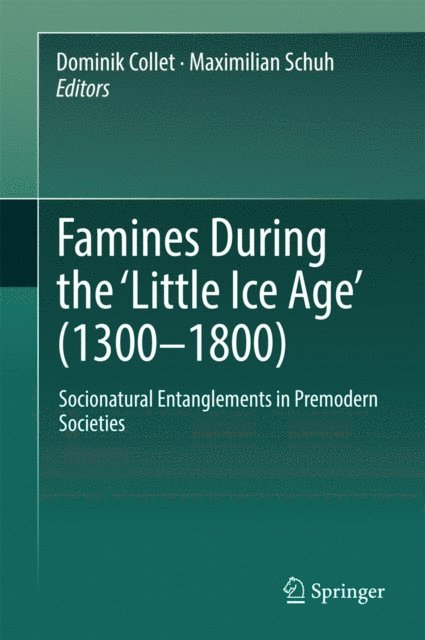
This highly interdisciplinary book studies historical famines as an interface of nature and culture. It will bring together researchers from the natural and social sciences as well as the humanities. With reference to recent interdisciplinary concepts (disaster studies, vulnerability studies, environmental history) it will examine, how the dominant opposition of natural and cultural factors can be overcome. Such an integrated approach includes the "archives of nature" as well as "archives of man". It challenges deterministic models of human-environment interaction and replaces them with a dynamic, historicising approach. As a result it provides a fresh perspective on the entanglement of climate and culture in past societies.
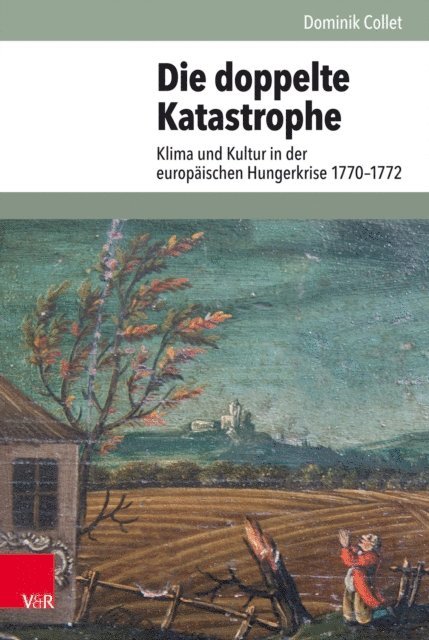
At the end of the 18th century Europe suffered one of the worst subsistence crises of the Little Ice Age. The disastrous fatality of this "double" catastrophe was a result of both climate and culture. The effects of earth and famine were felt throughout Europe and claimed hundreds of thousands of lives. The crisis initiated mass migration, discrimination and bouts of antisemitism but also political reform, early humanitarianism and new fields of science. It linked the revolts of the Steelboys in Ireland with the absolutist coup in Sweden and the bourgeois reform movements in Saxony. Dominik Collet draws on these crises to trace, how climate anomalies have been "socialised" in the past and to highlight the surprising plurality of societal responses.His book calls for a socionatural approach to writing history. It narrates an entangled history of environment and society that pursues the links between short-term events and long-term, socio-ecological structures. Due to these interconnections the crisis of the 1770s reveals the deeper, underlying conflicts of the affected societies in the fields of economy, ecology and governance. They reveal the inherent vulnerability of Europe''s "grain societies" and sketch the actions of governments, subjects and "experts". In this complex environment catastrophes constitute both social and natural disasters. The study challenges social and climatic determinism and illustrates that more dynamic connections of climate and culture are both necessary and feasible. It calls for a fresh perspective that – instead of separating nature and culture – treats nature as history.
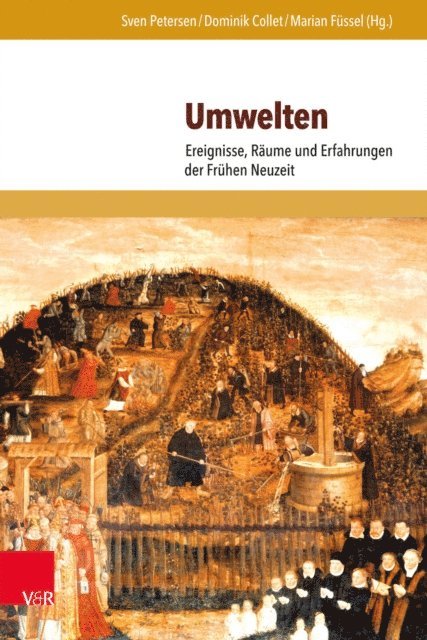
This volume focuses on nature, religion and politics - three "environments" of early modernity. Exemplary studies from pietism research, historical disaster studies, interdisciplinary environmental history and the history of transnational connectivity provide close-up insights into a plurality of lifeworlds and environments. Seen as a whole, these perspectives offer a broader understanding of early modern "environments" as material as well as cultural contexts of historical events and experiences, and encourage the crossing of the boundaries between established fields of research.