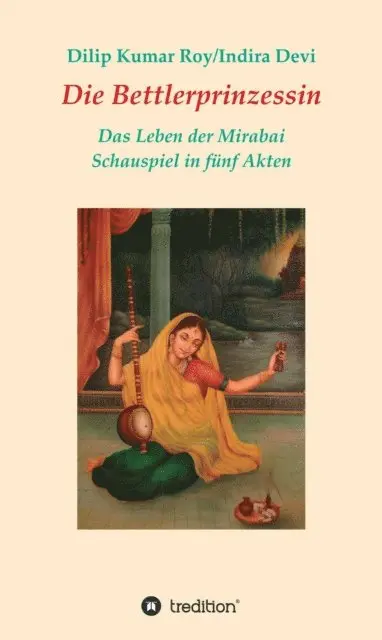
Hauptperson des Schauspiels ist eine der faszinierendsten Frauen Indiens, die im 16. Jh. lebende Fürstin Mirabai, die mit allen Konventionen der Aristokratie brach, um im Namen ihres geliebten Gottes Krishna, für den sie eine Vielzahl von Liedern komponierte und sang, heimat- und besitzlos durchs Land zu ziehen. Bis heute sind ihre mündlich überlieferten Lieder in Indien berühmt und lebendig.Dilip Kumar Roy (1897-1980) und Indira Devi (1920-1997), verfassten "Die Bettlerprinzessin" als historisches Schauspiel. Es vergegenwärtigt Mirabais Leben von ihrer behüteten Kindheit über die arrangierte Ehe, ihr gefährdetes Leben als gottliebende Visionärin in einer von steifen höfischen Regeln geprägten Umgebung und ihren radikalen Ausbruch aus dieser Welt.Das Stück ist voller Poesie: In jedem Stadium des Dramas drückt Mirabai ihre Gefühle in liedhafter Weise reiner, klarer und anrührender aus, als dies in Prosa möglich wäre.
The book is a smart attempt to explore the potentialities and possibilities of modern museums and will prove useful to students, research scholars, social scientists, anthropologists, archaeologists and museologists, compact with theoretical and practical aspects of museology.
This book discusses the quintessential aspects of George Santayana’s wide and comprehensive philosophy. Its critical and comparative discussions centre round the problems of Epistemology, Metaphysics, Aesthetics, Ethics and Religion. This makes it all the more interesting. What is noteworthy about this book is that it shows how naturalism serves as a basis of the idealistic philosophy of George Santayana. Moreover, the illustrious part of this treatise is that essence, as discovered by Santayana by the doubting process, serves as the keynote of his whole philosophy. The exposition of Santayana’s philosophy on the basis of the above two points is an outstanding feature of the present work.