717 kr
Läs direkt efter köp
717 kr
Läs direkt efter köp
815 kr
Läs direkt efter köp
873 kr
Skickas inom 10-15 vardagar
2 215 kr
Skickas inom 7-10 vardagar
1 335 kr
Skickas inom 7-10 vardagar
2 629 kr
Skickas inom 3-6 vardagar
490 kr
Skickas inom 7-10 vardagar
All scientists and engineers are creative - you wouldn't be a scientist or engineer if you weren't. But can you be even more creative? Do you know how to develop creativity in those who are less confident? And how to build a team culture in which creativity flourishes? If those questions spark interest, then this book is for you. Presenting pragmatic and powerful processes for generating ideas, and for distinguishing good ideas from weak ones, the book explores the fundamental first principles on which creativity is based, as well as the organisational factors that need to be addressed for creativity to happen. Filled with examples of creativity in science and engineering, and including a contributed chapter in which 13 contemporary scientists and engineers tell their own stories, this book is a practical 'how to' guide on how to have good ideas on demand, how to judge between good ideas and bad ones, and how to build a sustainable innovation culture. From gravitational waves to outreach, from safety on trains to how some cows in Kansas triggered an idea for noise reduction, the examples in this book are sure to stimulate individual and organisational creativity. Key Features:
Provides a practical 'how to' guide on how to have good ideas 'on demand' Shows how to identify, wisely, the best ideas Presents down-to-earth strategies to increase scientific creativity Includes stimulating case studies contributed by 16 leading scientists and engineers Describes how to build a sustainable organisational culture in which creativity can flourish Written by a world leader in creative consultancy438 kr
Skickas inom 7-10 vardagar
974 kr
Läs direkt efter köp
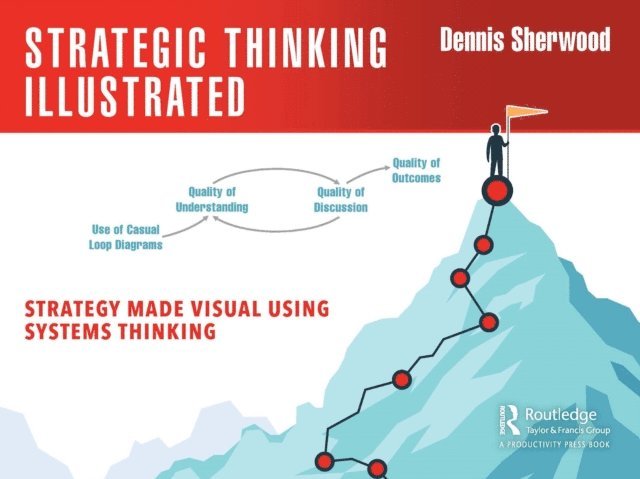
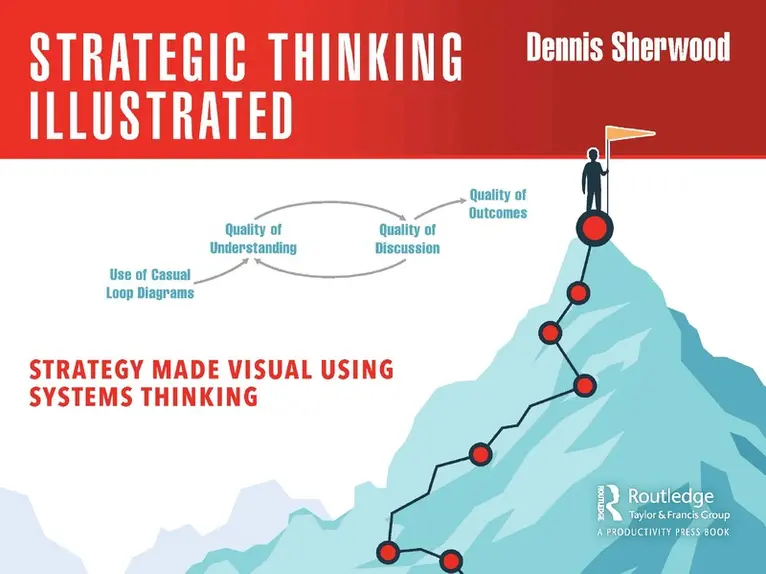
This book is about the behaviour of systems. Systems are important, for we interact with them all the time, and many of the actions we take are influenced by a system – for example, the system of performance measures in an organisation influences, often very strongly, how individuals within that organisation behave. Furthermore, sometimes we are involved in the design of systems, as is any manager contributing to the definition of what those performance measures might be. That manager will want to ensure that all the proposed performance measures will drive the ‘right’ behaviours rather than (inadvertently) encouraging dysfunctional ‘game playing’, and so anticipating how the performance measurement system will work in practice is a vital part of a wise design process.
Some of the systems with which we interact are local, such as your organisation’s performance measurement system. Some systems, however, are distant, but nonetheless very real, such as the healthcare system, the education system, the legal system and the climate system. Systems, therefore, exist on all scales, from the local to the global. And all systems are complex, some hugely so. That’s why understanding how systems behave can be very helpful.
Systems are complex for two main reasons. First, the manner in which they behave over time can be very hard to anticipate – and anticipating the future sensibly is of course a key objective of management. Second, the ‘entities’ within a system can be connected together in very complex ways, so that an intervention ‘here’ can result in an effect ‘there’, perhaps a long time afterward. Sometimes this can be surprising, and so we talk of ‘unintended consequences’ – but this is of course a euphemism for ‘because I didn’t understand how this system behaves, I had not anticipated that’.
Systems thinking, the subject matter of this book, is the disciplined study of systems, and causal loop diagrams – the ‘pictures’ of this ‘picture book’ – are a very insightful way to represent the connectedness of the entities from which any system is composed, so taming that system’s complexity.
981 kr
Läs direkt efter köp
This book is about the behaviour of systems. Systems are important, for we interact with them all the time, and many of the actions we take are influenced by a system – for example, the system of performance measures in an organisation influences, often very strongly, how individuals within that organisation behave. Furthermore, sometimes we are involved in the design of systems, as is any manager contributing to the definition of what those performance measures might be. That manager will want to ensure that all the proposed performance measures will drive the ‘right’ behaviours rather than (inadvertently) encouraging dysfunctional ‘game playing’, and so anticipating how the performance measurement system will work in practice is a vital part of a wise design process.
Some of the systems with which we interact are local, such as your organisation’s performance measurement system. Some systems, however, are distant, but nonetheless very real, such as the healthcare system, the education system, the legal system and the climate system. Systems, therefore, exist on all scales, from the local to the global. And all systems are complex, some hugely so. That’s why understanding how systems behave can be very helpful.
Systems are complex for two main reasons. First, the manner in which they behave over time can be very hard to anticipate – and anticipating the future sensibly is of course a key objective of management. Second, the ‘entities’ within a system can be connected together in very complex ways, so that an intervention ‘here’ can result in an effect ‘there’, perhaps a long time afterward. Sometimes this can be surprising, and so we talk of ‘unintended consequences’ – but this is of course a euphemism for ‘because I didn’t understand how this system behaves, I had not anticipated that’.
Systems thinking, the subject matter of this book, is the disciplined study of systems, and causal loop diagrams – the ‘pictures’ of this ‘picture book’ – are a very insightful way to represent the connectedness of the entities from which any system is composed, so taming that system’s complexity.
361 kr
Skickas inom 7-10 vardagar
117 kr
Skickas inom 7-10 vardagar
98 kr
Skickas inom 7-10 vardagar
45 kr
Läs direkt efter köp
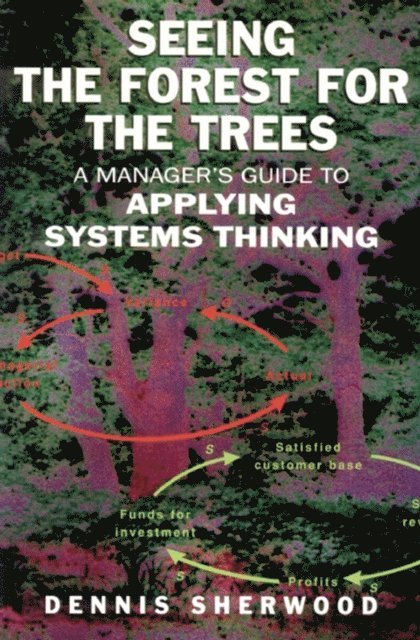
Systems thinking can help you tame the complexity of real-world problems by providing a structured way of balancing a broad, overall view with the selection of the right level of detail, truly allowing you to "see the forest for the trees". Only by taking a broad view can we avoid the twin dangers of a silo mentality-in which a fix ''here'' simply shifts the problem to ''there'', and organisational myopia-in which a fix ''now'' gives rise to a much bigger problem to fix ''then''. Seeing the Forest for the Trees will give you all the tools and techniques you need, with many practical examples as diverse as managing a busy back office, negotiating an outsourcing deal and formulating business strategy.
830 kr
Tillfälligt slut
2 553 kr
Tillfälligt slut
278 kr
Tillfälligt slut