582 kr
Skickas inom 7-10 vardagar
582 kr
Skickas inom 7-10 vardagar
1 786 kr
Läs direkt efter köp
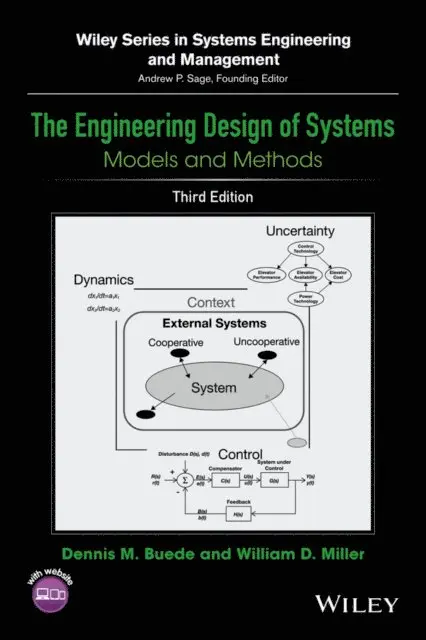
New for the third edition, chapters on: Complete Exercise of the SE Process, System Science and Analytics and The Value of Systems Engineering
The book takes a model-based approach to key systems engineering design activities and introduces methods and models used in the real world. This book is divided into three major parts: (1) Introduction, Overview and Basic Knowledge, (2) Design and Integration Topics, (3) Supplemental Topics. The first part provides an introduction to the issues associated with the engineering of a system. The second part covers the critical material required to understand the major elements needed in the engineering design of any system: requirements, architectures (functional, physical, and allocated), interfaces, and qualification. The final part reviews methods for data, process, and behavior modeling, decision analysis, system science and analytics, and the value of systems engineering. Chapter 1 has been rewritten to integrate the new chapters and updates were made throughout the original chapters.
Provides an overview of modeling, modeling methods associated with SysML, and IDEF0 Includes a new Chapter 12 that provides a comprehensive review of the topics discussed in Chapters 6 through 11 via a simple system – an automated soda machine Features a new Chapter 15 that reviews General System Theory, systems science, natural systems, cybernetics, systems thinking, quantitative characterization of systems, system dynamics, constraint theory, and Fermi problems and guesstimation Includes a new Chapter 16 on the value of systems engineering with five primary value propositions: systems as a goal-seeking system, systems engineering as a communications interface, systems engineering to avert showstoppers, systems engineering to find and fix errors, and systems engineering as risk mitigation The Engineering Design of Systems: Models and Methods, Third Edition is designed to be an introductory reference for professionals as well as a textbook for senior undergraduate and graduate students in systems engineering.1 813 kr
Läs direkt efter köp
New for the third edition, chapters on: Complete Exercise of the SE Process, System Science and Analytics and The Value of Systems Engineering
The book takes a model-based approach to key systems engineering design activities and introduces methods and models used in the real world. This book is divided into three major parts: (1) Introduction, Overview and Basic Knowledge, (2) Design and Integration Topics, (3) Supplemental Topics. The first part provides an introduction to the issues associated with the engineering of a system. The second part covers the critical material required to understand the major elements needed in the engineering design of any system: requirements, architectures (functional, physical, and allocated), interfaces, and qualification. The final part reviews methods for data, process, and behavior modeling, decision analysis, system science and analytics, and the value of systems engineering. Chapter 1 has been rewritten to integrate the new chapters and updates were made throughout the original chapters.
Provides an overview of modeling, modeling methods associated with SysML, and IDEF0 Includes a new Chapter 12 that provides a comprehensive review of the topics discussed in Chapters 6 through 11 via a simple system – an automated soda machine Features a new Chapter 15 that reviews General System Theory, systems science, natural systems, cybernetics, systems thinking, quantitative characterization of systems, system dynamics, constraint theory, and Fermi problems and guesstimation Includes a new Chapter 16 on the value of systems engineering with five primary value propositions: systems as a goal-seeking system, systems engineering as a communications interface, systems engineering to avert showstoppers, systems engineering to find and fix errors, and systems engineering as risk mitigation The Engineering Design of Systems: Models and Methods, Third Edition is designed to be an introductory reference for professionals as well as a textbook for senior undergraduate and graduate students in systems engineering.1 606 kr
Skickas
1 828 kr
Läs direkt efter köp
Comprehensive resource covering methods to design, verify, and validate systems with a model-based approach, addressing engineering of current software-centric systems
The newly revised and updated Fourth Edition of The Engineering Design of Systems includes content addressing model-based systems engineering, digital engineering, digital threads, AI, SysML 1.0 and 2.0, digital twins, and GENESYS software. The authors explore system and software-centric architecture, allocations, and logical and physical architecture development, including revised terminologies for a variety of subsections throughout.
Composed of 15 chapters, this book includes important new sections on modeling approaches for middle-out engineering, reverse engineering, and agile systems engineering, with a separate section on emerging trends within systems engineering to explore the most update-to-date methods. The authors include comprehensive diagrams and a separate chapter on a complete exercise of the System Engineering process, ranging from the operational concept to integration and qualification.
To aid in reader comprehension and retention of concepts, the text is embedded with problems at the end of each chapter, along with relevant case studies.
Sample topics covered in The Engineering Design of Systems include:
Structural system models to executable models, verification and validation on systems of systems, and external systems and context modeling Digital engineering, digital threads, artificial/augmented intelligence (AI), stakeholder requirements, and scientific foundations for systems engineering Quantifying a context and external systems’ model, including intended and unintended inputs, both deterministic and non-deterministic Functional architecture development, logical and physical architecture development, allocated architecture development, interface design, and decision analysis for design tradesThe Engineering Design of Systems is highly suitable as a main text for undergraduate and graduate students studying courses in system engineering design, systems architecture, and systems integration. The text is also valuable as a reference for practicing system architects, systems engineers, industrial engineers, engineering management professionals, and systems integrators.

1 828 kr
Läs direkt efter köp
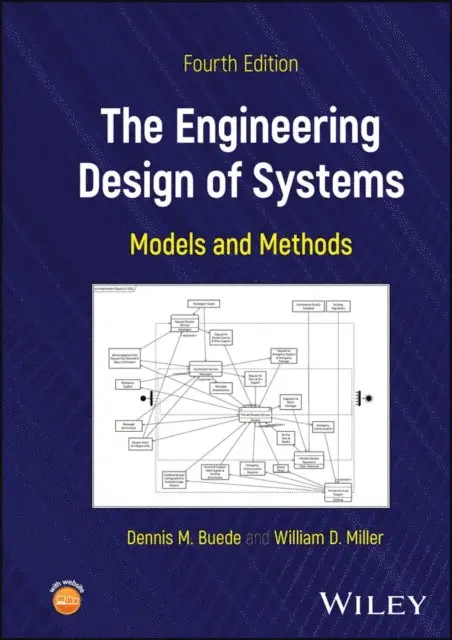
Comprehensive resource covering methods to design, verify, and validate systems with a model-based approach, addressing engineering of current software-centric systems
The newly revised and updated Fourth Edition of The Engineering Design of Systems includes content addressing model-based systems engineering, digital engineering, digital threads, AI, SysML 1.0 and 2.0, digital twins, and GENESYS software. The authors explore system and software-centric architecture, allocations, and logical and physical architecture development, including revised terminologies for a variety of subsections throughout.
Composed of 15 chapters, this book includes important new sections on modeling approaches for middle-out engineering, reverse engineering, and agile systems engineering, with a separate section on emerging trends within systems engineering to explore the most update-to-date methods. The authors include comprehensive diagrams and a separate chapter on a complete exercise of the System Engineering process, ranging from the operational concept to integration and qualification.
To aid in reader comprehension and retention of concepts, the text is embedded with problems at the end of each chapter, along with relevant case studies.
Sample topics covered in The Engineering Design of Systems include:
Structural system models to executable models, verification and validation on systems of systems, and external systems and context modeling Digital engineering, digital threads, artificial/augmented intelligence (AI), stakeholder requirements, and scientific foundations for systems engineering Quantifying a context and external systems’ model, including intended and unintended inputs, both deterministic and non-deterministic Functional architecture development, logical and physical architecture development, allocated architecture development, interface design, and decision analysis for design tradesThe Engineering Design of Systems is highly suitable as a main text for undergraduate and graduate students studying courses in system engineering design, systems architecture, and systems integration. The text is also valuable as a reference for practicing system architects, systems engineers, industrial engineers, engineering management professionals, and systems integrators.

1 235 kr
Tillfälligt slut