488 kr
Skickas
488 kr
Skickas
2 403 kr
Skickas inom 7-10 vardagar
225 kr
Skickas
456 kr
Skickas
2 787 kr
Läs direkt efter köp
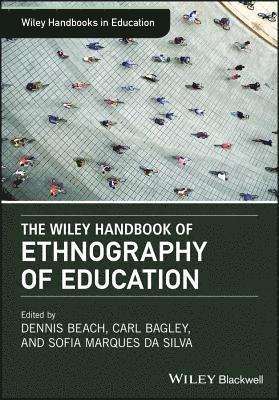
A state-of-the-art reference on educational ethnography edited by leading journal editors
This book brings an international group of writers together to offer an authoritative state-of-the-art review of, and critical reflection on, educational ethnography as it is being theorized and practiced today—from rural and remote settings to virtual and visual posts. It provides a definitive reference point and academic resource for those wishing to learn more about ethnographic research in education and the ways in which it might inform their research as well as their practice.
Engaging in equal measure with the history of ethnography, its current state-of play as well as its prospects, The Wiley Handbook of Ethnography of Education covers a range of traditional and contemporary subjects—foundational aims and principles; what constitutes ‘good’ ethnographic practice; the role of theory; global and multi-sited ethnographic methods in education research; ethnography’s many forms (visual, virtual, auto-, and online); networked ethnography and internet resources; and virtual and place-based ethnographic fieldwork.
Makes a return to fundamental principles of ethnographic inquiry, and describes and analyzes the many modalities of ethnography existing today Edited by highly-regarded authorities of the subject with contributions from well-known experts in ethnography Reviews both classic ideas in the ethnography of education, such as “grounded theory”, “triangulation”, and “thick description” along with new developments and challenges An ideal source for scholars in libraries as well as researchers out in the fieldThe Wiley Handbook of Ethnography of Education is a definitive reference that is indispensable for anyone involved in educational ethnography and questions of methodology.
2 726 kr
Läs direkt efter köp
A state-of-the-art reference on educational ethnography edited by leading journal editors
This book brings an international group of writers together to offer an authoritative state-of-the-art review of, and critical reflection on, educational ethnography as it is being theorized and practiced today—from rural and remote settings to virtual and visual posts. It provides a definitive reference point and academic resource for those wishing to learn more about ethnographic research in education and the ways in which it might inform their research as well as their practice.
Engaging in equal measure with the history of ethnography, its current state-of play as well as its prospects, The Wiley Handbook of Ethnography of Education covers a range of traditional and contemporary subjects—foundational aims and principles; what constitutes ‘good’ ethnographic practice; the role of theory; global and multi-sited ethnographic methods in education research; ethnography’s many forms (visual, virtual, auto-, and online); networked ethnography and internet resources; and virtual and place-based ethnographic fieldwork.
Makes a return to fundamental principles of ethnographic inquiry, and describes and analyzes the many modalities of ethnography existing today Edited by highly-regarded authorities of the subject with contributions from well-known experts in ethnography Reviews both classic ideas in the ethnography of education, such as “grounded theory”, “triangulation”, and “thick description” along with new developments and challenges An ideal source for scholars in libraries as well as researchers out in the fieldThe Wiley Handbook of Ethnography of Education is a definitive reference that is indispensable for anyone involved in educational ethnography and questions of methodology.
330 kr
Skickas inom 7-10 vardagar
261 kr
Skickas inom 7-10 vardagar
142 kr
Skickas inom 7-10 vardagar
164 kr
Skickas inom 7-10 vardagar
178 kr
Skickas inom 7-10 vardagar
332 kr
Skickas inom 7-10 vardagar
161 kr
Skickas
Rural-urban disparities in Sweden, as in many other countries, have been somewhat of a blackspot—one that seems to have both diversified and expanded in recently. Schools are often fighting to survive in rural areas which are losing value in terms of wealth and cultural capital and rather than offering a route to social mobility and equality, they risk reproducing inequality and future life difficulties.
First, there are distinctive differences between various types of rural area, their education, and the responses and resistance to the present situation by those living there. Second, despite these differences we can still point to consistent patterns. Third is the issue of mobility into and between rural areas. Different social groups and places have different and distinct mobility forms and patterns, and educational availabilities are amongst the factors involved. Some are effectively imprisoned in their now increasingly depleted areas and experience intense alienation and flight instincts. Fourth, the introduction of market politics is also an important contextual feature in rural education and school experiences. This travelling package of metro-centric policies cuts very differently in rural areas compared with urban, as it also does in respect of rural towns compared with other kinds of rural area.
1 375 kr
Skickas inom 10-15 vardagar
1 487 kr
Skickas inom 10-15 vardagar
1 893 kr
Läs direkt efter köp
1 381 kr
Skickas inom 10-15 vardagar
1 722 kr
Läs direkt efter köp
211 kr
Skickas inom 7-10 vardagar