509 kr
Skickas inom 10-15 vardagar
509 kr
Skickas inom 10-15 vardagar
1 855 kr
Skickas inom 10-15 vardagar
576 kr
Läs direkt efter köp
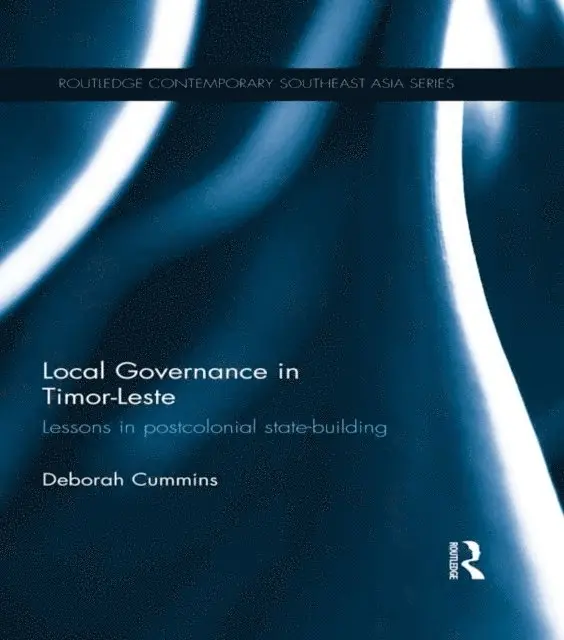
Across many parts of the postcolonial world, it is everyday reality for people to cross regularly between state-based and customary governance, institutions and norms. This book examines this phenomenon in the context of the villages of Timor-Leste, and the state-building efforts that have been conducted by the Timorese government and international development agencies since the vote for independence in 1999.
Drawing on 5 years of ethnographic fieldwork in the remote, rural areas of Timor-Leste, the book provides a critical analysis of the challenges that communities face when navigating coexisting customary and state-based structures and norms in a context where customary law continues to be the central guiding force. It also explores the various creative ways in which local leaders and community members make sense of their local governance environment. It then draws on these insights to provide a more nuanced, contextualised account of the impact of institutional interventions, state-building and democratisation within these villages. While set in the context of state- and nation-building efforts following Timor-Leste’s vote for independence, the book also provides a broader examination of the issues that arise for the postcolonial state adequately meeting the needs of its citizens. Further, it explores the challenges that are met by communities when incorporating state influences and demands into their everyday lives.
Expanding the scope of empirical Timor-Leste scholarship by moving beyond anthropological description and providing the first detailed political analysis of local-level governance in contemporary Timorese communities, this book is a valuable contribution to studies on Asian Politics, Governance and International Studies.
585 kr
Läs direkt efter köp
Across many parts of the postcolonial world, it is everyday reality for people to cross regularly between state-based and customary governance, institutions and norms. This book examines this phenomenon in the context of the villages of Timor-Leste, and the state-building efforts that have been conducted by the Timorese government and international development agencies since the vote for independence in 1999.
Drawing on 5 years of ethnographic fieldwork in the remote, rural areas of Timor-Leste, the book provides a critical analysis of the challenges that communities face when navigating coexisting customary and state-based structures and norms in a context where customary law continues to be the central guiding force. It also explores the various creative ways in which local leaders and community members make sense of their local governance environment. It then draws on these insights to provide a more nuanced, contextualised account of the impact of institutional interventions, state-building and democratisation within these villages. While set in the context of state- and nation-building efforts following Timor-Leste’s vote for independence, the book also provides a broader examination of the issues that arise for the postcolonial state adequately meeting the needs of its citizens. Further, it explores the challenges that are met by communities when incorporating state influences and demands into their everyday lives.
Expanding the scope of empirical Timor-Leste scholarship by moving beyond anthropological description and providing the first detailed political analysis of local-level governance in contemporary Timorese communities, this book is a valuable contribution to studies on Asian Politics, Governance and International Studies.
57 kr
Läs direkt efter köp
187 kr
Skickas inom 7-10 vardagar
220 kr
Läs direkt efter köp
188 kr
Tillfälligt slut