Clandestine Crossings delivers an in-depth description and analysis of the experiences of working-class Mexican migrants at the beginning of the twenty-first century as they enter the United States surreptitiously with the help of paid guides known as coyotes. Drawing on ethnographic observations of crossing conditions in the borderlands of South Texas, as well as interviews with migrants, coyotes, and border officials, Spener details how migrants and coyotes work together to evade apprehension by U.S. law enforcement authorities as they cross the border. In so doing, he seeks to dispel many of the myths that misinform public debate about undocumented immigration to the United States. The hiring of a coyote, Spener argues, is one of the principal strategies that Mexican migrants have developed in response to intensified U.S. border enforcement. Although this strategy is typically portrayed in the press as a sinister organized-crime phenomenon, Spener argues that it is better understood as the resistance of working-class Mexicans to an economic model and set of immigration policies in North America that increasingly resemble an apartheid system. In the absence of adequate employment opportunities in Mexico and legal mechanisms for them to work in the United States, migrants and coyotes draw on their social connections and cultural knowledge to stage successful border crossings in spite of the ever greater dangers placed in their path by government authorities.

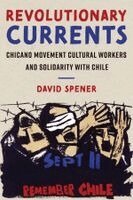
On September 11, 1973, General Augusto Pinochet led a bloody military coup in Chile that overthrew Salvador Allende's democratically elected socialist government. The coup ushered in a cruelly repressive dictatorship that would govern the country for the next seventeen years, constituting a watershed moment in Cold War history.This book recounts the untold story of how Chicano Movement poets, artists, musicians, and theater groups in the United States used their work to express solidarity with the international campaign to restore democracy in Chile. Such expressions of solidarity were especially prominent in the San Francisco Bay Area, where hundreds of Chilean exiles settled following the coup. Upon arrival, they joined a diverse Latinx population that was home to a Chicanx arts community whose members' political orientations primed them to lend their talents to anti-imperialist causes. These Chicanxs were also drawn to the campaign against the dictatorship through friendship and acquaintance with members of the Chilean exile community.David Spener shows how the Bay Area's unique cosmopolitan social context offered Chicanxs and Chileans meaningful opportunities for dialogue and collaboration with each other as well as with Latinxs of other national origins. Chicanxs often adopted a pan-ethnic raza identity that they could share with Chilean, Nicaraguan, Puerto Rican, Salvadoran, and other Latinx activists. This did not mean, however, that they abandoned the political identities that they had gained from the Chicano Movement. Instead, many came to see themselves as uniting with other Latinxs, first Chileans and then Nicaraguans and Salvadorans, in a struggle against U.S. imperialism throughout the Americas.
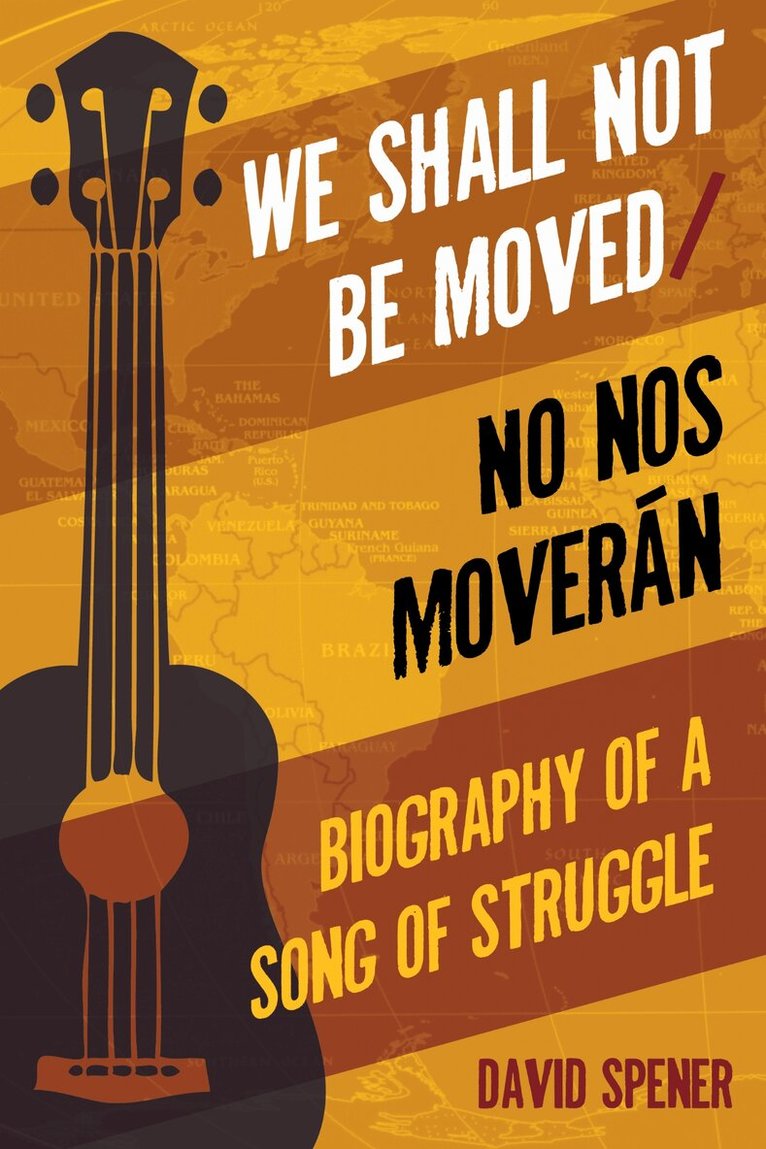
The activist anthem “We Shall Not Be Moved” expresses resolve in the face of adversity; it helps members of social movements persevere in their struggles to build a better world. The exact origins of the song are unknown, but it appears to have begun as a Protestant revival song sung by rural whites and African slaves in the southeastern United States in the early nineteenth century. The song was subsequently adopted by U.S. labor and civil rights activists, students and workers opposing the Franco dictatorship in Spain, and by Chilean supporters of that country’s socialist government in the early 1970s. In his fascinating biography, We Shall Not Be Moved, David Spener details the history and the role the song has played in each of the movements in which it has been sung. He analyzes its dissemination, function, and meaning through a number of different sociological and anthropological lenses to explore how songs can serve as an invaluable resource to participants in movements for social change.
This volume addresses many of the complex issues raised by North American integration through the lens of one of the largest and most global industries in the region: textiles and apparel. In part, this is a story of winners and losers in the globalization process, especially if one focuses on jobs lost and jobs gained in different countries and communities within North America, defined here as: Canada, the United States, Mexico, Central America, and the Caribbean. However, it would be a mistake to view the industry solely in these zerosum terms. The North American apparel industry is an excellent illustration of larger trends in the global economy, in which regional divisions of labor appear to be one of the most stable and effective responses to globalization. The contributors to this volume are an international and interdisciplinary group of scholars who have all done detailed fieldwork at the firm and factory levels in one or more countries of North America.Taken together the essays offer theoretical and methodological innovations built around the intersection of the global commodity chains and industrial districts literatures, as well as innovative approaches to studying the impact of cross-national, interfirm networks in terms of production and trade issues, and local development outcomes for workers and communities.Author note: Gary Gereffi is Director of the Markets and Management Studies Program at Duke University. He is the co-editor of "Commodity Chains and Global Capitalism" (with Miguel Korzeniewicz) and "Manufacturing Miracles: Paths of Industrialization in Latin America and East Asia" (with Donald L. Wyman). David Spener is Assistant Professor in the Department of Sociology and Anthropology at Trinity University in San Antonio, Texas. He is the co-editor (with Kathleen Staudt) of "The U.S.-Mexico Border: Transcending Divisions, Contesting Identities". Jennifer Bair is Assistant Professor of Sociology at Yale University.