2 295 kr
Skickas inom 7-10 vardagar
2 295 kr
Skickas inom 7-10 vardagar
2 688 kr
Läs direkt efter köp
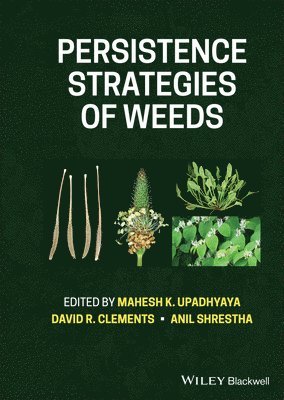
An invaluable source of up-to-date information on all major aspects of weed persistence
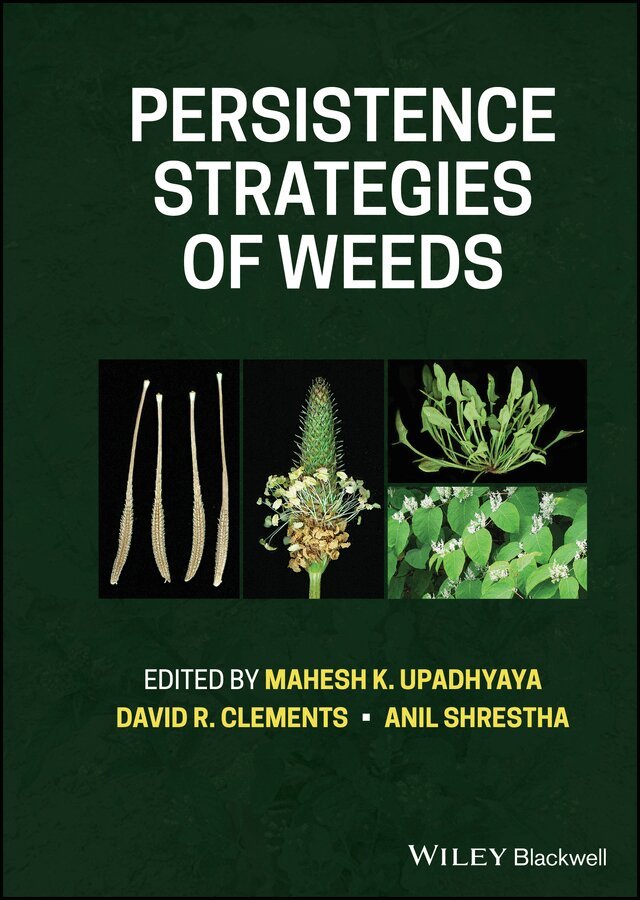
Weeds negatively impact crop yields, the quality of agricultural produce, the health of livestock and ecosystems, and various aspects of human life. Despite significant expenditures of time, money, and resources by agricultural producers, land managers, and the general public, weeds persist. Developing new methods for protecting crops and the environment requires a thorough understanding of the persistence mechanisms of weeds.
In Persistence Strategies of Weeds, an international team of expert authors provide detailed information on weed seed biology, identify the vulnerabilities of different weeds, and address the underlying issues behind the problem of weed persistence despite various management methods including herbicides. Presenting a comprehensive approach to the subject, the authors describe what is already understood about weed persistence and what yet needs to be determined. Topics include the role of seed production, dissemination, seed banks, the physiology and genetics of seed dormancy, the influence of agronomic practices, seed longevity, vegetative propagation, allelopathy, predation, soil microbes, weed evolution, and more. This authoritative volume:
Examines the genetic flexibility of weeds to adapt to changes in agricultural practices and management strategies Discusses the release of allelochemicals by certain weeds that inhibit the growth of competing plant species Explores the influence of climate change on weed persistence and how the efficacy of herbicides will be affected Emphasizes the importance of sustainable crop production and reducing dependence on synthetic herbicides Provides extensive coverage of the roles of genetic, environmental, and morphological factors in the regulation of weed seed dormancy Includes an overview of persistence strategies of weeds, detailed case studies, and numerous illustrative examplesPersistence Strategies of Weeds is an ideal textbook for all upper-level undergraduate and graduate students of weed and pest biology, agroecology, or organic agriculture, and a must-have reference for weed scientists and weed management professionals.
2 670 kr
Läs direkt efter köp
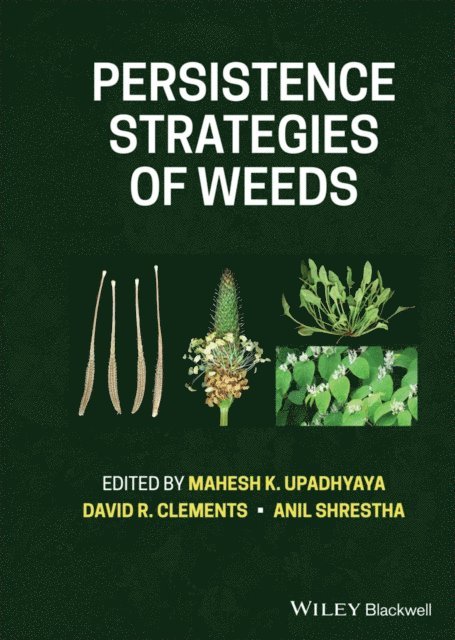
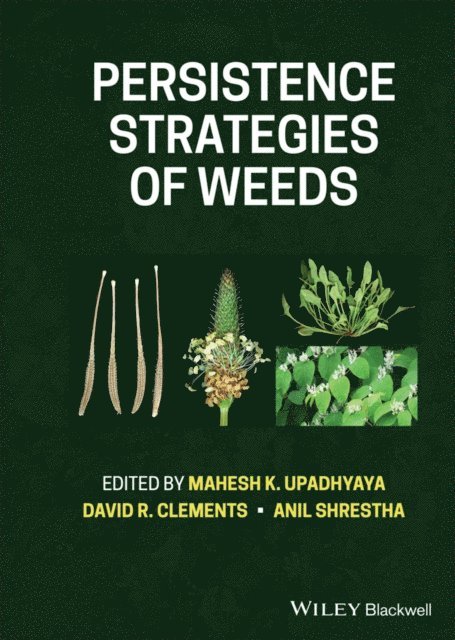
An invaluable source of up-to-date information on all major aspects of weed persistence
Weeds negatively impact crop yields, the quality of agricultural produce, the health of livestock and ecosystems, and various aspects of human life. Despite significant expenditures of time, money, and resources by agricultural producers, land managers, and the general public, weeds persist. Developing new methods for protecting crops and the environment requires a thorough understanding of the persistence mechanisms of weeds.
In Persistence Strategies of Weeds, an international team of expert authors provide detailed information on weed seed biology, identify the vulnerabilities of different weeds, and address the underlying issues behind the problem of weed persistence despite various management methods including herbicides. Presenting a comprehensive approach to the subject, the authors describe what is already understood about weed persistence and what yet needs to be determined. Topics include the role of seed production, dissemination, seed banks, the physiology and genetics of seed dormancy, the influence of agronomic practices, seed longevity, vegetative propagation, allelopathy, predation, soil microbes, weed evolution, and more. This authoritative volume:
Examines the genetic flexibility of weeds to adapt to changes in agricultural practices and management strategies Discusses the release of allelochemicals by certain weeds that inhibit the growth of competing plant species Explores the influence of climate change on weed persistence and how the efficacy of herbicides will be affected Emphasizes the importance of sustainable crop production and reducing dependence on synthetic herbicides Provides extensive coverage of the roles of genetic, environmental, and morphological factors in the regulation of weed seed dormancy Includes an overview of persistence strategies of weeds, detailed case studies, and numerous illustrative examplesPersistence Strategies of Weeds is an ideal textbook for all upper-level undergraduate and graduate students of weed and pest biology, agroecology, or organic agriculture, and a must-have reference for weed scientists and weed management professionals.
2 726 kr
Skickas inom 10-15 vardagar
2 599 kr
Läs direkt efter köp
Invasive species have inspired concern for many reasons, including economic and environmental impacts in specific jurisdictions within particular countries. However, it is apparent that for some invasive plant species, political borders offer only weak barriers because these species have succeeded in invading many countries, emerging as threats at a global level. With this level of threat, a number of books on invasive plants and invasive species in general have been published in recent years, but none explicitly provides “global” coverage, perhaps because it is only recently that the full geographical, economic and environmental implications of widespread spread and adaptive nature of these particular invasive plants have been recognized.
We plan to make this volume unique by profiling plant invasions in explicitly geographical contexts; on the world continents (Chapters 5-11), as well as islands (Chapter 12) and mountains (Chapter 13). This global approach is supported by an overview of invasion biology and recent advances (Chapter 1) and how different communities differ in invasibility (Chapter 2). Global factors influencing invasion are introduced in Chapter 3 (globalized trade) and Chapter 4 (climate change). Key species are profiled through geographic treatments, continent by continent (Chapters 5-11), and for islands (Chapter 12) and mountains (Chapter 13). The impact of invasive plants is highlighted in Chapter 14, both in biotic and economic terms, partly to counter the tendency for the young field of invasion biology to rely too much on anecdotal evidence. This chapters is also designed to bring home the message that these are serious problems that must be dealt with, as covered in the subsequent chapters. The book concludes with three chapters casting light on solutions to the many problems described in the rest of the volume. Chapter 15 features new, innovative technologies that are being developed to monitor and manage invasive plants, andChapter 16 presents comprehensive strategies for public education and implementation of management on local and global scales. Chapter 17 describes different future scenarios depending on current trends in plant invasion and its management, just as climate change predictions employ various scenarios to project the future. The future is very much up to us, as humanity grapples with the question of how best to strategically meet the problems of global invasive plant problems that we ourselves have created that is further challenged by a changing climate.We are confident that this book will be of interest to invasion biologists, resource managers, and the legion of others who must deal with these invasive plants across the globe on a daily basis.1 965 kr
Skickas inom 10-15 vardagar
John Wiley and Sons Ltd
2 619 kr
Tillfälligt slut