2 049 kr
Läs direkt efter köp
2 049 kr
Läs direkt efter köp
1 616 kr
Skickas inom 10-15 vardagar
1 453 kr
Skickas inom 7-10 vardagar
896 kr
Läs direkt efter köp
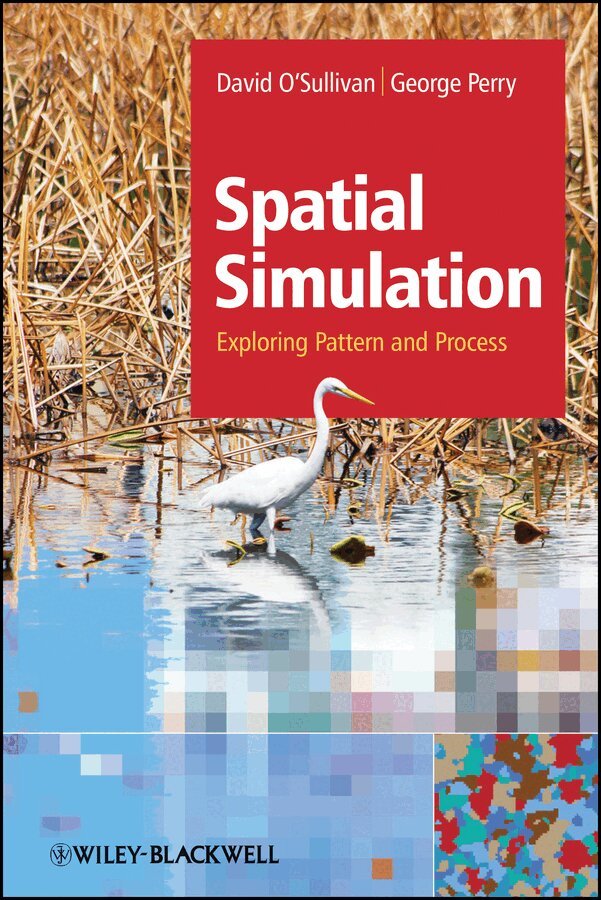
A ground-up approach to explaining dynamic spatial modelling for an interdisciplinary audience.
Across broad areas of the environmental and social sciences, simulation models are an important way to study systems inaccessible to scientific experimental and observational methods, and also an essential complement to those more conventional approaches. The contemporary research literature is teeming with abstract simulation models whose presentation is mathematically demanding and requires a high level of knowledge of quantitative and computational methods and approaches. Furthermore, simulation models designed to represent specific systems and phenomena are often complicated, and, as a result, difficult to reconstruct from their descriptions in the literature. This book aims to provide a practical and accessible account of dynamic spatial modelling, while also equipping readers with a sound conceptual foundation in the subject, and a useful introduction to the wide-ranging literature.
Spatial Simulation: Exploring Pattern and Process is organised around the idea that a small number of spatial processes underlie the wide variety of dynamic spatial models. Its central focus on three ‘building-blocks’ of dynamic spatial models – forces of attraction and segregation, individual mobile entities, and processes of spread – guides the reader to an understanding of the basis of many of the complicated models found in the research literature. The three building block models are presented in their simplest form and are progressively elaborated and related to real world process that can be represented using them. Introductory chapters cover essential background topics, particularly the relationships between pattern, process and spatiotemporal scale. Additional chapters consider how time and space can be represented in more complicated models, and methods for the analysis and evaluation of models. Finally, the three building block models are woven together in a more elaborate example to show how a complicated model can be assembled from relatively simple components.
To aid understanding, more than 50 specific models described in the book are available online at patternandprocess.org for exploration in the freely available Netlogo platform. This book encourages readers to develop intuition for the abstract types of model that are likely to be appropriate for application in any specific context. Spatial Simulation: Exploring Pattern and Process will be of interest to undergraduate and graduate students taking courses in environmental, social, ecological and geographical disciplines. Researchers and professionals who require a non-specialist introduction will also find this book an invaluable guide to dynamic spatial simulation.

896 kr
Läs direkt efter köp
A ground-up approach to explaining dynamic spatial modelling for an interdisciplinary audience.
Across broad areas of the environmental and social sciences, simulation models are an important way to study systems inaccessible to scientific experimental and observational methods, and also an essential complement to those more conventional approaches. The contemporary research literature is teeming with abstract simulation models whose presentation is mathematically demanding and requires a high level of knowledge of quantitative and computational methods and approaches. Furthermore, simulation models designed to represent specific systems and phenomena are often complicated, and, as a result, difficult to reconstruct from their descriptions in the literature. This book aims to provide a practical and accessible account of dynamic spatial modelling, while also equipping readers with a sound conceptual foundation in the subject, and a useful introduction to the wide-ranging literature.
Spatial Simulation: Exploring Pattern and Process is organised around the idea that a small number of spatial processes underlie the wide variety of dynamic spatial models. Its central focus on three ‘building-blocks’ of dynamic spatial models – forces of attraction and segregation, individual mobile entities, and processes of spread – guides the reader to an understanding of the basis of many of the complicated models found in the research literature. The three building block models are presented in their simplest form and are progressively elaborated and related to real world process that can be represented using them. Introductory chapters cover essential background topics, particularly the relationships between pattern, process and spatiotemporal scale. Additional chapters consider how time and space can be represented in more complicated models, and methods for the analysis and evaluation of models. Finally, the three building block models are woven together in a more elaborate example to show how a complicated model can be assembled from relatively simple components.
To aid understanding, more than 50 specific models described in the book are available online at patternandprocess.org for exploration in the freely available Netlogo platform. This book encourages readers to develop intuition for the abstract types of model that are likely to be appropriate for application in any specific context. Spatial Simulation: Exploring Pattern and Process will be of interest to undergraduate and graduate students taking courses in environmental, social, ecological and geographical disciplines. Researchers and professionals who require a non-specialist introduction will also find this book an invaluable guide to dynamic spatial simulation.
1 683 kr
Läs direkt efter köp
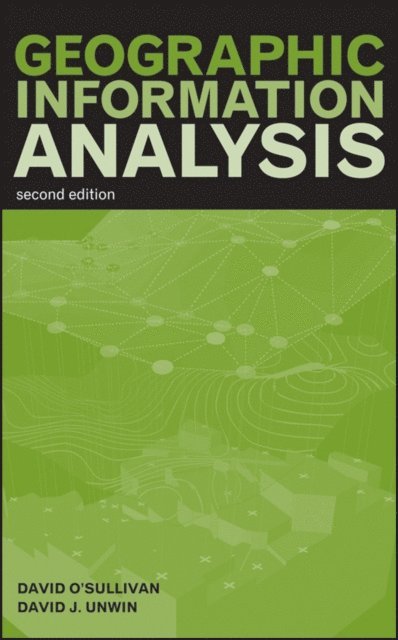
Geographic Information Analysis, Second Edition is fully updated to keep pace with the most recent developments of spatial analysis in a geographic information systems (GIS) environment. Still focusing on the universal aspects of this science, this revised edition includes new coverage on geovisualization and mapping as well as recent developments using local statistics.
Building on the fundamentals, this book explores such key concepts as spatial processes, point patterns, and autocorrelation in area data, as well as in continuous fields. Also addressed are methods for combining maps and performing computationally intensive analysis. New chapters tackle mapping, geovisualization, and local statistics, including the Moran Scatterplot and Geographically Weighted Regression (GWR). An appendix provides a primer on linear algebra using matrices.
Complete with chapter objectives, summaries, "thought exercises," explanatory diagrams, and a chapter-by-chapter bibliography, Geographic Information Analysis is a practical book for students, as well as a valuable resource for researchers and professionals in the industry.
769 kr
Skickas inom 7-10 vardagar
3 814 kr
Skickas inom 3-6 vardagar
2 704 kr
Skickas inom 3-6 vardagar
1 090 kr
Skickas inom 10-15 vardagar
1 427 kr
Läs direkt efter köp
All companies which reach a critical size are faced with outsourcing decisions that can increase the value of their products and services primarily through lower costs, greater reliability and improved efficiency. Successful outsourcing decisions have an important knowledge dimension, where the outsourcing professionals need to be supported by historical and contextual knowledge regarding their own products performance but also the performance of suppliers. Outsourcing in Manufacturing: the Knowledge Dimension explains in detail how a manager can acquire, create, transfer and use knowledge that optimizes their outsourcing decisions and improves the changes of marketplace success.
Outsourcing in Manufacturing: the Knowledge Dimension gives examples of the key decisions that needs to be taken by managers regarding effective outsourcing. Decisions are divided around the structural and infrastructural aspects of outsourcing and the key knowledge that needs to be managed to support good decisions. The book contains illustrations and examples of key processes throughout and concludes with a section dedicated to case studies. These case studies represent a variety of manufacturing system types and sizes focused on supply chain integration, and which deploy various manufacturing paradigms including craft, mass, lean, adaptive, and sustainable manufacturing.
Outsourcing in Manufacturing: the Knowledge Dimension covers many theoretical and practical examples of critical outsourcing decisions, their knowledge aspects and how knowledge challenges can be dealt with in a systematic way. It provides a key resource for students, lecturers and industry managers looking to solidify their understanding and application of outsourcing decision making strategies.
.
1 123 kr
Skickas inom 10-15 vardagar
822 kr
Skickas inom 7-10 vardagar
667 kr
Skickas inom 7-10 vardagar
1 620 kr
Skickas inom 10-15 vardagar
233 kr
Läs direkt efter köp
100 kr
Skickas
1 740 kr
Skickas inom 10-15 vardagar
2 291 kr
Läs direkt efter köp
Collaboration among industry, universities and research institutes plays a vital role in stimulating open innovation, which in turn leads to new products, processes, services and business models. This book brings together a number of real-life examples of how to govern and manage open innovation collaboration projects more effectively, and provides timely insights that project consortia, governance boards and funding agencies can directly apply to implement and monitor projects and achieve greater impacts. All papers were written by recognized leading authorities with extensive experience in governance and management, and reveal how to capitalize on the potential of open innovation.
This book shares multidisciplinary research perspectives on the potential benefits and challenges of collaboration, project management, and open innovation, as well as the management of complex organizational cultures and governance models.
1 740 kr
Skickas inom 10-15 vardagar
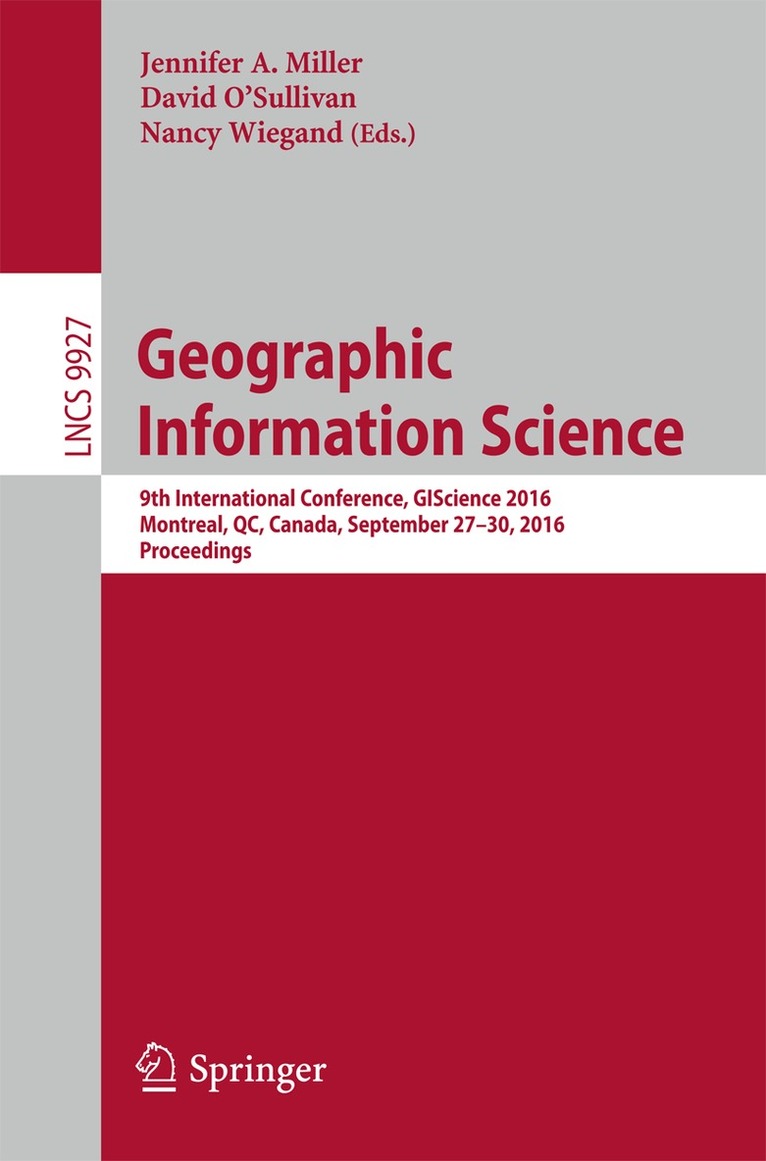
9th International Conference, GIScience 2016, Montreal, QC, Canada, September 27-30, 2016, Proceedings
549 kr
Skickas inom 10-15 vardagar
734 kr
Läs direkt efter köp
This book constitutes the refereed proceedings of the 9th International Conference on Geographic Information Science, GIScience 2016, held in Montreal, QC, Canada, in September 2016. The 21 full papers presented were carefully reviewed and selected from 63 submissions. The papers are organized in topical sections such as spatial algorithms; network analysis; spatial analysis; spatial methods; user-generated data and linked data; automated cartography and geovisualization.
John Wiley & Sons Inc
1 461 kr
Tillfälligt slut
1 138 kr
Tillfälligt slut