Samuel H. Walker was an apprentice carpenter in Washington, D.C., when the second Seminole War broke out in 1838. He enlisted in a Washington militia unit and went to Florida. Upon the expiration of the unit’s service, he was employed in the construction of the railroad from Mobile to Pensacola. Upon the completion of his labors, he removed to Texas where he joined the ill-fated Mier Expedition in 1842, being subsequently imprisoned by the Mexican authorities for two years, during which time he developed an intense hatred for his captors. Upon his release, he returned to Texas and joined the Texas Rangers. When war broke between the United States and Mexico in 1846, Walker joined the 1st Regiment of Texas Mounted Rifle Volunteers before, at the request of General Zachary Taylor, forming his own company of scouts. He subsequently returned to the Texas Mounted Rifles and was elected lieutenant colonel of the regiment. His term of service with Texas finished, he was commissioned as a captain in the U.S. Mounted Rifles and journeyed north to recruit his company. During this time, he met Samuel Colt. His discussions with Colt resulted in the Walker Colt pistol. His company filled, Walker returned to Mexico and the scene of battle. There, in 1847 Walker led a furious charge against the remnants of the Mexican dictator Santa Ana’s army in which he was mortally wounded by a Mexican sniper. Based upon archival materials including Walker’s own letters—he was a well-educated man and wrote extremely descriptive accounts of his experiences—this is the first in-depth biography of Walker.
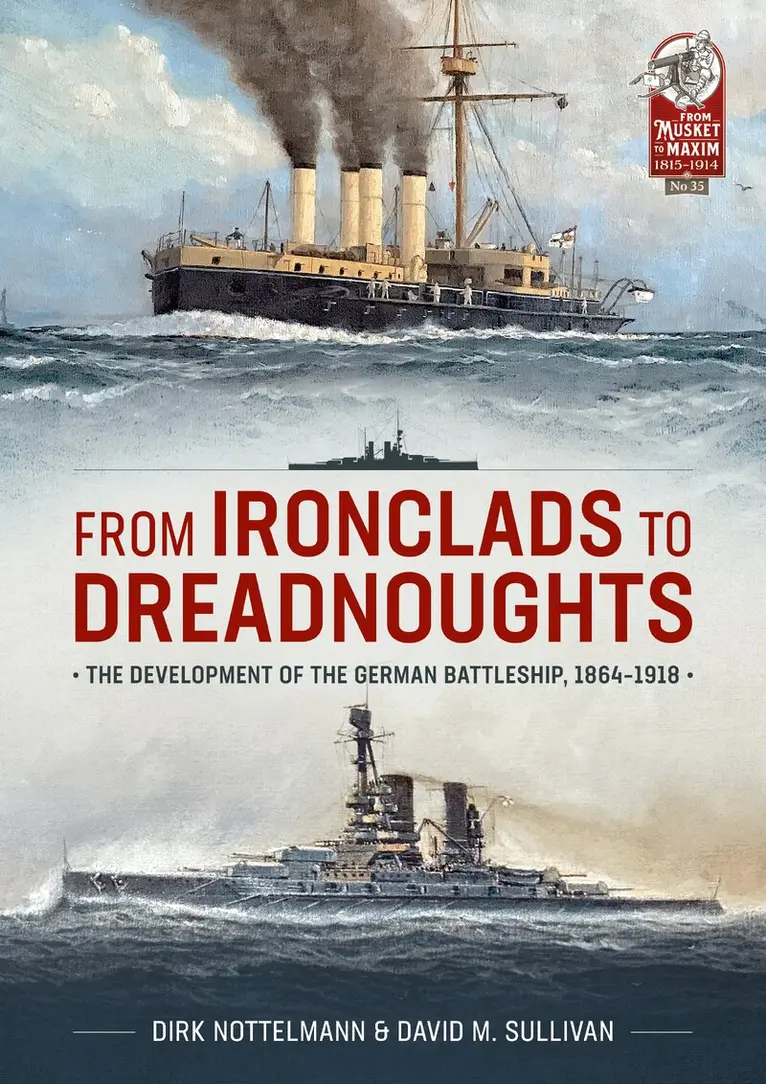
"...provides the background and a remarkable collection of images, facts and figures." — Roads to the Great WarIn 1864, the Prussian Navy, the core element of what would become the Imperial German Navy, acquired its first ironclad vessels from Great Britain and France. Until then, it had existed as a relatively insignificant force, mainly consisting of a handful of gunboats, corvettes, and other small craft. However, over the subsequent 50 years, the fleet would rise from these small beginnings into one capable of threatening the Royal Navy on the high seas. The development of the Imperial German Navy mirrored the rise of Germany as a technical power following unification in 1871. Still, such a rise needed more than just technical ability – it required considerable political will and economic resources. The early chapters of From Ironclads to Dreadnoughts cover the initial purchase of ships from abroad, the switch to German shipyards, and the hesitant attempts of Emperor Wilhelm II to develop the navy. The later chapters present the fundamental changes after Alfred von Tirpitz became naval minister in 1897. They focus on the history of the various classes of ships, from their inception to the wide variety of design influences, through their history in service and individual fates.The text is accompanied by an abundant selection of illustrations, photographs, maps and tables, many of them never before published, sourced from the vast Federal Archives at Freiburg or several private archives – including those of both authors – after many years of research.